1. What is a panel antenna?
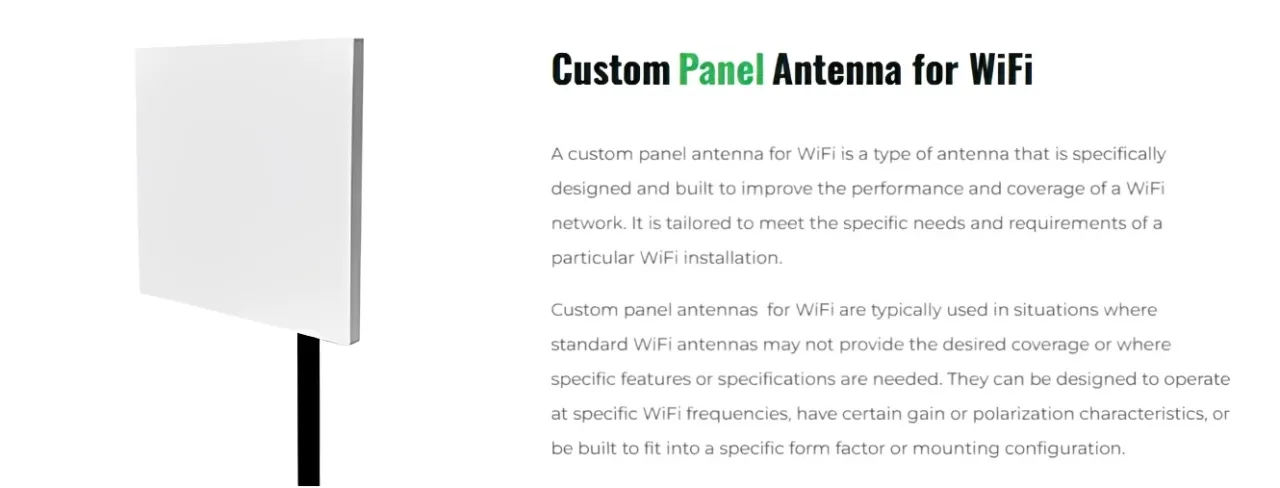
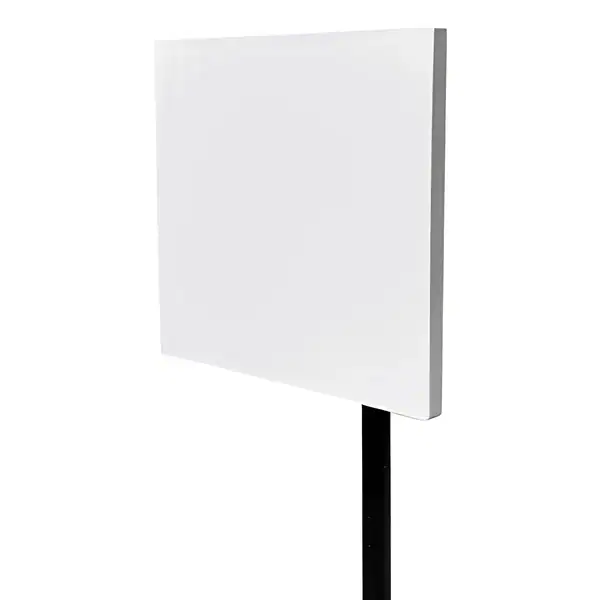
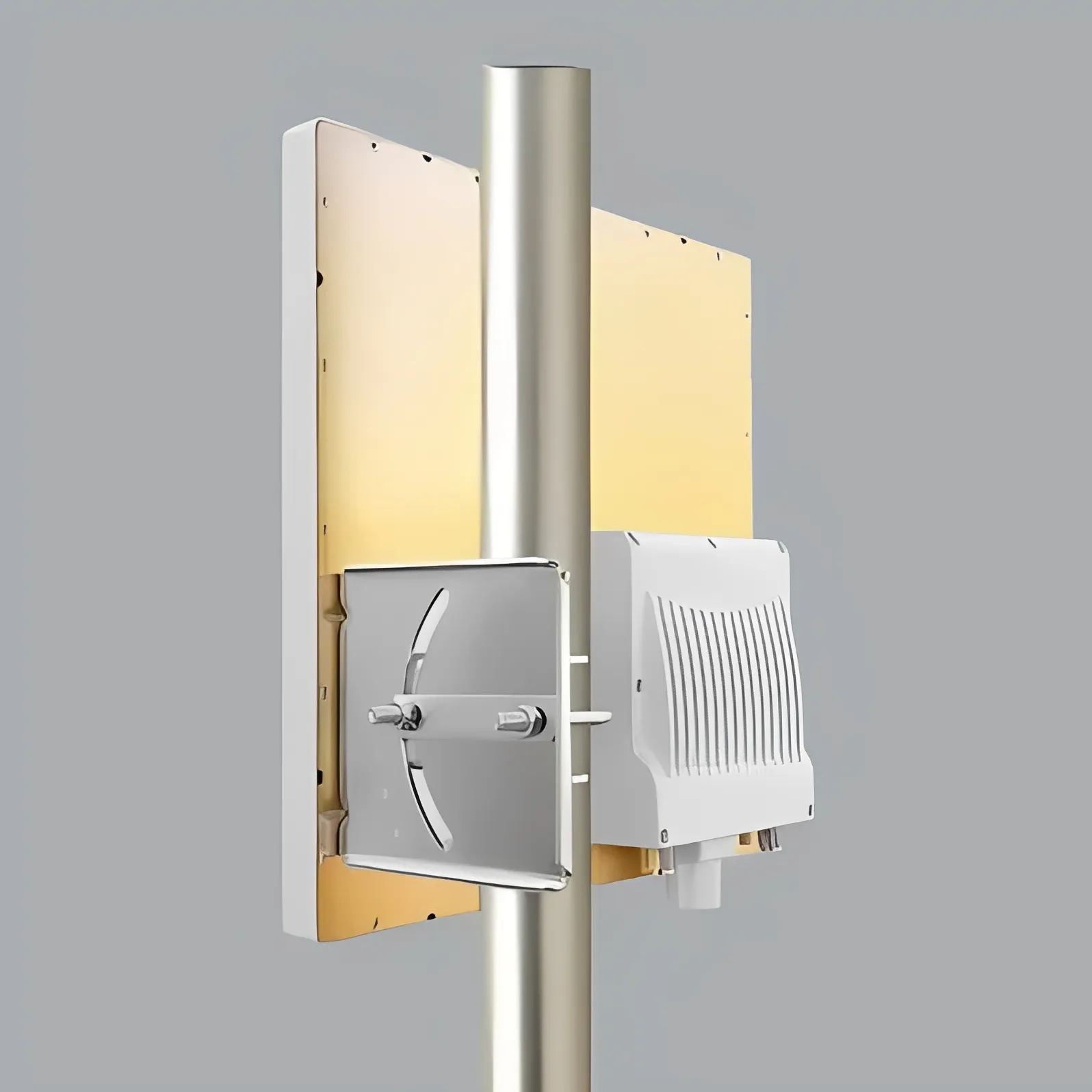
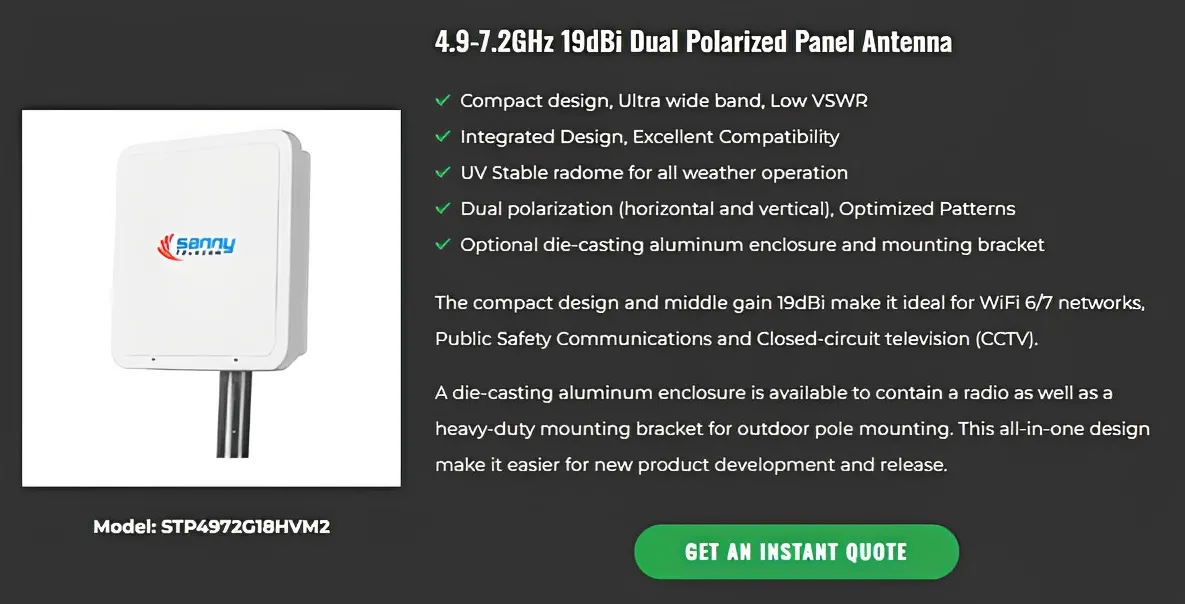
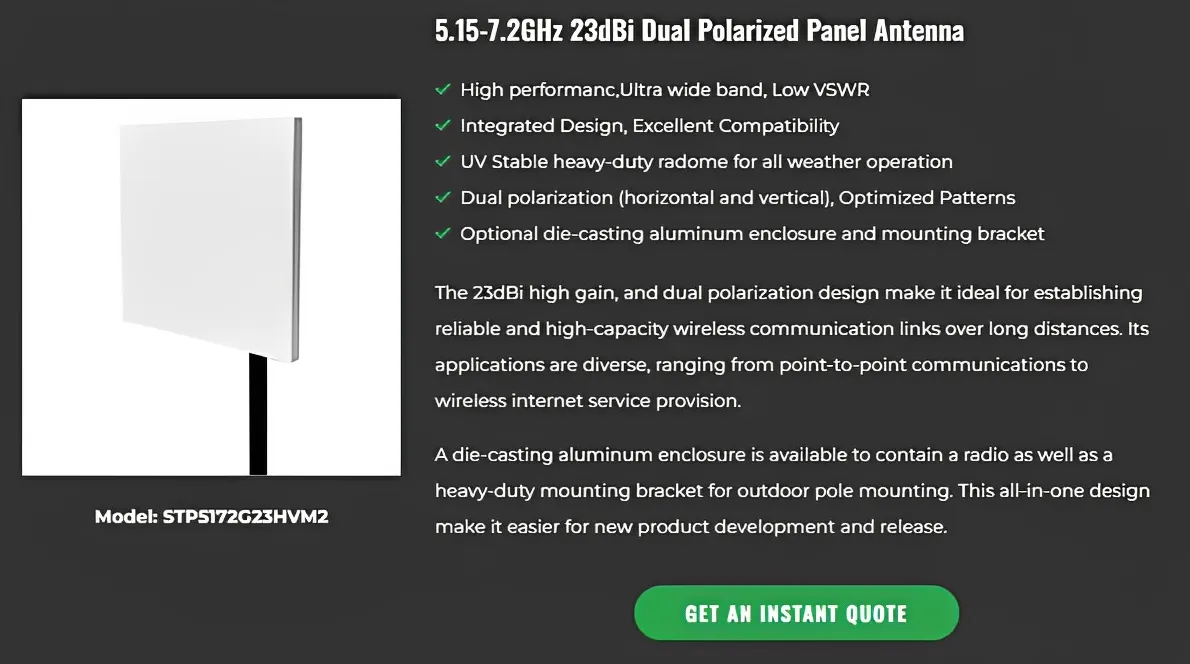
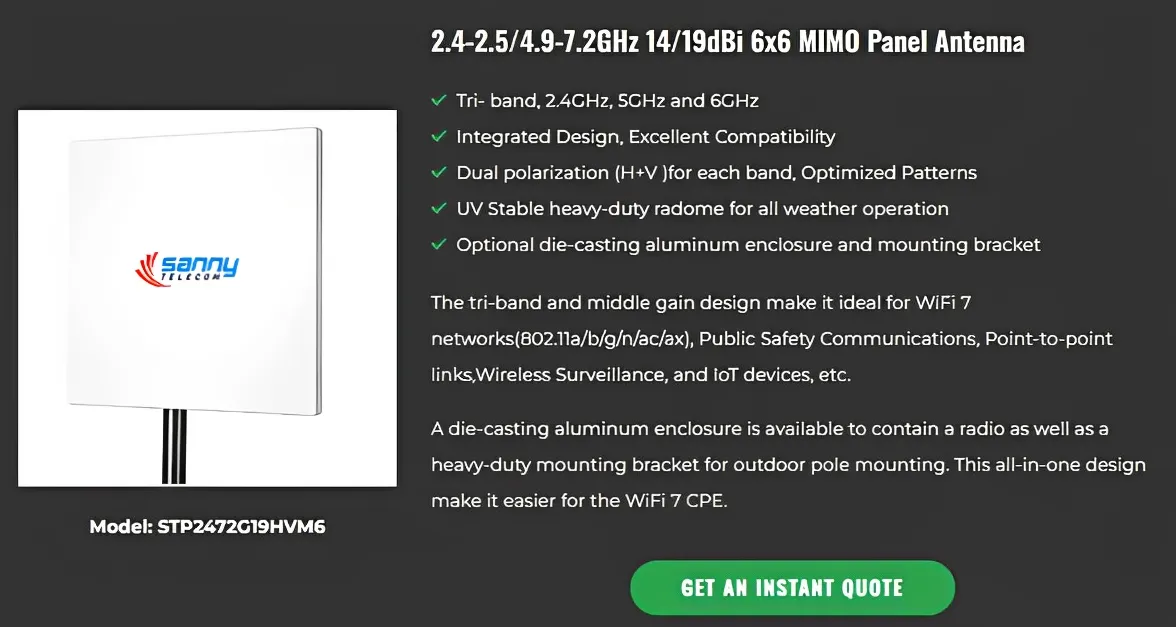
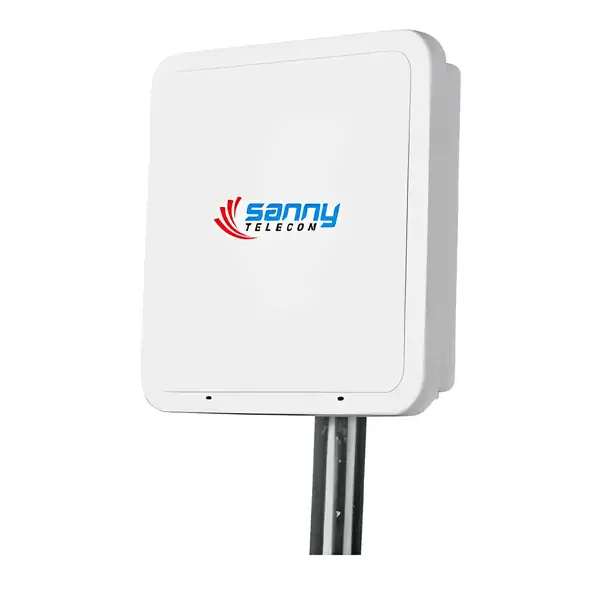
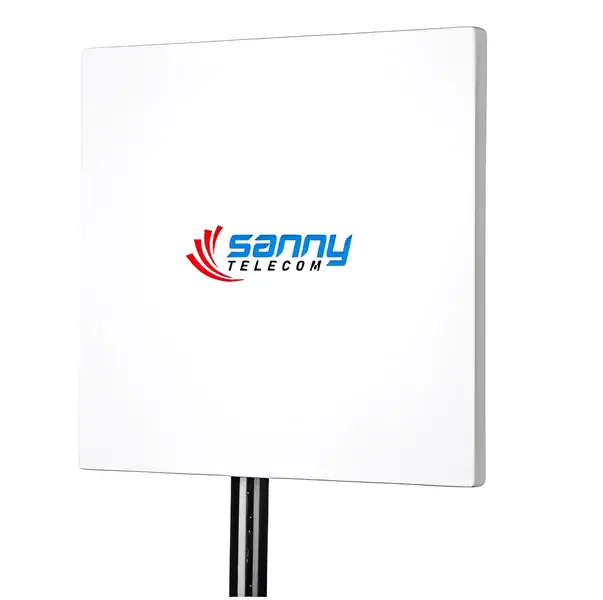
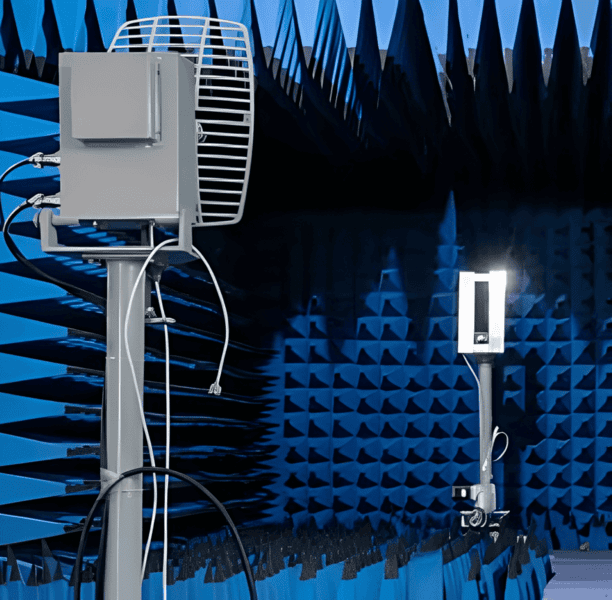
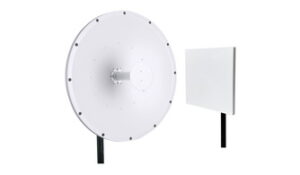
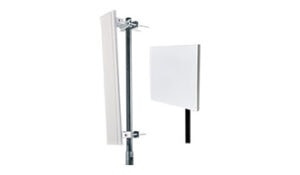
A panel antenna is a type of directional antenna that consists of a flat, rectangular surface. It is designed to focus the signal in a specific direction, providing a higher gain compared to omnidirectional antennas.
2. How does a panel antenna work?
A panel antenna works by using a flat, rectangular or square surface to emit and receive radio waves in a focused direction, thereby increasing the signal strength and reducing interference from other directions.
3. What are the typical applications of panel antennas?
Panel antennas are commonly used in cellular networks, Wi-Fi systems, point-to-point communication, and various wireless communication systems to improve signal strength and coverage.
4. What frequency ranges do panel antennas support?
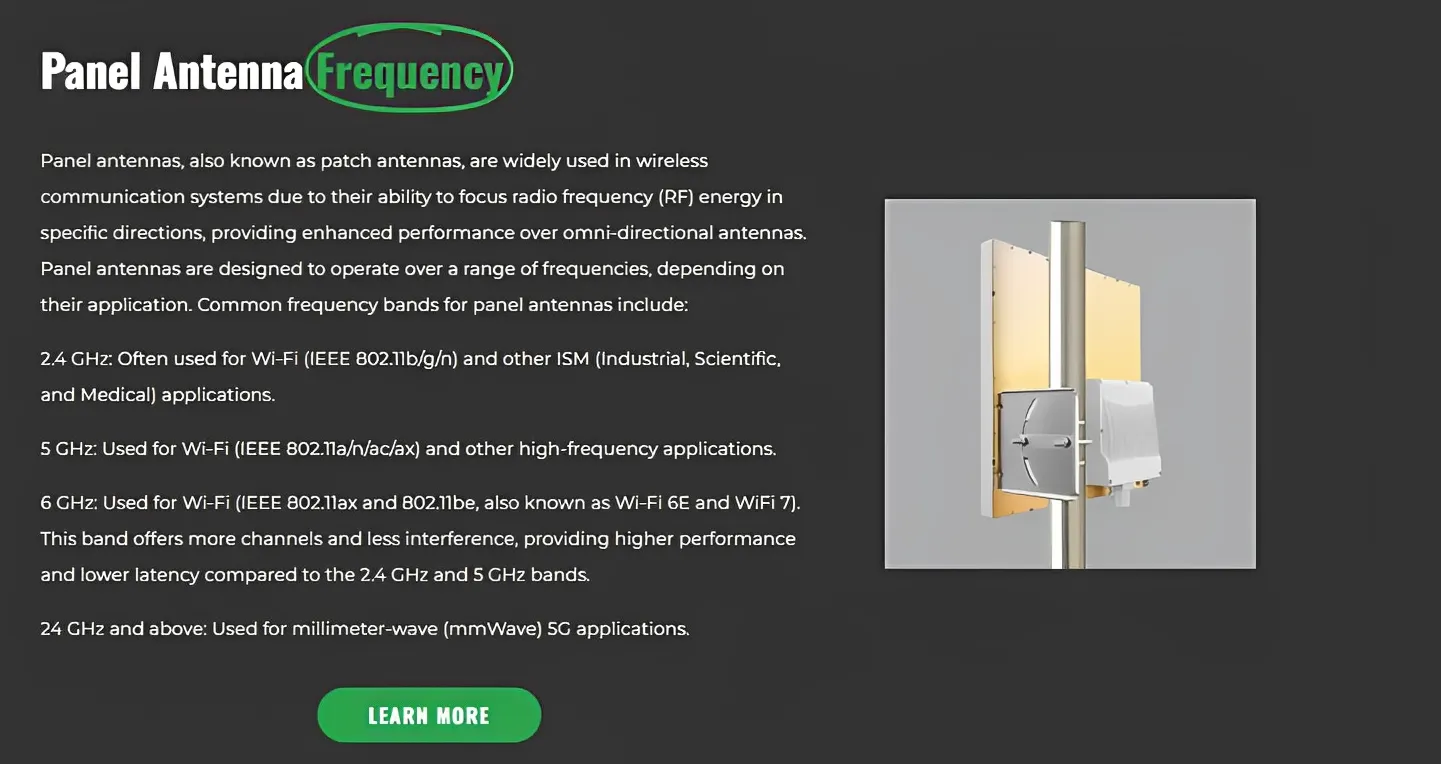
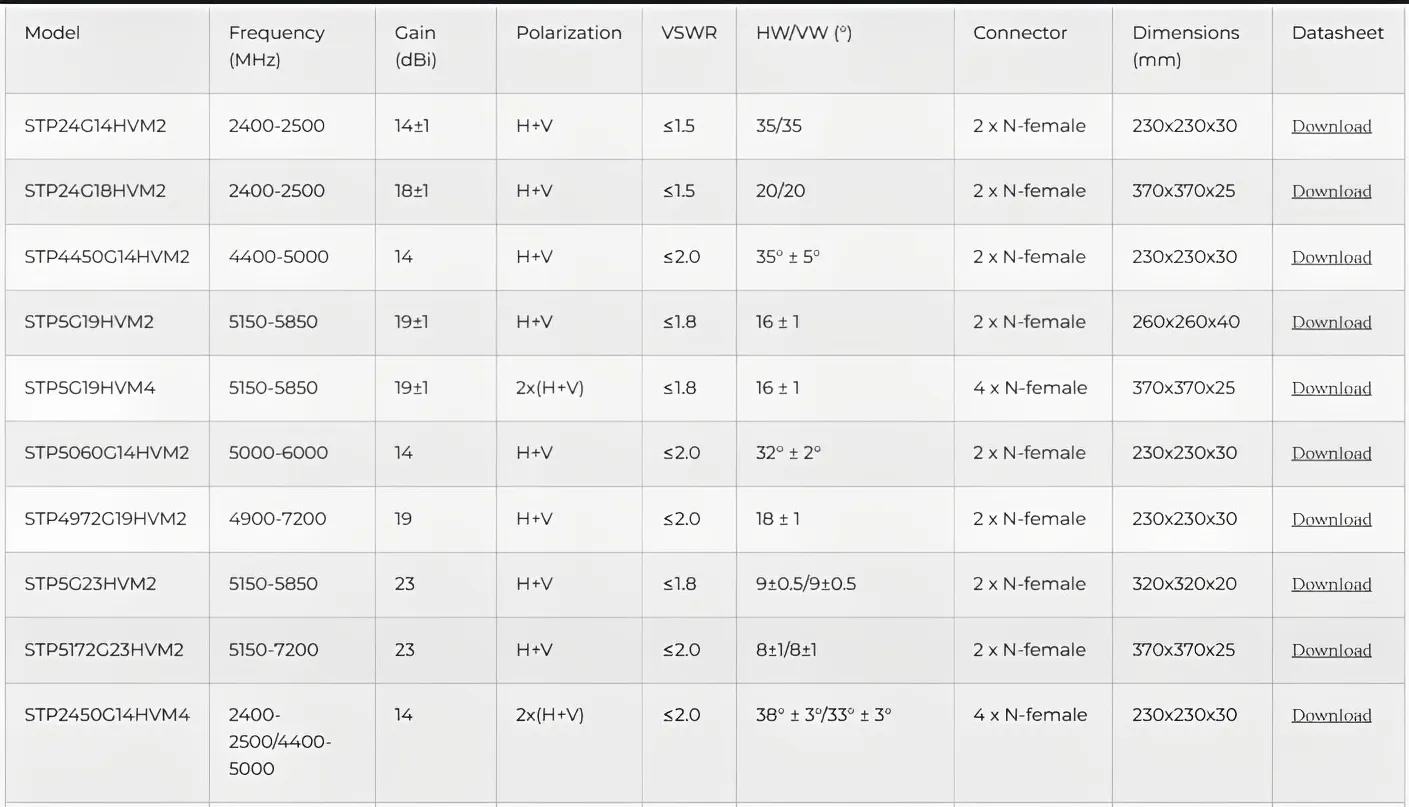
Panel antennas can support a wide range of frequencies, from low-frequency bands like 700 MHz to high-frequency bands like 6 GHz, depending on the design and application.
5. What is the gain of a panel antenna?
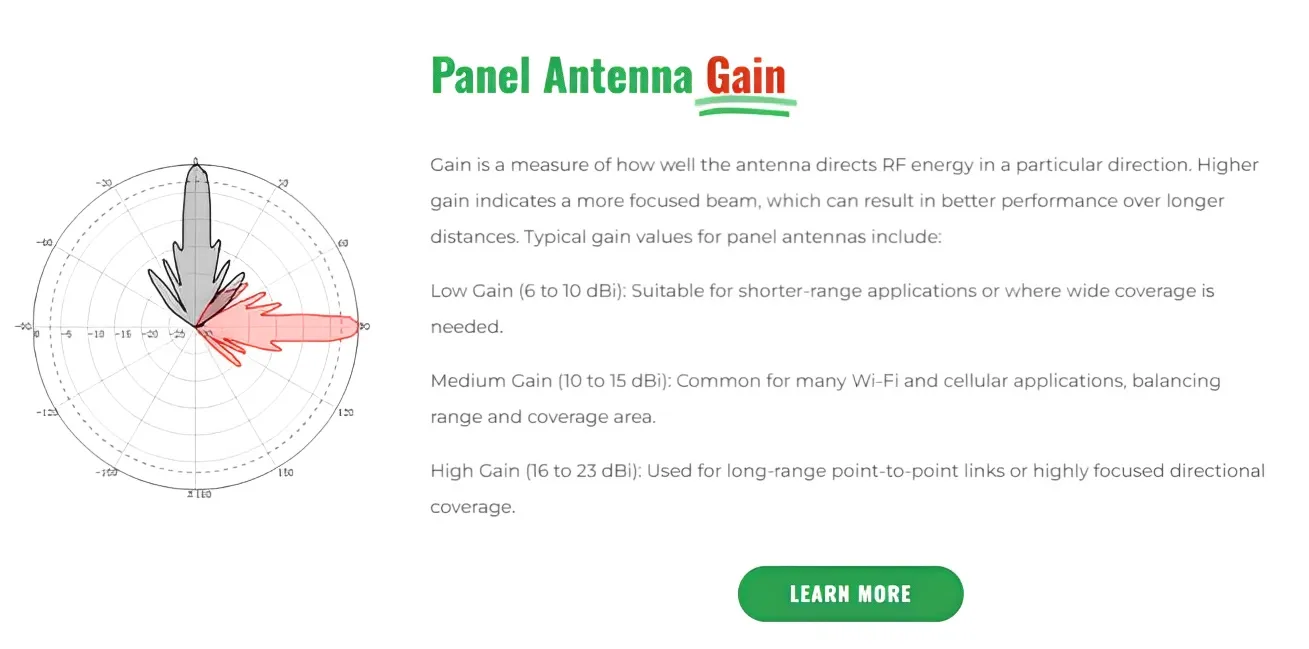
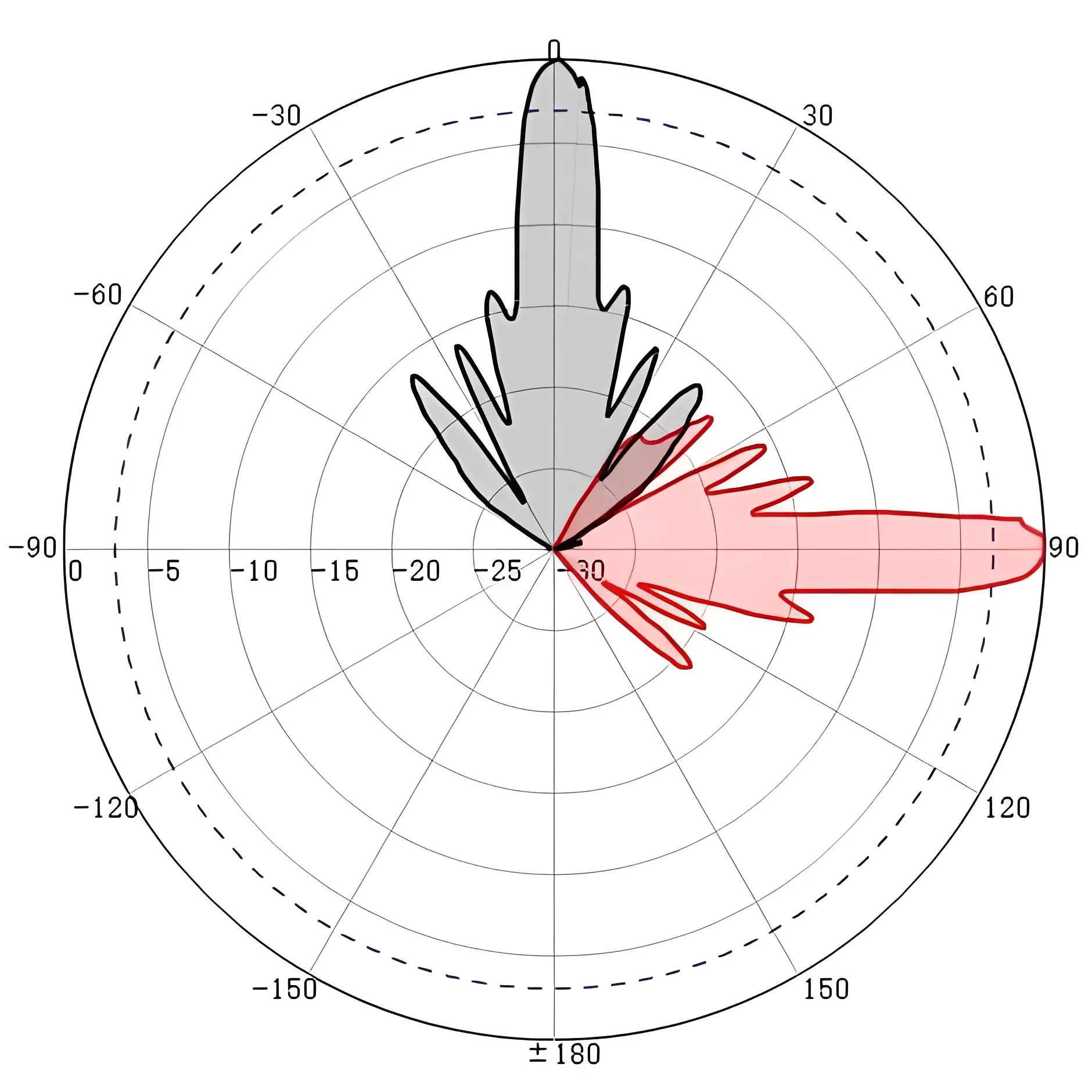
The gain of a panel antenna typically ranges from 8 dBi to 23 dBi, with higher gains providing more focused signal transmission and reception.
6. How do I install a panel antenna?
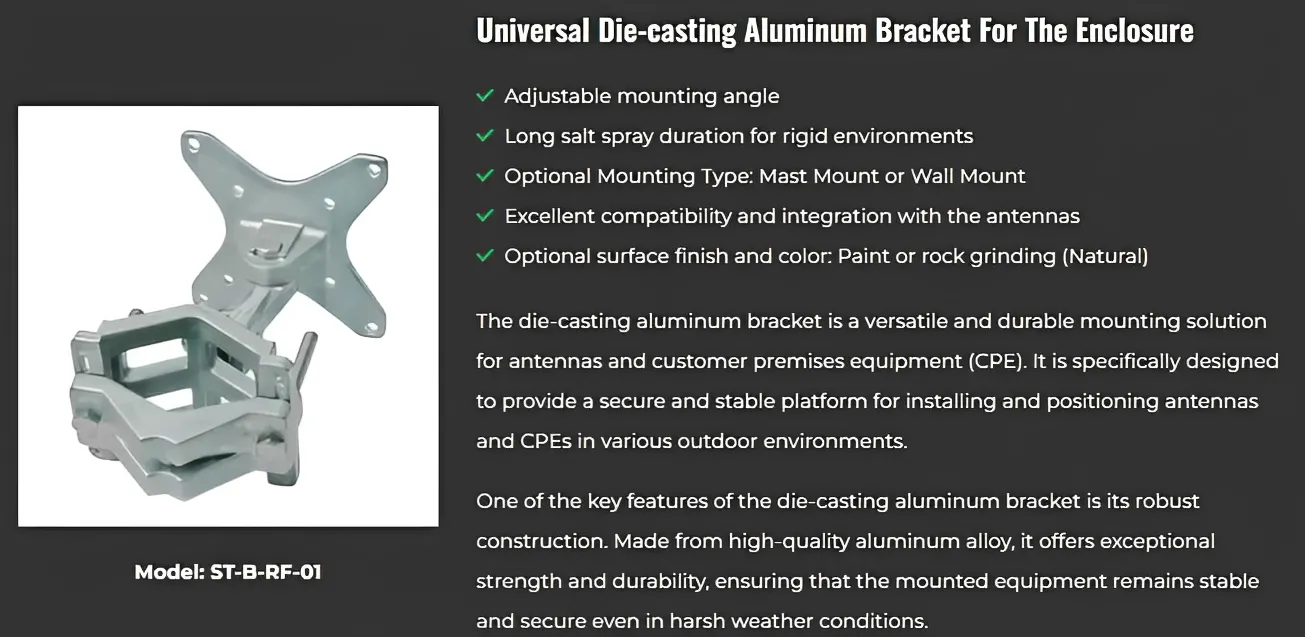
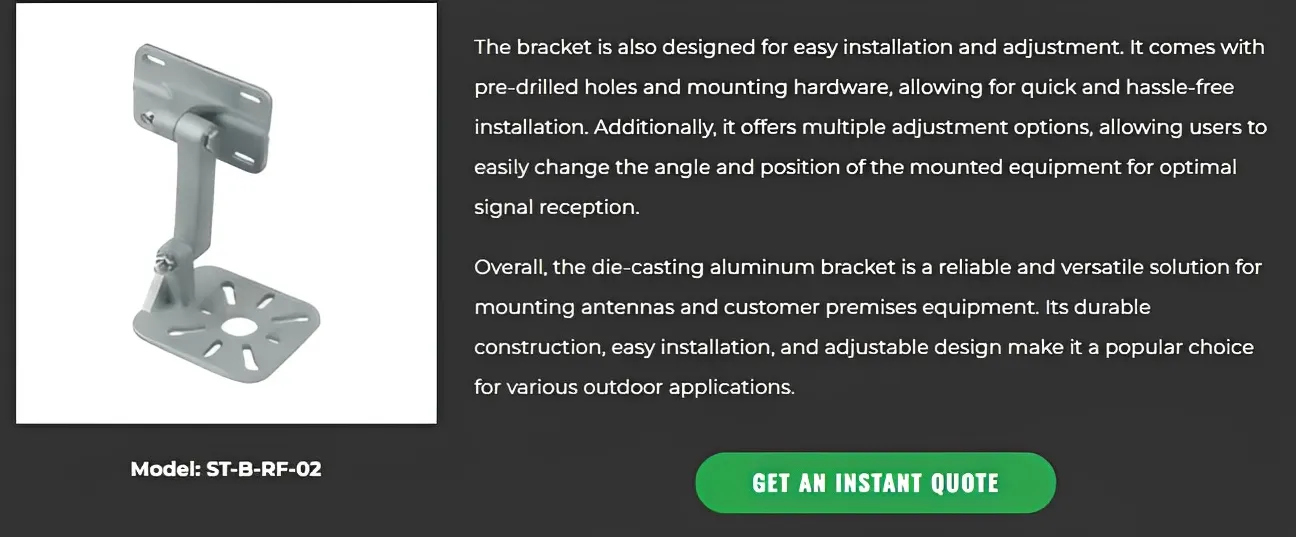
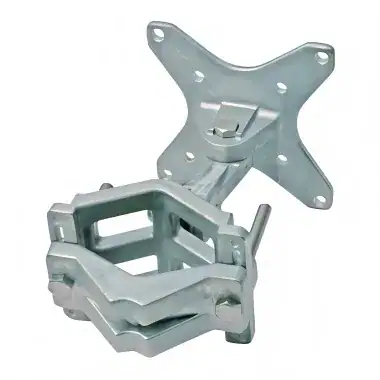
Installation involves mounting the antenna on a stable surface, such as a wall or pole, and aligning it towards the desired coverage area. Proper grounding and weatherproofing are also essential for outdoor installations.
7. What is the difference between a panel antenna and an omnidirectional antenna?
A panel antenna focuses its signal in a specific direction, providing higher gain and longer range in that direction, while an omnidirectional antenna radiates signals uniformly in all directions with lower gain.
8. Can panel antennas be used indoors?
cURL Too many subrequests by single Worker invocation. To configure this limit, refer to https://developers.cloudflare.com/workers/wrangler/configuration/#limits.
cURL Too many subrequests by single Worker invocation. To configure this limit, refer to https://developers.cloudflare.com/workers/wrangler/configuration/#limits
cURL Too many subrequests by single Worker invocation. To configure this limit, refer to https://developers.cloudflare.com/workers/wrangler/configuration/#limits.
cURL Too many subrequests by single Worker invocation. To configure this limit, refer to https://developers.cloudflare.com/workers/wrangler/configuration/#limits
cURL Too many subrequests by single Worker invocation. To configure this limit, refer to https://developers.cloudflare.com/workers/wrangler/configuration/#limits.
cURL Too many subrequests by single Worker invocation. To configure this limit, refer to https://developers.cloudflare.com/workers/wrangler/configuration/#limits
cURL Too many subrequests by single Worker invocation. To configure this limit, refer to https://developers.cloudflare.com/workers/wrangler/configuration/#limits.
cURL Too many subrequests by single Worker invocation. To configure this limit, refer to https://developers.cloudflare.com/workers/wrangler/configuration/#limits
cURL Too many subrequests by single Worker invocation. To configure this limit, refer to https://developers.cloudflare.com/workers/wrangler/configuration/#limits.
cURL Too many subrequests by single Worker invocation. To configure this limit, refer to https://developers.cloudflare.com/workers/wrangler/configuration/#limits
cURL Too many subrequests by single Worker invocation. To configure this limit, refer to https://developers.cloudflare.com/workers/wrangler/configuration/#limits.
cURL Too many subrequests by single Worker invocation. To configure this limit, refer to https://developers.cloudflare.com/workers/wrangler/configuration/#limits
cURL Too many subrequests by single Worker invocation. To configure this limit, refer to https://developers.cloudflare.com/workers/wrangler/configuration/#limits.
cURL Too many subrequests by single Worker invocation. To configure this limit, refer to https://developers.cloudflare.com/workers/wrangler/configuration/#limits
cURL Too many subrequests by single Worker invocation. To configure this limit, refer to https://developers.cloudflare.com/workers/wrangler/configuration/#limits.
cURL Too many subrequests by single Worker invocation. To configure this limit, refer to https://developers.cloudflare.com/workers/wrangler/configuration/#limits
cURL Too many subrequests by single Worker invocation. To configure this limit, refer to https://developers.cloudflare.com/workers/wrangler/configuration/#limits.
cURL Too many subrequests by single Worker invocation. To configure this limit, refer to https://developers.cloudflare.com/workers/wrangler/configuration/#limits
cURL Too many subrequests by single Worker invocation. To configure this limit, refer to https://developers.cloudflare.com/workers/wrangler/configuration/#limits.
cURL Too many subrequests by single Worker invocation. To configure this limit, refer to https://developers.cloudflare.com/workers/wrangler/configuration/#limits
cURL Too many subrequests by single Worker invocation. To configure this limit, refer to https://developers.cloudflare.com/workers/wrangler/configuration/#limits.
cURL Too many subrequests by single Worker invocation. To configure this limit, refer to https://developers.cloudflare.com/workers/wrangler/configuration/#limits
Yes, panel antennas can be designed to support the frequency bands used in 5G networks, providing enhanced coverage and performance.
20. What maintenance is required for panel antennas?
Regular maintenance includes checking for physical damage, ensuring proper alignment, and cleaning any debris or dirt that may accumulate on the antenna surface.
 Chuyển đến nội dung
































 Vietnamese
  English
  Spanish
  German
  French (France)
  Korean
  Russian
  Indonesian
  French (Canada)
  Armenian
  Albanian
  Assamese
  Acehnese
  Amharic
  Czech
Czech  Bulgarian
  Cebuano
  Malayalam
  German (Switzerland)
  Japanese
  Dutch
Dutch 