 Skip to content
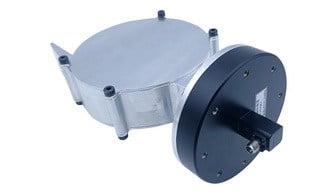
In the quest for unprecedented internet speeds and connectivity, the 5G mmWave antenna emerges as a beacon of innovation. This technological marvel is set to redefine what we perceive as network efficiency, offering a glimpse into the future of wireless communication.
A 5G mmWave antenna is a high-frequency antenna that operates in the millimeter-wave spectrum, typically between 24GHz and 100GHz. Unlike traditional antennas, it enables ultra-fast data transmission rates and significantly increased bandwidth, allowing for the delivery of high-speed internet and support for an array of advanced wireless services. This technology is pivotal in the rollout of 5G networks, offering the capacity to handle the explosive growth in data demand and connect a vast number of devices simultaneously.
Let’s dive deeper into the capabilities and applications of this groundbreaking technology.
What is a Distinguishing Feature of 5G mmWave?
The high-frequency bands used by 5G mmWave technology allow for faster data transmission speeds than previous generations of wireless technology. This means that users can download and upload data at much higher speeds, allowing for quicker access to information and more efficient communication.
The increased speed of 5G mmWave technology also enables the use of bandwidth-intensive applications such as high-definition video streaming, virtual reality, and augmented reality. These applications require a lot of data to be transferred quickly in order to provide a seamless and immersive experience for users.
Another advantage of 5G mmWave technology is its ability to support a larger number of devices simultaneously. This is important as more and more devices become connected to the internet. With 5G mmWave technology, networks will be able to handle the increased demand for connectivity and ensure that all devices can access the internet without experiencing slowdowns or congestion.
5G mmWave technology also offers lower latency than previous generations of wireless technology. Latency refers to the time it takes for data to travel from its source to its destination. With lower latency, users will experience less delay when accessing information or communicating with others. This is particularly important for applications that require real-time communication, such as online gaming, video conferencing, and autonomous vehicles.
In conclusion, 5G mmWave technology provides faster data transmission speeds, increased capacity, lower latency, and improved support for bandwidth-intensive applications. These advantages will enhance the user experience and enable the development of new applications and services that will shape the future of wireless communication.
What is a Benefit of 5G mmWave Technology?
The benefit of 5G mmWave technology is that it increases network capacity and efficiency, resulting in lower latency and the ability to connect many devices. This enables the Internet of Things (IoT) era.
How Does the 5G mmWave Antenna Work?
5G mmWave antennas have evolved to meet the diverse and demanding requirements of next-generation wireless networks. These antennas come in various forms—electrically small and large, low-gain and high-gain—and are often engineered for operation at millimeter wavelengths. In many cases, they incorporate advanced features like beam steering or switching capability to adapt to different environments and user needs.
The antenna consists of multiple small elements that work together to transmit and receive signals. These elements are arranged in an array and can be individually controlled to create a focused beam of radio waves. By adjusting the phase and amplitude of the signal in each element, the antenna can steer the beam in a specific direction.
Beamforming allows the antenna to direct the signal towards the intended receiver, rather than broadcasting it in all directions. This increases the signal strength and improves the overall performance of the communication link. Additionally, beamforming can be used to overcome obstacles and interference, as the antenna can dynamically adjust the beam direction to avoid obstructions.
Phased array technology is utilized to electronically steer the beam without physically moving the antenna. By adjusting the phase of the signal in each element, the antenna can create constructive and destructive interference patterns, causing the beam to steer in a specific direction. This enables the antenna to rapidly switch between different beams to track and maintain a connection with a moving device.
Overall, the 5G mmWave antenna uses beamforming and phased array technologies to create a focused beam of high-frequency signals, optimizing the communication path and enabling faster data transfer rates.These innovations are essential for supporting the high capacity, low latency, and flexibility demanded by modern wireless communication, paving the way for applications such as the Internet of Things (IoT), autonomous vehicles, and immersive virtual experiences.
Recent Developments in 5G mmWave Antenna Technology
As 5G technology continues to evolve, new approaches to millimeter-wave antenna design are emerging to meet the unique challenges of high-frequency wireless communication. Different components within a 5G network require antennas tailored for specific roles—ranging from compact, low-gain solutions perfect for smartphones and IoT devices, to high-gain, beam-steering antennas intended for base stations and dense urban deployments.
Recently, significant advancements include:
- High-Gain Antennas With Beam Switching: Engineers have developed sophisticated lens antennas capable of dynamically switching their beams. These high-gain designs help maximize signal strength and coverage in environments where devices and users are constantly on the move, such as crowded stadiums or city centers. Companies like Samsung and Ericsson are at the forefront, developing innovative lens and phased array antenna systems to address these demands.
- Mass-Produced Printed Antennas: For devices requiring lower gain but needing cost-effective scalability, printed antennas—sometimes known as patch antennas—are gaining traction. These antennas can be manufactured in large volumes using standard PCB fabrication techniques, making them ideal for integration into everyday consumer electronics and IoT devices.
The frequency bands of interest stretch from popular 28 GHz and 38 GHz up to 71–86 GHz and even beyond, as researchers and manufacturers explore new windows for future generations of wireless. Each frequency band brings its own opportunities and challenges, shaping the design and deployment of antennas across the network.
These innovations are crucial for supporting the expanding ecosystem of devices and applications that rely on 5G’s high-speed, low-latency connectivity.
What Are High-Gain Lens Antennas with Beam Switching Capability, and How Are They Used in 5G
High-gain lens antennas are specialized components often used in 5G mmWave systems to maximize signal strength and directivity. These antennas incorporate a lens structure that focuses radio waves into a narrow, powerful beam—much like how a magnifying glass focuses sunlight. The result is a significant increase in the range and clarity of wireless signals, even at the higher frequencies used by 5G networks.
What truly sets these antennas apart is their beam switching capability. Instead of sending out signals in every direction, high-gain lens antennas can rapidly shift their focused beam from one direction to another. This flexibility allows the network to establish and maintain strong connections with multiple devices, even as users move through different locations or as network demands shift throughout the day.
You’ll often find high-gain lens antennas in dense urban environments where there is a need to support a high number of users, such as busy city centers, stadiums, or large venues. By targeting users more precisely and reducing interference, these antennas help ensure reliable, high-speed connections, supporting everything from seamless video streaming to low-latency applications like autonomous driving and real-time collaboration tools.
In summary, high-gain lens antennas with beam switching capability play a critical role in delivering the speed, coverage, and adaptability that define modern 5G networks. Their focused beams and agile signal direction make them essential for managing the complexity of today’s wireless communication landscape.
What’s 5G mmWave Antenna Frequency?
The frequency spectrum of 5G mmWave antennas, typically between 24GHz and 100GHz, is a testament to their high-speed data transmission capability. This range is critical for supporting the growing demand for bandwidth-intensive applications.
What’s the Range of 5G mmWave Antenna?
The range of 5G mmWave antennas is typically between a few hundred meters to a few kilometers. However, the actual range can vary depending on various factors such as the frequency band used, the environment (urban or rural), and the presence of obstacles like buildings or trees. In urban areas, where network densification is possible, the range can be shorter due to the high number of small cells required to provide coverage. In rural areas, where there are fewer obstacles, the range can be longer.
5G mmWave Antenna Types
There are several types of 5G mmWave antennas, including patch antennas, horn antennas, and phased array antennas. Each type has its own advantages and disadvantages, and is suited for specific use cases and environments. It is important to choose the right type of antenna for your specific application to ensure optimal performance.
Beyond these, the world of 5G mmWave antennas is expanding rapidly to meet the diverse requirements of modern wireless systems. For instance, high-gain lens antennas with beam switching capabilities are being developed to support scenarios where precise, directional transmission is crucial—such as in dense urban deployments or point-to-point links. On the other hand, lower gain printed antennas offer the benefit of easy, cost-effective mass production, making them ideal for widespread consumer devices and IoT applications.
The frequencies at which these antennas operate can span from 28 GHz and 38 GHz, up through 58 GHz, 60 GHz, and even beyond to 71–86 GHz and higher. This wide range allows for different antenna designs to be tailored for specific roles within a 5G network, whether high-gain, beam-steering solutions are needed for backhaul and infrastructure, or compact, lower-gain types are better suited for handheld devices.
Selecting the appropriate antenna type not only maximizes system performance but also ensures that the network can support a broad array of applications and deployment scenarios as 5G technology continues to evolve.
What Are Lower Gain Printed Antennas—and Why Are They Ideal for Mass Production?
Lower gain printed antennas are a specific type of antenna designed with compactness and scalability in mind. These antennas, typically crafted using printed circuit board (PCB) technology, are known for their slim profiles and flexibility in shape and size. Due to their flat, lightweight construction, they can be easily integrated into a wide range of devices, from smartphones and wearables to smart home sensors.
Their most significant advantage is suitability for high-volume manufacturing. Because they can be fabricated using standard PCB processes—much like the ones used by electronics giants such as Samsung and Apple—they allow manufacturers to produce large quantities at a lower cost. This makes them an excellent choice for the expanding world of 5G connectivity, where billions of devices will need reliable, efficient antennas.
Printed antennas may not deliver the highest gain compared to other specialty antennas, but their balance of cost-effectiveness, manufacturability, and performance makes them a popular solution for consumer electronics and IoT devices that require seamless 5G integration.
How Do Different Parts of a 5G System Require Different Kinds of Antennas?
Different parts of a 5G system require specialized antennas to meet diverse needs. For instance, base stations in dense urban areas often rely on high-gain phased array antennas, which can direct signals precisely using beamforming technology. These antennas are ideal for handling large numbers of connections and high data traffic within a small area.
On the other hand, devices like smartphones and IoT sensors tend to utilize compact, low-gain antennas. These are designed to fit within the limited space of portable devices while still maintaining reliable connectivity.
Frequency bands also play a significant role in antenna selection. Lower-frequency antennas (below 6GHz) are favored for broader coverage and better penetration through obstacles, making them suitable for suburban or rural deployments. Meanwhile, mmWave antennas operating at higher frequencies (such as 28GHz, 60GHz, or even above 70GHz) excel at delivering ultra-fast data speeds over short distances, which is perfect for hotspots, stadiums, or transportation hubs.
In summary, the unique demands of each 5G deployment area—from city centers to remote towns—call for antennas with distinct characteristics, ensuring efficient coverage, capacity, and performance across the entire network.
Why Is There a Growing Need for Both Small and Large Antennas in 5G?
In the world of 5G, one size definitely doesn’t fit all. The expanding landscape of wireless communication means that antennas—whether small or large—each play essential roles depending on the application.
Electrically small antennas are ideal for compact devices like smartphones, wearables, and IoT sensors, where space is at a premium. These antennas help pack advanced connectivity into gadgets we use every day while keeping designs sleek and portable.
On the other hand, electrically large antennas come into play for infrastructure needs, such as base stations and fixed wireless access points. Larger antennas, especially high-gain types, enable robust coverage over greater distances and support advanced functions like beam steering—key for delivering fast speeds and reliable connections in densely populated urban settings.
The need for both types arises because 5G networks must serve diverse environments—from crowded stadiums and city centers to remote rural communities. By employing a combination of small and large antennas, network providers like Verizon and Ericsson can optimize performance, manage network loads, and ensure strong connectivity everywhere users need it.
Ultimately, the versatility in antenna sizing ensures that 5G technology is equipped to deliver on its promise of high speed, low latency, and massive connectivity—no matter the device or deployment scenario.
What is mmWave Antenna Cover?
mmWave antenna covers are protective enclosures that are designed to shield mmWave antennas from environmental factors such as rain, snow, dust, and other debris. These covers are typically made of materials that are transparent to mmWave frequencies, allowing the antennas to transmit and receive signals without interference. In addition to protecting the antennas, these covers also help to maintain the aesthetics of the surrounding area by concealing the antennas and making them less obtrusive.
What is a 5G mmWave Antenna Used For?
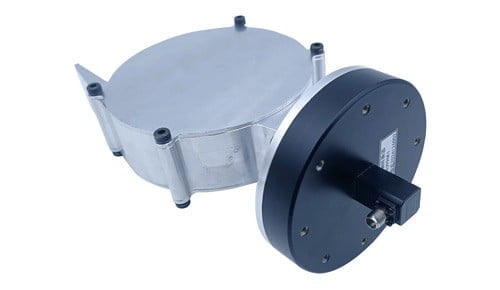
A 5G mmWave antenna is used to transmit and receive signals in the millimeter wave frequency range, which is a key component of 5G networks. These antennas are designed to operate at high frequencies, typically above 24 GHz, and are used to provide high-speed, low-latency connectivity in dense urban areas. They are capable of transmitting and receiving large amounts of data, making them ideal for applications that require high bandwidth, such as video streaming, virtual reality, and autonomous vehicles.
Additionally, 5G mmWave antennas are used for beamforming, a technique that allows for more efficient use of the spectrum and better signal quality by focusing the signal in a specific direction.
Where Shall We Use the 5G mmWave Antenna?
Some specific examples of where to use 5G mmWave antennas include:
1. Smart cities: With the increasing number of connected devices and the need for real-time data processing, 5G mmWave antennas can provide the high-speed and low-latency connectivity required for smart city applications such as traffic management, public safety, and energy efficiency.

2. Stadiums and arenas: These venues often have large crowds of people who want to share their experiences on social media, watch replays, or stream videos. 5G mmWave antennas can handle the high network capacity required to support these activities.

3. Airports and transportation hubs: With the growing number of passengers and the need for efficient operations, 5G mmWave antennas can provide the necessary bandwidth and connectivity for applications such as flight information, baggage tracking, and security systems.

4. Shopping malls and retail stores: As e-commerce continues to grow, physical stores need to provide unique experiences to attract customers. 5G mmWave antennas can enable augmented reality (AR) and virtual reality (VR) applications, personalized shopping experiences, and real-time inventory management.

5. Business districts: With the increasing number of businesses and employees in urban areas, there is a need for high-speed and reliable connectivity for applications such as video conferencing, cloud services, and remote working.

Overall, 5G mmWave antennas are best suited for areas with high-density network demands and where high-speed, low-latency, and high-capacity connectivity is required.
Where is mmWave 5G Available?
mmWave 5G is currently available in select cities in the following countries:
1. United States: mmWave 5G is available in various cities across the United States, including New York City, Los Angeles, Miami, Chicago, and Atlanta.
2. South Korea: South Korea was one of the first countries to adopt mmWave 5G, and it is available in major cities like Seoul.
3. Japan: mmWave 5G is available in several cities in Japan, including Tokyo, Osaka, and Nagoya.
4. Australia: mmWave 5G is available in limited areas in Australia, primarily in major cities like Sydney and Melbourne.
5. United Kingdom: mmWave 5G is available in certain areas of the United Kingdom, including parts of London, Manchester, and Birmingham.
6. Germany: mmWave 5G is available in select areas in Germany, including Berlin, Hamburg, and Munich.
7. Italy: mmWave 5G is available in some cities in Italy, such as Milan, Turin, and Rome.
8. Switzerland: mmWave 5G is available in certain areas of Switzerland, including Zurich, Geneva, and Basel.
9. Saudi Arabia: mmWave 5G is available in limited areas in Saudi Arabia, including Riyadh and Jeddah.
10. United Arab Emirates: mmWave 5G is available in parts of the United Arab Emirates, including Dubai and Abu Dhabi.
It is important to note that the availability of mmWave 5G may vary within these countries, and coverage may be limited to specific neighborhoods or areas within the cities mentioned.
In summary, the use of 5G mmWave antennas is a major advancement in our quest for a highly connected society. As we continue to study and embrace this technology, its ability to transform communication and connectivity is unquestionable. The future of wireless networking depends on fully utilizing 5G mmWave, offering a world where slow speeds and limited capacities are a thing of the past.
 Acehnese
  English
  Spanish
  German
  French (France)
  Korean
  Russian
  Indonesian
  French (Canada)
  Vietnamese
  Armenian
  Albanian
  Assamese
  Amharic
  Czech
Czech  Bulgarian
  Cebuano
  Malayalam
  German (Switzerland)
  Japanese
  Dutch
Dutch