 Skip to content
Explore the essentials of Distributed Antenna Systems (DAS) and how they revolutionize wireless communication across various sectors. Discover its significance in enhancing connectivity in challenging environments.
A DAS antenna, part of a Distributed Antenna System, extends wireless coverage by distributing signals through a network of connected antennas, enhancing connectivity in areas where direct signals are poor or unavailable.
But why does this matter, and how does DAS fit into the evolving landscape of wireless technology?
What is a DAS?
DAS stands for Distributed Antenna System. It is a network of antennas that are strategically placed throughout a building or area to improve wireless coverage and capacity. The antennas are connected to a central hub, which is typically connected to a cellular network, allowing for the distribution of wireless signals to provide coverage in areas where the signal may be weak or non-existent.
DAS is commonly used in large buildings, stadiums, airports, and other areas with high user density. It helps to overcome the limitations of traditional macrocellular networks, which may struggle to provide adequate coverage and capacity in such environments. With a DAS, multiple antennas are strategically placed throughout the area to provide a strong and reliable signal to users. This ensures that everyone within the coverage area can access high-quality wireless services.
What is a BTS Distributed Antenna System?
A BTS Distributed Antenna System (BTS DAS) takes coverage one step further by integrating a complete cellular base station—referred to as BTS (Base Transceiver Station)—directly into the distributed antenna network. You might also see these systems called NodeB for 3G, eNodeB for 4G LTE, or gNodeB for 5G NR technologies.
Unlike simpler DAS setups that typically connect back to the main network via repeaters or off-air connections, a BTS DAS is directly linked to a carrier’s core network, often using dedicated fiber optic connections. This architecture is custom-built for high-demand locations such as packed stadiums, busy airports, or towering office buildings, where reliable, high-capacity wireless service is crucial for thousands of users simultaneously. By bringing the full power of a cellular base station inside, it helps ensure that data speeds, voice quality, and overall connectivity remain strong—even when the crowd is at its largest.
What is a DAS used for?
A DAS (Distributed Antenna System) is used to enhance wireless coverage and capacity in indoor or outdoor environments where cellular signals are weak or congested.

It consists of a network of antennas that are strategically placed throughout a building or venue to distribute and amplify cellular signals. This allows for improved call quality, faster data speeds, and better overall wireless connectivity for users within the coverage area. DAS systems are commonly used in places such as airports, shopping malls, hospitals, office buildings, and sports stadiums, among others.
In what scenarios is a BTS DAS typically used?
A Base Transceiver Station (BTS) DAS is designed for environments where there is an exceptionally high concentration of users who require robust and reliable wireless service. These systems function by deploying multiple antennas connected to a central base station, much like miniaturized versions of traditional cellular towers that are spread throughout a facility.
You’ll typically find BTS DAS deployed in:
- Large venues with dense crowds: Stadiums hosting concerts or sporting events, convention centers, or bustling airports, where thousands of users need uninterrupted connectivity at the same time.
- High-rise buildings and skyscrapers: Urban office buildings and hotels, where thick walls and multiple floors can weaken cellular signals from outside towers.
- Hospitals and major healthcare facilities: To ensure strong and consistent wireless communication for staff, patients, and visitors throughout every level of the building.
- Underground or partially enclosed environments: Subways, tunnels, and shopping malls, which are notorious for blocking external wireless signals.
These scenarios demand a high-capacity solution because they cannot be served adequately by traditional macrocell towers alone. By connecting directly to the carrier’s core network, often via dedicated high-speed fiber links, a BTS DAS ensures all users enjoy seamless call quality and fast data speeds, even in the most challenging settings.
In what environments is an off-air DAS most suitable?
Off-air DAS (Distributed Antenna System) installations are ideally suited for buildings or areas that already receive strong external cellular signals but struggle with indoor coverage due to structural barriers. Common examples include high-rise office complexes, apartment buildings, and dense urban properties where the existing outdoor signal is excellent, but materials like concrete, glass, or metal impede signal strength indoors. By tapping into the available outdoor signals and distributing them efficiently throughout the building, an off-air DAS ensures reliable connectivity for every user within the premises.
What is the frequency of DAS cellular?
DAS systems are able to operate on a broad spectrum of frequencies, ranging from 600 MHz to 6 GHz. This flexibility enables them to support a variety of networks, including cellular, Wi-Fi, and emergency service networks. As a result, DAS systems can be tailored to meet the unique requirements of each venue.
How does DAS support multiple cellular service providers?
One of the key advantages of a DAS is its ability to serve customers from different cellular carriers all at once. By leveraging mainly passive components like splitters, couplers, and coaxial cabling, a passive DAS can distribute signals from various service providers throughout the same network of antennas. This means users on competing networks—like AT&T, Verizon, and T-Mobile—can all enjoy strong, reliable coverage within the same venue, without interference.
Whether you’re at a busy airport or a packed stadium, a well-designed DAS ensures seamless connectivity regardless of which carrier your device relies on. This versatility makes DAS an essential solution for multi-tenant buildings and public spaces where user diversity is high.
What is 5G DAS?
DAS, or Distributed Antenna Systems, is a network of antennas that are strategically placed throughout a building or area to enhance wireless coverage. These systems are commonly used in large venues like stadiums, airports, and shopping malls to ensure that users have a strong and reliable wireless signal.

With the rollout of 5G, DAS systems are being upgraded to support the increased data rates and capacity that come with this new technology. 5G DAS systems utilize advanced antennas and signal processing techniques to provide the necessary coverage and capacity for ultra-fast internet speeds and connectivity in areas with high user density.
One of the main challenges in deploying 5G DAS systems is the need for more antennas. 5G operates on higher frequency bands, which have shorter wavelengths and require more antennas to provide the same coverage as lower frequency bands. This means that DAS systems need to be denser and have more antennas to provide the same level of coverage and capacity as previous generations.
To address this challenge, 5G DAS systems often use smaller, more compact antennas that can be placed in areas with limited space. These antennas are typically mounted on walls, ceilings, or other structures to ensure comprehensive coverage throughout a building or area.
In addition to the physical changes, 5G DAS systems also require upgrades to the underlying infrastructure. This includes the fiber optic cables that connect the antennas to the central equipment, as well as the signal processing equipment that is used to distribute the wireless signals.
Overall, 5G DAS systems are a critical component of the next-generation wireless networks. They provide the necessary coverage and capacity to support the ultra-fast speeds and connectivity that 5G promises, making them essential for delivering a seamless wireless experience in densely populated areas.
What is a hybrid DAS and how does it balance performance and cost?
A hybrid DAS combines the strengths of both active and passive distribution methods to optimize wireless coverage while controlling costs. In this setup, an active system—often using fiber optic cables—delivers the signal across larger distances, such as between different floors of a building. Once the signal reaches its designated floor, a passive distribution network takes over, using coaxial cables to route the signal to multiple antennas throughout the area.
This approach allows venues to benefit from the signal quality and scalability of active DAS where it’s needed most, while leveraging the simplicity and lower expense of passive components for local coverage. Hybrid DAS is especially popular in multi-story buildings, where it isn’t practical or cost-effective to run active components directly to every antenna. By strategically mixing both systems, facility managers can achieve robust wireless performance without overspending on infrastructure.
What is a digital DAS and how does it combine with existing data networks?
A digital DAS, or Distributed Antenna System, is a specific type of active DAS that takes a unique approach to transmitting signals. Instead of sending traditional radio frequency (RF) signals directly through cables, a digital DAS converts the RF signals into digital data packets. This digital format allows the system to take full advantage of existing IT infrastructure—such as fiber optic or Ethernet networks—already installed in many modern buildings.
By integrating with a building’s current data network, digital DAS can streamline signal distribution and make deployment more efficient. The digital packets travel over the same cabling used for internet and internal communications, reducing the need for additional, dedicated cabling and simplifying the setup. This not only saves space but can also lower installation and maintenance costs. Furthermore, digital DAS solutions often provide more flexible management and monitoring options, as the digital signals are easier to route, split, and troubleshoot using network-based tools.
In essence, digital DAS brings together the reliability of traditional DAS with the flexibility of modern data networks, making it a practical choice for facilities looking to support robust wireless performance without overhauling their entire infrastructure.
How does a DAS antenna work?
A DAS antenna works by receiving a signal from a central hub and transmitting it to the desired area. The central hub, often located on the roof of a building or in a nearby equipment room, receives the signal from a source such as a cell tower. The hub then distributes the signal through a series of coaxial cables to a network of antennas strategically placed throughout the venue.
The antennas are typically installed on the ceilings, walls, or other locations where they can provide optimal coverage. They are connected to the hub via the coaxial cables and are designed to transmit the signal to the desired area.
The antennas in a DAS network can be either passive or active. Passive antennas simply receive the signal from the hub and transmit it to the desired area without any amplification. Active antennas, on the other hand, include built-in amplifiers that boost the signal before transmitting it.
Types of DAS Signal Distribution
Distributed antenna systems can distribute their signals in several ways, each tailored to the needs of the environment:
- Passive DAS: In this approach, the radio signal is picked up in one location and transported over coaxial cables, often with the help of amplifiers. Components like RF couplers, splitters, and taps divide the signal to reach different antennas throughout the building. Passive DAS systems primarily use passive components, making them suitable for supporting multiple cell service providers at once. However, they’re best used for smaller or mid-sized venues, since longer cable runs can degrade the signal.
- Active DAS: Here, the RF signal is converted into another signal type—such as optical or Ethernet—for transmission over longer distances, then converted back to RF before reaching the antenna. Active DAS setups require more advanced (and often more expensive) equipment but allow for longer cable runs and greater flexibility in expanding the system. Fiber optic or Ethernet cabling is common in these installations, which are ideal for large buildings or campuses.
- Digital DAS: This is a subtype of active DAS that converts RF signals into digital packets. Digital DAS can be integrated with existing data networks, making it a flexible solution in modern buildings.
- Hybrid DAS: Combining elements of both active and passive approaches, hybrid DAS systems might use fiber optic cables to carry signals to each floor and then distribute them passively to antennas on that floor. This method balances performance and cost, making it suitable for complex or multi-story environments.
By strategically placing the antennas throughout the venue and selecting the appropriate distribution method, a DAS network ensures consistent coverage and capacity. This means that users within the venue can have reliable and fast wireless connectivity, even in areas with high user density or challenging building materials that can block signals.
Cost and Expansion: Passive vs. Active DAS
When considering the cost and scalability of Distributed Antenna Systems, it’s important to compare passive and active DAS architectures.
Passive DAS systems use coaxial cabling and passive hardware—think couplers, splitters, and taps—to relay signals from a central amplifier out to each antenna. Because most of the components used are relatively simple, the upfront equipment costs tend to be lower. However, this approach has its limitations: coaxial cables are bulky and can only extend so far before signal loss becomes an issue. As a result, passive DAS is generally most effective for smaller buildings where cable runs are short and straightforward.
On the other hand, active DAS takes a different approach. Here, the radio signal is converted and carried over fiber optic or Ethernet cables, then converted back to a radio signal at each antenna endpoint. While active DAS components—like signal processors and remote units—are more expensive and require greater investment in both setup and ongoing maintenance, they come with a big advantage: expansion. Fiber optic cabling is lighter and allows for much longer cable runs without the same loss of signal, making it possible to cover larger or more complex facilities. Active DAS systems are also easier to scale up if your coverage needs grow over time, as adding new antenna locations is less constrained by distance or cable bulk.
In short, passive DAS keeps costs down for smaller footprints, but doesn’t scale well for more ambitious or sprawling deployments. Active DAS carries a higher price tag, but offers flexibility, reach, and future-proofing for buildings that demand more extensive or adaptable coverage.
What are the main considerations when designing a distributed antenna system?
When planning a Distributed Antenna System (DAS), several key factors come into play to ensure optimal wireless performance. One of the first steps is determining where the main signal will originate—this could be from an on-site cell tower, an external donor antenna, or a direct connection to a carrier’s network.
Next, the right method for distributing that signal throughout the venue must be selected. This involves choosing between various architectures, such as passive, active, or hybrid DAS solutions, each impacting factors like signal strength, coverage area, and installation complexity.
Additional considerations include:
- Coverage Needs: Analyzing the size, layout, and construction materials of the venue to identify potential dead zones or areas with heavy user density.
- Capacity Requirements: Understanding the number of expected users and devices to ensure the system can handle peak demand, especially in venues like airports or convention centers.
- Future-Proofing: Designing the system for scalability and compatibility with newer technologies, such as future 5G upgrades or integration with Wi-Fi networks.
- Aesthetic and Structural Constraints: Selecting antennas and cabling paths that minimize visual impact and work around the building’s architectural features.
- Regulatory Compliance: Making sure the design meets local building codes and safety regulations, particularly for emergency communication coverage.
By carefully weighing these considerations, a well-designed DAS delivers robust and reliable wireless coverage tailored to the unique needs of each environment.
How can a hybrid DAS be used in a multi-floor building?
A hybrid Distributed Antenna System (DAS) offers a flexible solution for delivering strong wireless coverage across multiple floors of a building. In a typical setup, an active DAS component uses fiber optic links to transmit signals from the central hub to different floors. Once the signal arrives on each floor, passive components—such as coaxial cables—distribute it efficiently to multiple antennas placed throughout that level.
This approach combines the strengths of both active and passive DAS: fiber optics provide robust signal transport over long distances between floors, while passive cabling keeps installation costs manageable within each floor. The end result is consistent, reliable coverage from the lobby to the top floor, making hybrid DAS an effective and scalable choice for hotels, office towers, and large campuses alike.
Types of DAS Signal Sources
When it comes to providing wireless coverage throughout a venue, a DAS system needs a reliable signal source to distribute. There are a few main ways to supply this signal, each suited for different scenarios:
Off-Air Signal Source:
This approach uses an antenna—often installed on the roof—to capture signals directly from nearby cell towers. The captured signal is then delivered into the DAS and distributed throughout the building. Off-air DAS setups are often straightforward and cost-effective, requiring minimal involvement from cellular carriers. However, their effectiveness depends on the quality of the outdoor signal, making them best suited for urban environments with strong carrier presence. If the existing signal outside the building is weak, off-air options may struggle to provide adequate coverage inside.
Small Cell Integration:
In locations where outdoor coverage is limited or non-existent, integrating small cells into the DAS can bridge the gap. Small cells, such as microcells, picocells, or even femtocells, generate their own wireless signals and connect back to the carrier’s network, usually via a high-speed internet connection. This approach is ideal for rural areas, remote corners of large buildings, or any space where outside signals can’t reliably reach. While adding small cells can increase complexity and may require carrier cooperation, it delivers dedicated capacity and coverage where it’s needed most.
Base Transceiver Station (BTS) Source:
For the highest levels of demand—think crowded stadiums, high-rise office towers, or airports—a DAS can receive its signal from a dedicated base transceiver station. This setup involves deploying a cellular base station (sometimes referred to as NodeB for 3G, eNodeB for 4G LTE, or gNodeB for 5G NR) that connects directly to the carrier’s core network using a dedicated backhaul, such as fiber optics. While these deployments require coordination with carriers and significant infrastructure, they offer robust coverage and capacity for extremely dense environments.
By choosing the right signal source—whether off-air, small cell, or BTS—a DAS can be tailored to address the unique coverage and capacity needs of any venue.
What is an off-air distributed antenna system and how does it work?
An off-air distributed antenna system (off-air DAS) is a specific type of DAS that captures existing wireless signals from outside a building and redistributes them inside, without generating any new signal. The process begins with a large donor antenna—usually mounted on the roof—picking up wireless signals from nearby cellular towers. These signals are then fed through cables to a series of smaller antennas strategically placed throughout the building.
This setup is especially useful in urban offices, apartments, or commercial spaces where cellular signals struggle to penetrate walls or dense construction materials. Rather than negotiating extensively with mobile carriers, these systems simply rebroadcast what’s already available outside—making them relatively straightforward and cost-effective to deploy. Because off-air DAS doesn’t create new cellular service but repeats existing signals, it can work across various carriers without the need for customization.
However, it’s important to note that off-air DAS has its limitations. In rural areas where the outdoor cell signal is weak, or in extremely crowded venues where the incoming capacity isn’t enough, off-air DAS may not deliver the best performance. Still, for many urban and suburban environments, it offers a practical way to extend reliable wireless coverage indoors.
What is the range of DAS antennas?
The range of a DAS antenna can vary widely depending on its design and the environment it’s deployed in. Generally, DAS networks are customized to the specific coverage requirements of a venue, providing tailored solutions that ensure optimal performance.
In indoor environments, such as stadiums or office buildings, the range of a DAS antenna can typically cover a radius of 100-200 feet. However, in larger outdoor environments, such as campuses or urban areas, the range can extend up to several miles.
DAS Antenna Types
There are several types of DAS (Distributed Antenna System) antennas, each with its own characteristics and applications. Here are some common types:
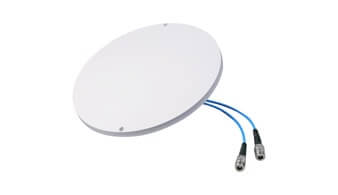
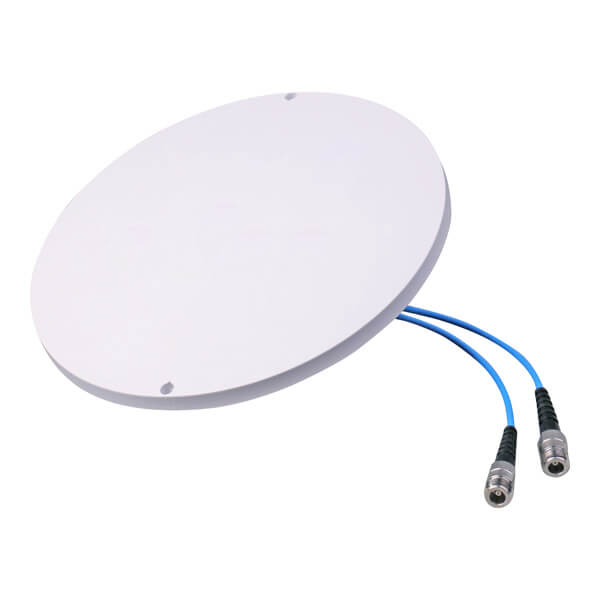
1. Dome Antennas or called Omni Ceiling Antennas: These antennas have a dome-shaped design and are typically used for indoor DAS deployments. They provide 360-degree coverage and are often mounted on ceilings or walls. They are commonly used in hotels, airports, and other indoor venues.
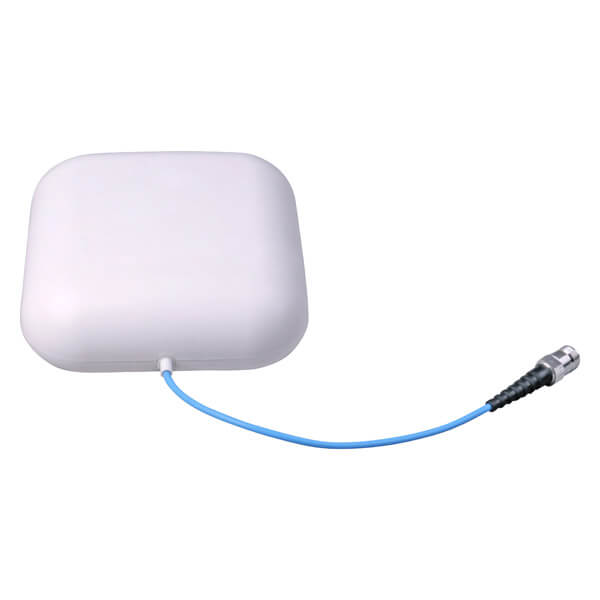
2. Panel Antennas: These antennas have a flat, rectangular shape and are designed for indoor or outdoor use. They provide a narrow, focused beam of signal in a specific direction, making them ideal for targeting specific areas or sectors. They are commonly used in office buildings, stadiums, and other large indoor spaces.
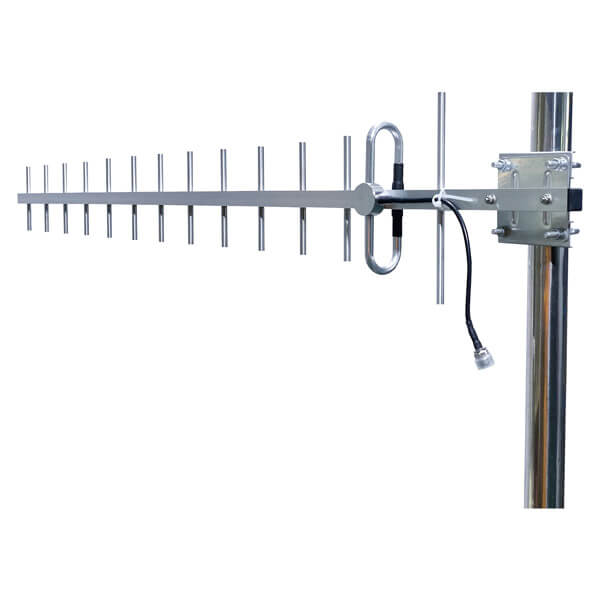
3. Yagi Antennas or called Log Periodic Antennas: These antennas are highly directional and have a long, narrow shape. They are typically used for outdoor DAS deployments to provide long-range coverage in a specific direction. They are commonly used in rural areas or remote locations where the signal needs to be amplified over long distances.
4. Whip Antennas: These antennas are commonly used in vehicle-mounted DAS systems, such as in police cars or commercial vehicles. They are typically short and flexible, allowing them to withstand movement and vibration while maintaining a strong signal.
These are just a few examples of the many types of DAS antennas available. The choice of antenna depends on the specific requirements of the DAS deployment, including coverage area, signal strength, and environmental factors.
What are the advantages and disadvantages of using DAS?
Advantages of using DAS (distributed antenna system):
1. Enhanced coverage: DAS improves wireless coverage, especially in large buildings or areas with poor signal strength. It helps eliminate dead zones and provides better signal quality throughout the coverage area.
2. Increased capacity: DAS can handle a large number of simultaneous connections, which is crucial in crowded areas such as stadiums, airports, or shopping malls. It helps prevent network congestion and ensures a reliable connection for all users.
3. Scalability: DAS can be easily expanded or upgraded to accommodate increasing user demands. Additional antennas or remote units can be added to the system without significant disruption or downtime.
4. Better signal quality: DAS reduces signal interference and improves call quality, data transfer rates, and overall network performance. It provides a more consistent and reliable connection for users.
5. Flexibility: DAS supports multiple wireless technologies and can be used for various applications, including voice, data, and video transmission. It can also support different frequency bands and can be tailored to specific network requirements.
Passive DAS: How It Works
A commonly used type is the passive DAS, which operates by picking up radio signals in one location and transmitting them over a wire to another location. This is typically done using an amplifier and coaxial cables, while radio frequency (RF) couplers, splitters, and taps divide the signal to the different antennas throughout the coverage area.
Passive DAS primarily relies on passive components, making it capable of supporting all cell service providers simultaneously. However, since it depends solely on these passive elements, it may not be suitable for very large distributions or long cable runs, as signal loss can occur. Additionally, designing and installing a passive DAS requires specialized knowledge of RF signals and components, adding a layer of complexity to the process.
Disadvantages of using DAS (distributed antenna system):
1. Cost: Implementing a DAS can be expensive, especially for large-scale deployments. It involves the installation of multiple antennas, cables, and other equipment, which can significantly increase the overall cost.
2. Complex installation: Setting up a DAS requires careful planning, design, and installation. It can be a time-consuming and complex process, involving coordination with multiple stakeholders, such as building owners, carriers, and regulatory authorities.
3. Maintenance challenges: DAS requires regular maintenance and monitoring to ensure optimal performance. Identifying and resolving issues, such as faulty cables or antennas, can be challenging, especially in large and complex systems.
4. Limited control: In a DAS, the service provider or carrier has control over the system, including coverage areas, signal strength, and capacity. Users may have limited control over the network and may not be able to make changes or improvements according to their specific needs.
5. Regulatory considerations: Deploying a DAS may require compliance with various regulations and obtaining permits or licenses from regulatory authorities. This can add complexity and time to the implementation process.
What are the advantages and limitations of off-air DAS?
Advantages of off-air DAS (Distributed Antenna System):
- Cost-effective deployment: Off-air DAS is generally less expensive to install compared to other solutions since it leverages existing cellular signals instead of requiring direct connections to carrier networks or expensive base station equipment.
- Fast and straightforward installation: Because this system simply captures and rebroadcasts available cellular signals, the setup process is much simpler. It involves mounting a donor antenna—often on the roof—to collect signals from nearby cell towers, which are then distributed throughout the building using internal antennas. This means less coordination is needed with cellular providers, making project timelines shorter.
- Carrier-neutral operation: Off-air DAS is inherently agnostic, providing coverage for any carrier whose signal can be received by the donor antenna. This flexibility can be especially useful in environments with a mix of users across different networks.
Limitations of off-air DAS:
- Dependence on existing outdoor signal strength: The performance of an off-air DAS is directly tied to the strength and quality of the signal received by the donor antenna. If the external cellular signal is weak—such as in rural areas or isolated buildings—coverage inside will also be limited.
- Potential coverage and capacity constraints: In locations with high device density—like large offices or residential complexes—an off-air DAS can be limited by the capacity of the incoming signal. It cannot amplify network capacity, only propagate what’s already available.
- Regulatory compliance: Off-air DAS typically falls under regulatory oversight (such as by the FCC in the U.S.), requiring adherence to guidelines for operation to avoid interfering with carrier networks. Obtaining the necessary permissions may add complexity.
Off-air DAS is a suitable option for augmenting indoor coverage in buildings that already enjoy strong outdoor cellular signals but suffer from signal attenuation due to construction materials or architectural layout. However, it may not solve issues in remote or congested environments where the external signal itself is insufficient or overloaded.
What is the difference between DAS and small cells?
DAS stands for Distributed Antenna System, which is a network of antennas that are connected to a central hub to distribute and enhance cellular signals. DAS is commonly used in large buildings, stadiums, airports, and other venues where there is a high demand for cellular coverage.
Small cells, on the other hand, are low-powered cellular base stations that are typically used to enhance coverage and capacity in smaller areas. Small cells can be installed on street lights, utility poles, or buildings to provide targeted coverage in specific areas, such as city blocks or neighborhoods.
In summary, DAS is used for large-scale coverage in venues and outdoor areas, while small cells are used for targeted coverage in smaller areas.
Deploying a small-cell DAS (Distributed Antenna System) involves several unique complexities and considerations compared to other DAS types. Instead of simply capturing and rebroadcasting an existing cellular signal, a small-cell DAS generates its own cellular signal on-site. This is typically done by using carrier-provided equipment that communicates directly with the carrier’s network via a standard high-speed internet connection.
Key requirements and challenges include:
- Carrier Agreements: Installing a small-cell DAS requires direct cooperation with network carriers such as AT&T, Verizon, or T-Mobile. These agreements are essential because the system must integrate securely and seamlessly with the carrier’s core network to provide coverage.
- High-Bandwidth Internet: Small-cell DAS units rely on robust, high-speed internet connectivity to backhaul data and maintain quality of service. Insufficient bandwidth can result in poor performance or interruptions.
- Deployment Cost and Complexity: Compared to off-air DAS solutions—which simply retransmit available signals—small-cell DAS deployments are typically more expensive and technically involved. This is due to equipment costs and the need for careful configuration to prevent interference with other cellular infrastructure.
- Site Planning: Identifying optimal installation points for each small cell is crucial, especially in environments with challenging layouts or signal obstructions. Each unit must be positioned to maximize coverage while minimizing overlap and interference.
- Ongoing Support: Maintenance and monitoring are continuous needs. Issues such as connectivity drops, bandwidth throttling, or changes in carrier infrastructure may require quick adjustment.
In summary, while small-cell DAS systems are highly effective for extending coverage to areas with poor or nonexistent cellular reception—such as rural locations or deep interior spaces—they require a more involved setup process, greater upfront investment, and close cooperation with service providers. This added complexity is balanced by the ability to deliver reliable, targeted coverage where traditional solutions fall short.
When should you use a small-cell DAS instead of an off-air DAS?
Small-cell DAS is best suited for locations where off-air DAS solutions aren’t practical—specifically, areas with little to no existing cellular coverage. If your building sits in a rural region, a service dead zone, or simply far from any strong carrier signals, small-cell DAS can step in to fill the coverage gap.
Unlike off-air DAS, which pulls in signals from nearby cell towers, a small-cell DAS generates its own signal using carrier-provided equipment—think of it as bringing the tower inside. This setup connects back to the carrier’s network via a high-speed internet connection, creating reliable service where none previously existed.
However, keep in mind that small-cell DAS deployments:
- Typically require cooperation and agreements with your wireless carrier (like Verizon, AT&T, or T-Mobile).
- Need robust, high-bandwidth internet to support signal backhaul.
- Can be more complex and expensive to install compared to off-air solutions.
In short, when your space is outside the reach of strong existing signals—or you need tightly controlled, carrier-grade coverage—a small-cell DAS is the way to go. For locations with decent outdoor coverage but indoor dead spots, an off-air DAS may suffice and could be easier on your budget.
Overall, DAS antennas are crucial for modern wireless networks, helping to overcome connectivity obstacles and ensuring the smooth functioning of mobile and emergency services. With the continued development of technology, the significance of DAS antennas in providing strong and effective wireless coverage will only grow, making them a vital factor for any location that needs dependable communication options.
 Acehnese
  English
  Spanish
  German
  French (France)
  Korean
  Russian
  Indonesian
  French (Canada)
  Vietnamese
  Armenian
  Albanian
  Assamese
  Amharic
  Czech
Czech  Bulgarian
  Cebuano
  Malayalam
  German (Switzerland)
  Japanese
  Dutch
Dutch