 Skip to content
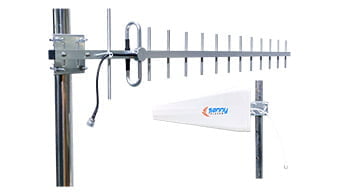
Are you in need of a powerful antenna to boost your Wi-Fi signal or improve your 4G reception? If so, you may have come across two popular options: the Yagi antenna and the log-periodic antenna. Both of these antennas are designed to enhance signal strength and range, but they do so in slightly different ways. In this article, we will compare the Yagi antenna and the log-periodic antenna to help you determine which one is right for your needs.
The Yagi antenna is a highly directional antenna that is designed to receive and transmit signals in a specific direction. It is ideal for situations where you want to focus your signal in a particular area. The log-periodic antenna, on the other hand, is a multi-directional antenna that can receive and transmit signals from multiple angles simultaneously. It is ideal for situations where you want to pick up signals from multiple sources or in multiple directions.
While both antennas are often used in similar environments, their internal operation differs significantly. With a log-periodic antenna, only the elements corresponding to the operating frequency are actively involved at any given moment, allowing for broad frequency coverage and versatility. In contrast, a full Yagi antenna utilizes all its directors and reflectors together, relying on the combination of its oscillator and reflector array to maximize performance within a narrower frequency band.
This distinction makes the Yagi antenna perfect for applications requiring strong, focused reception—such as targeting a distant broadcast tower—while the log-periodic antenna excels in scenarios where flexibility across a range of frequencies and directions is essential.
Now that we have a basic understanding of how the Yagi antenna and the log-periodic antenna work, let’s compare them in a few key areas to help you make an informed decision.
What is a Yagi Antenna?
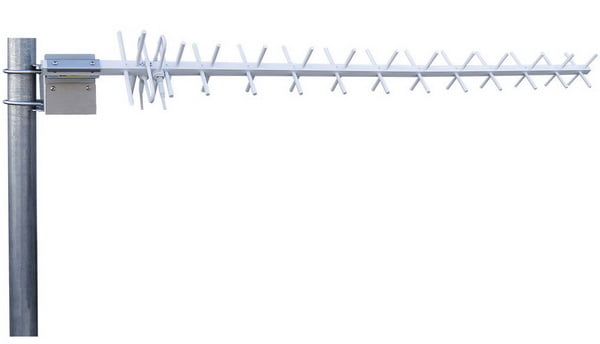
The Yagi antenna, also known as a Yagi-Uda antenna, is a directional antenna that was invented by Japanese engineer Hidetsugu Yagi and his colleague Shintaro Uda in 1926. It consists of a single driven element (typically a dipole or folded dipole) and several passive elements (usually straight rods) that are arranged in a specific pattern. The driven element is connected to a transmitter or receiver, while the passive elements serve to direct and focus the signal.
What are the benefits of using a Yagi antenna?
The Yagi antenna offers several distinct advantages that make it a popular choice for boosting signal strength in specific directions:
- High Gain for Targeted Reception: Thanks to its directional design, the Yagi antenna excels at focusing signal energy in a particular direction. This results in stronger reception and transmission, especially over longer distances.
- Excellent Performance in Weak Signal Areas: If you’re located far from a signal source or dealing with low signal environments, a Yagi antenna can help pull in distant signals that other antennas may miss.
- Simple Installation and Compact Design: Yagis are typically lightweight and straightforward to mount—often just a small, simple antenna on your rooftop can dramatically enhance your signal quality.
- Customizable to Your Needs: There is a wide range of Yagi antennas available, including models tailored for specific frequency ranges or applications. This flexibility means you can select a solution that fits your exact requirements.
- Ideal for Focused Applications: These antennas are commonly used in emergency communication systems, amateur (ham) radio, and any scenario where you need to isolate or concentrate on a few select frequencies for maximum performance.
- Minimized Interference: By narrowing the reception angle, a Yagi antenna can help reduce interference from unwanted signals coming from other directions.
Now, let’s take a closer look at the log-periodic antenna and how its features set it apart from the Yagi design.
What is a Log-periodic Antenna?
The log-periodic antenna, also known as a log-periodic dipole array or LPDA, is a broadband antenna that was invented by American electrical engineer Dwight Isbell and his colleague Raymond DuHamel in 1958. Unlike the Yagi antenna, which is a directional antenna, the log-periodic antenna is a multi-directional antenna that can receive and transmit signals from multiple angles simultaneously. It consists of a series of dipole elements that are spaced at specific intervals and increase in size as they move away from the center.
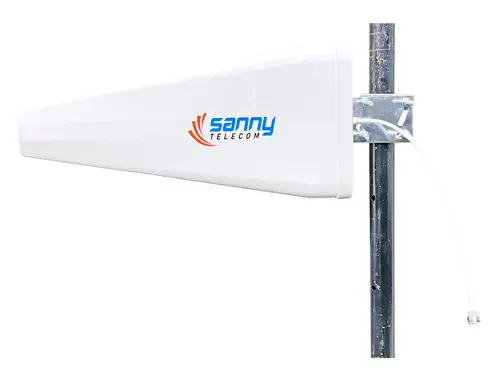
A distinctive feature of the log-periodic antenna is its unique structure: it combines multiple dipole elements, each one slightly longer than the previous, resulting in a characteristic triangular or “fan” shape. This deliberate arrangement allows the antenna to operate effectively across a wide range of frequencies, making it a true broadband solution. The various dipole elements of different lengths enable the LPDA to emit and receive signals at different frequency bands, with specific elements becoming active depending on the frequency in use. This design is especially useful when you need reliable performance for applications such as wideband TV reception, amateur radio, or scientific measurement setups, where flexibility across multiple frequencies is crucial.
Advantages of Using a Log-Periodic Antenna
So, why might you choose a log-periodic antenna over other options? Here are a few reasons why the log-periodic design stands out:
Broadband Performance
One of the key strengths of the log-periodic antenna is its ability to cover a wide range of frequencies. Unlike more narrowly tuned antennas, the log-periodic antenna maintains reliable performance across broad frequency bands, making it an excellent fit for applications like TV reception, UHF, VHF, and even HF communication. If you need one antenna to handle multiple frequencies without constant adjustments, the log-periodic is hard to beat.
Flexible Design and Form Factors
Log-periodic antennas come in many shapes and sizes, allowing for versatile installation options. You’ll find compact models for urban rooftops and larger arrays for more demanding industrial settings. This flexibility makes them popular in both residential and commercial installations, from home entertainment systems to professional communication networks.
Simple to Set Up and Use
Thanks to their straightforward design, log-periodic antennas are easier to install and use than many other antennas with similar performance. There’s no need for specialized tuning equipment or complex alignment procedures—just mount the antenna and you’re ready to go.
Versatile Applications
Beyond television and radio, log-periodic antennas are commonly used to improve cell phone reception in areas with weak signals, to enhance two-way radio communication, and in various scientific and research settings. Their broad bandwidth and reliable performance make them a go-to choice in many fields.
With these advantages in mind, a log-periodic antenna offers a practical solution when you need one antenna to support multiple communication needs, without sacrificing performance or ease of use.
Common Shapes and Forms of Log-periodic Antennas
Log-periodic antennas come in a range of shapes to suit different applications and installation needs. The most frequent design you’ll encounter is the classic log-periodic dipole array (LPDA), which features a set of metal elements arranged in a distinctive, tapered “fan” pattern along a boom. These elements vary in length and spacing, giving the antenna its unique appearance and broad frequency coverage.
You’ll also find log-periodic antennas designed for outdoor use, often mounted on masts for TV reception, wireless communication, or scientific measurement. Some models feature ruggedized construction for harsh environments, while others come with compact, lightweight booms that fit easily in tighter spaces or for portable setups.
For specialized tasks, like EMC (electromagnetic compatibility) testing and broadband measurement, log-periodic antennas are sometimes available in planar or printed circuit board (PCB) versions as well. No matter the configuration, their adaptable structure makes them a strong choice when wide frequency range and consistent performance are required.
Directionality
One of the main differences between the Yagi antenna and the log-periodic antenna is their directionality. The Yagi antenna is a highly directional antenna that is designed to receive and transmit signals in a specific direction. This makes it ideal for situations where you want to focus your signal in a particular area, such as when you are trying to pick up a distant Wi-Fi signal or aim your TV antenna at a specific broadcast tower.
Beyond its focused directionality, the Yagi antenna is especially valued for its high gain at its optimal frequency. It operates on a narrow frequency range, making it a top choice for applications where selectivity is important—think radio communications, public safety systems, and locations where only a few cellular frequencies are needed.
You’ll often see Yagi antennas used in areas with weak signals, where maximizing reception is crucial. Their design allows even a relatively simple rooftop installation to provide a significant signal boost. Additionally, Yagi antennas are available in customized forms, allowing users to tailor them for specialized setups or environments.
In summary, the Yagi antenna is best suited for scenarios that demand strong signal focus, high gain, and reliable performance within a targeted frequency range.
On the other hand, the log-periodic antenna is a multi-directional antenna that can receive and transmit signals from multiple angles simultaneously. This makes it ideal for situations where you want to pick up signals from multiple sources or in multiple directions, such as when you are trying to receive signals from multiple Wi-Fi routers or pick up TV signals from different broadcast towers.
Frequency Range
Another important factor to consider when choosing between a Yagi antenna and a log-periodic antenna is the frequency range that each antenna is designed to operate in.
A Yagi antenna is typically designed to operate within a narrow frequency range, such as the UHF or VHF band. This means that it is optimized to receive and transmit signals within a specific range of frequencies. On the other hand, a log-periodic antenna is designed to operate within a wide frequency range. This means that it can receive and transmit signals across a broad range of frequencies. If you want strong, focused signals on a single frequency band—such as for a specific TV broadcast channel or a Wi-Fi router operating on a fixed band—the Yagi antenna excels due to its directional nature and higher gain.


On the other hand, a log-periodic antenna is designed to operate within a wide frequency range. This means that it can receive and transmit signals across a broad spectrum of frequencies, making it a versatile choice for environments where signal sources may vary or span multiple bands. So, if you need an antenna that can pick up signals across a wide range of frequencies, such as the entire UHF/VHF or https://www.sannytelecom.com/products/4g-lte-5g-das-directional-panel-antennas/, then a log-periodic antenna may be the better option.
If you need an antenna that can pick up signals within a specific frequency range, such as the frequency range used by your Wi-Fi router or TV broadcast tower, then a Yagi antenna may be the best choice. However, if you need an antenna that can pick up signals across a wide range of frequencies, a log-periodic antenna may suit your needs better.
When choosing between these two options, it’s also worth considering additional factors such as the working process, typical applications, and the types of components each antenna uses. For instance, Yagi antennas are often preferred for point-to-point connections or when targeting a single transmitter, while log-periodic antennas are ideal when you want to cover multiple sources or frequencies with a single device.
If you’re still unsure which antenna is right for your situation—whether for commercial or residential use—it’s a good idea to consult with antenna specialists or review trusted resources from established manufacturers like Televes or Winegard. Many manufacturers provide detailed documentation and support to help you match the right antenna to your needs.
Size and Form Factor
The size and form factor of an antenna can also play a role in your decision-making process. Yagi antennas are typically larger and bulkier than log-periodic antennas. This is because they have more elements and are designed to focus the signal in a specific direction. As a result, they may not be the best choice if you have limited space or need a more compact antenna. On the other hand, log-periodic antennas are typically smaller and more compact than Yagi antennas. This makes them a good choice if you have limited space or need a more portable antenna.
Additionally, the form factor of the antenna can also affect its performance. Some antennas are designed to be mounted on a pole or mast, while others are designed to be mounted on a wall or window. The form factor of the antenna should be considered based on your specific installation requirements and limitations.
In summary, when choosing an antenna, it is important to consider the size and form factor. Yagi antennas are larger and bulkier, while log-periodic antennas are smaller and more compact. The form factor of the antenna should also be considered based on your specific installation requirements.
Summary
In conclusion, both the Yagi antenna and the log-periodic antenna are capable of enhancing signal strength and range. However, they do so in slightly different ways. The Yagi antenna is a highly directional antenna that is designed to receive and transmit signals in a specific direction. It is ideal for situations where you want to focus your signal in a particular area.
The log-periodic antenna, on the other hand, is a multi-directional antenna that can receive and transmit signals from multiple angles simultaneously. It is ideal for situations where you want to pick up signals from multiple sources or in multiple directions.
Additionally, the Yagi antenna is typically designed to operate in a narrow frequency range, while the log-periodic antenna is designed to operate in a wide frequency range. Finally, Yagi antennas are typically larger and bulkier than log-periodic antennas, which may be a consideration if you have limited space or need a more portable antenna.
 Acehnese
  English
  Spanish
  German
  French (France)
  Korean
  Russian
  Indonesian
  French (Canada)
  Vietnamese
  Armenian
  Albanian
  Assamese
  Amharic
  Czech
Czech  Bulgarian
  Cebuano
  Malayalam
  German (Switzerland)
  Japanese
  Dutch
Dutch