 Skip to content
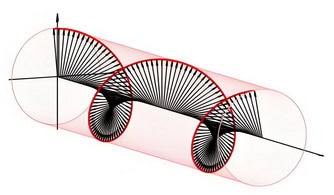
Polarization is an important concept in the study of electromagnetic waves, especially in radio frequency and optics. It determines how waves travel and interact with materials. One type of polarization, circular polarization, is particularly interesting due to its unique properties and applications. Circular polarization can be divided into two types: left-hand circular polarization (LHCP) and right-hand circular polarization (RHCP). In this article, we will explore the differences, characteristics, applications, and implications of LHCP and RHCP.
Understanding Circular Polarization
Before diving into the specifics of LHCP and RHCP, it is essential to understand what circular polarization is. Circular polarization occurs when the electric field vector of a wave rotates in a circular motion as the wave propagates. This rotation can occur in two directions: clockwise or counterclockwise. The direction of rotation determines whether the polarization is left-handed or right-handed.
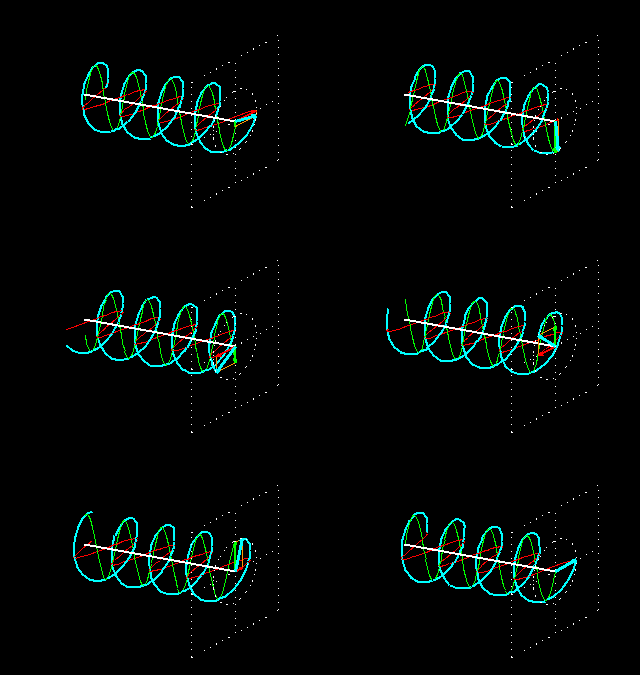
In mathematical terms, circular polarization can be represented using complex exponentials. For an electromagnetic wave traveling in the z-direction, the electric field vector can be described as:
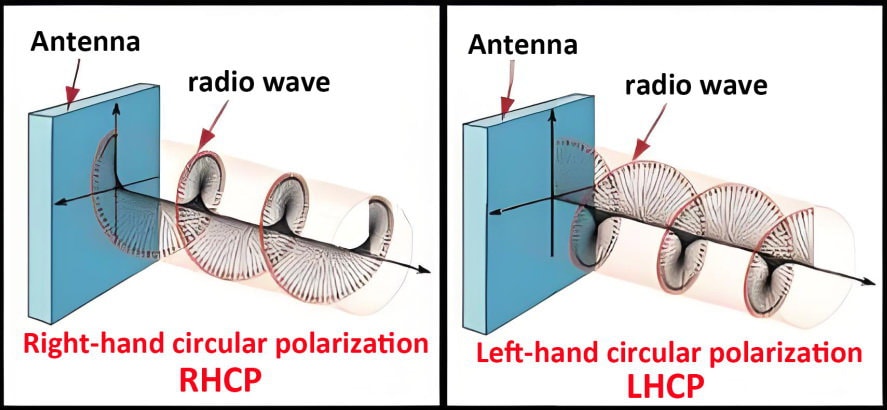
– Left-hand Circular Polarization (LHCP): The electric field vector rotates counterclockwise when viewed from the receiving end. It can be represented as:

Here, the phase difference between the x and y components is −π/2. This results in the electric field vector rotating counterclockwise when viewed from the receiving end.
– Right-hand Circular Polarization (RHCP): The electric field vector rotates clockwise when viewed from the receiving end. It can be represented as:

In this case, the phase difference between the x and y components is +π/2. This causes the electric field vector to rotate clockwise when viewed from the receiving end.
E0: This is the amplitude of the electric field, representing the maximum strength of the field vector.
x^ and y^: These are the unit vectors in the x and y directions, respectively, defining the direction of the electric field components.
ω: This is the angular frequency of the wave, related to the wave’s temporal oscillation.
The Importance of Circular Polarization
Circular polarization is a type of polarization in which the electric field vector of a wave rotates in a circular pattern as the wave propagates. Circular polarization is important in various applications because of its unique properties and advantages over other types of polarization.
One of the main advantages of circular polarization is its resistance to signal degradation caused by reflections and scattering. When an electromagnetic wave encounters a reflective or scattering surface, the wave can become polarized in a different direction. In the case of linear polarization, this change in polarization can cause signal loss or interference. However, circularly polarized waves remain circularly polarized after reflection or scattering, allowing for better signal transmission and reception in environments with high levels of reflection or scattering, such as urban areas or indoor spaces.
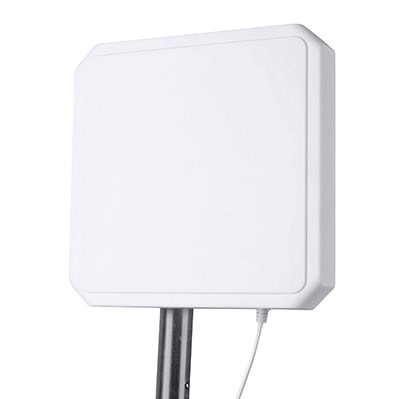
Circular polarization is also essential in RFID (Radio Frequency Identification) systems, particularly regarding RFID antennas. In these systems, the RFID reader, equipped with an antenna, transmits signals to the tags, which are also equipped with antennas. As the tags may move relative to the reader, the signals can experience a Doppler shift that can affect their polarization. Circular polarization is employed in RFID systems because it is less susceptible to the Doppler shift compared to linear polarization. This characteristic enhances the reliability and efficiency of communication between the RFID antenna of the reader and the antennas of the tags.
Circular polarization is also used in various other applications, such as wireless communication, radar systems, and medical imaging. In wireless communication, circular polarization can help reduce interference and improve signal quality. In radar systems, circular polarization can enhance target detection and reduce clutter. In medical imaging, circular polarization can improve image quality and reduce artifacts.
In conclusion, circular polarization is important because it provides better resistance to signal degradation caused by reflections and scattering, it is less affected by Doppler shift in satellite communication, and it has various other advantages in different applications. Circular polarization plays a crucial role in improving signal transmission and reception, reducing interference, and enhancing the performance of various systems and technologies.
What Is Left-hand Circular Polarization?
Left-hand circular polarization (LHCP) is a type of electromagnetic wave polarization where the electric field vector rotates in a counterclockwise direction as it propagates away from the source. This rotation occurs when viewed from a point along the direction of wave propagation.
In more technical terms, if you imagine looking toward the source of a plane wave, the electric field vector will rotate in a counterclockwise direction. This is in contrast to right-hand circular polarization (RHCP), where the electric field vector rotates in a clockwise direction.
What Is Right-hand Circular Polarization?
Right-hand circular polarization (RHCP) is a type of electromagnetic wave polarization where the electric field vector rotates in a right-handed manner as the wave propagates. This means that if you were to look in the direction that the wave is moving, the electric field vector would rotate clockwise.
RHCP antennas are widely used in applications like satellite communications and global navigation satellite systems (GNSS) receivers, such as GPS, Galileo, and GLONASS. Their design provides several advantages in real-world scenarios:
- Superior performance in multipath environments: RHCP antennas are particularly effective in areas where signals may bounce off surfaces, creating multiple paths that can interfere with each other. RHCP helps minimize the negative effects of this multipath interference, resulting in clearer and more reliable signal reception.
- Enhanced signal quality: In practical terms, RHCP is often used in various applications, including satellite communications, radar systems, and wireless communications. It helps in reducing interference and improving signal quality, particularly in environments where multiple signals may be present.
- Compatibility with many commercial systems: The widespread use of RHCP in GNSS and satellite links means RHCP antennas are a go-to choice for ensuring compatibility and optimal performance in these applications.
In contrast, left-hand circular polarization (LHCP) has the electric field vector rotating counterclockwise when viewed in the direction of wave propagation. The choice between RHCP and LHCP can be important, as using the same polarization for both transmitting and receiving can enhance signal reception and minimize loss due to polarization mismatch.
Key Differences Between LHCP and RHCP
1. Direction of Rotation
The most fundamental difference between LHCP and RHCP lies in the direction of the electric field vector’s rotation. LHCP rotates counterclockwise, while RHCP rotates clockwise when viewed from the perspective of the wave’s propagation. This difference is crucial when considering how these polarizations interact with various materials and antennas.
cURL Too many subrequests.
cURL Too many subrequests.

cURL Too many subrequests.
cURL Too many subrequests.
cURL Too many subrequests.
cURL Too many subrequests.
cURL Too many subrequests.
cURL Too many subrequests.
cURL Too many subrequests.
1. RFID cURL Too many subrequests.
cURL Too many subrequests.
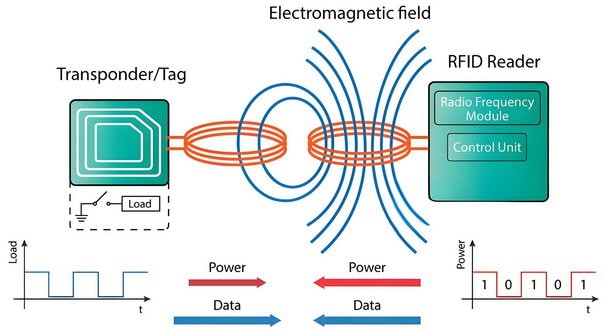
cURL Too many subrequests.
cURL Too many subrequests.

cURL Too many subrequests.
cURL Too many subrequests.MIMOcURL Too many subrequests.
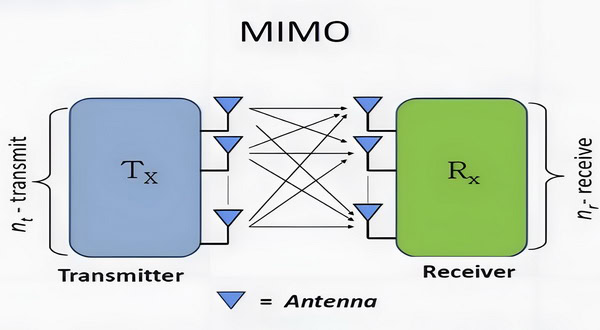
cURL Too many subrequests.
cURL Too many subrequests.
cURL Too many subrequests.
Circular polarization is also widely used in radar systems, particularly in applications such as weather radar and ground-penetrating radar (GPR). The ability to transmit and receive both LHCP and RHCP signals enables radar systems to differentiate between various types of targets and improve detection capabilities.
6. Optical Applications
In optics, circular polarization is used in various applications, including optical communication, imaging systems, and 3D displays. The manipulation of circularly polarized light can enhance contrast and reduce glare in imaging systems while also enabling advanced techniques such as optical trapping and manipulation.
These applications demonstrate the versatility and advantages of using circular polarization across various fields, enhancing communication, detection, and data transmission capabilities.
Implications of LHCP and RHCP
The choice between LHCP and RHCP has significant implications for the design and implementation of communication systems. When designing antennas and systems, engineers must consider factors such as:
1. Compatibility
Ensuring compatibility between transmitting and receiving systems is crucial. If a system is designed to operate with LHCP, it will not effectively receive RHCP signals, and vice versa. This compatibility issue can lead to signal loss and degraded performance.
2. Environmental Factors
The propagation characteristics of LHCP and RHCP can be influenced by environmental factors, such as terrain, obstacles, and atmospheric conditions. Engineers must account for these factors when designing communication systems to ensure reliable performance in real-world scenarios.
3. System Complexity
Implementing both LHCP and RHCP in a communication system can increase complexity. While using both polarizations can enhance performance, it also requires more sophisticated antenna designs and signal processing techniques, which may elevate costs and design challenges.
4.Application Requirements
Ultimately, the suitability of LHCP or RHCP depends on the specific needs of the application. Environmental conditions, system architecture, type of data transmission, and operational frequencies all play a role in determining which polarization is the optimal choice for a given scenario.
By carefully weighing these factors, engineers and system designers can make informed decisions that maximize signal integrity, minimize interference, and ensure robust performance in a variety of challenging environments.
Conclusion
The concepts of left-hand circular polarization (LHCP) and right-hand circular polarization (RHCP) are essential in the study of electromagnetic waves and have significant implications in various applications such as satellite communications, wireless networks, radar systems, and optics. Understanding the differences, characteristics, and applications of LHCP and RHCP is crucial for engineers and researchers working in these fields.
As technology advances, the importance of circular polarization in communication systems is expected to increase, leading to new innovations and applications that exploit the unique properties of LHCP and RHCP. By utilizing the strengths of both types of circular polarization, engineers can develop communication systems that are more efficient, reliable, and high-performance, meeting the demands of an increasingly connected world.
 German (Switzerland)
  English
  Spanish
  German
  French (France)
  Korean
  Russian
  Indonesian
  French (Canada)
  Vietnamese
  Armenian
  Albanian
  Assamese
  Acehnese
  Amharic
  Czech
Czech  Bulgarian
  Cebuano
  Malayalam
  Japanese
  Dutch
Dutch