 Skip to content
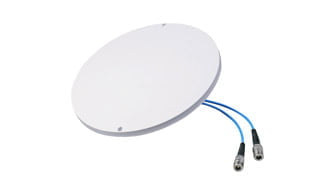
In an era where seamless connectivity is essential, ceiling mount antennas emerge as vital components for enhancing wireless communication in various environments. From bustling offices to tranquil homes, these antennas play a crucial role in ensuring uninterrupted signal coverage and robust network performance. Understanding how these devices function and their potential benefits can transform the everyday experience of connectivity.
A ceiling mount antenna is a device installed on the ceiling to optimize wireless signal distribution throughout a building or in a large open area. It is designed to to provide 360-degree coverage and enhance the strength and reliability of 4G/5G cellular and Wi-Fi signals, providing comprehensive coverage across different environments.
Now that we understand what a ceiling mount antenna is and its primary purpose, let’s delve deeper into the specifics of how these antennas work, their applications, and the benefits they offer to various users.
What is a ceiling mount?
A ceiling mount is a device used to attach and hang an object, such as a light fixture, projector, an antenna, or surveillance camera, from the ceiling. It typically consists of a bracket or plate that is secured to the ceiling with screws or other fasteners, and a hanging arm or pole that extends downward to support the object. Ceiling mounts are commonly used in homes, offices, schools, and other buildings to provide a secure and space-saving solution for mounting various equipment and fixtures.
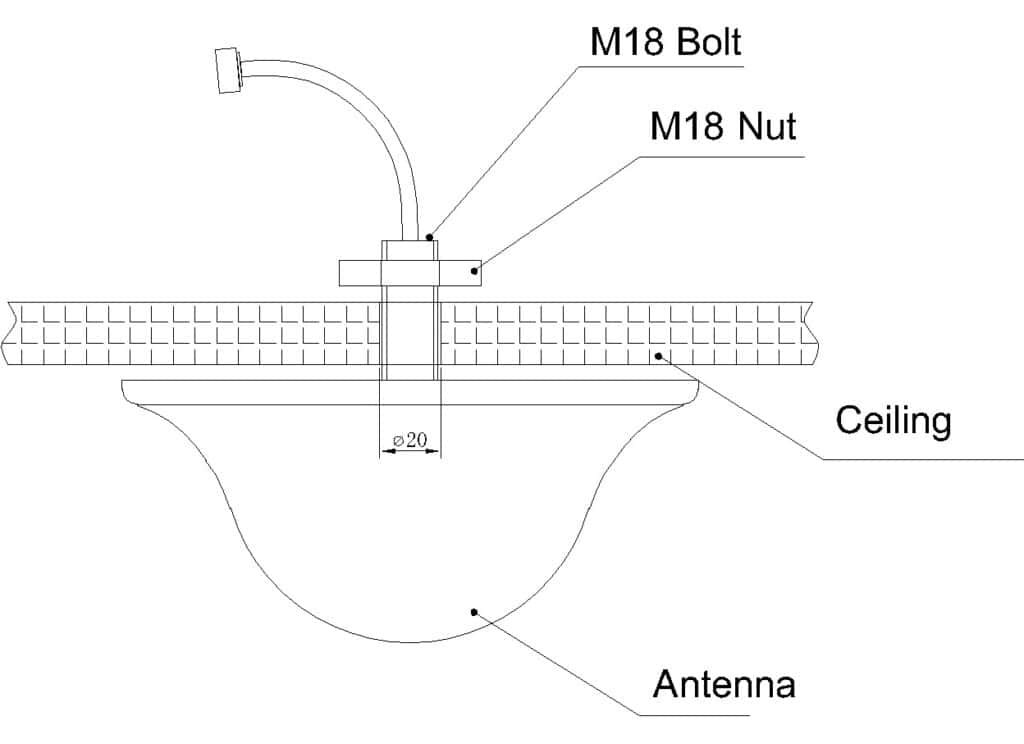
How does the omni ceiling antenna work?
The omni ceiling antenna is a type of antenna that is designed to be installed on the ceiling of a building. It is used to improve wireless signal coverage in indoor environments.
The antenna works by receiving and transmitting radio frequency (RF) signals. It is designed to radiate and receive RF signals in a 360-degree pattern, providing coverage in all directions. This omni-directional pattern allows the antenna to provide signal coverage to multiple devices in different locations within the building.

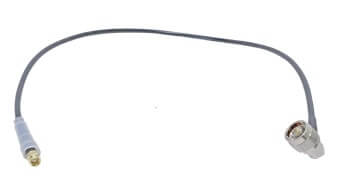
The omni ceiling antenna is typically connected to a wireless access point or a cellular signal booster system. The antenna is connected to the access point or signal booster using a coaxial cable assembly, which carries the RF signals to and from the antenna.
When the access point or signal booster sends out a wireless signal, the omni ceiling antenna receives the signal and radiates it in all directions, providing coverage to devices in the area. Similarly, when devices send out wireless signals, the antenna receives them and transmits them back to the access point or signal booster.
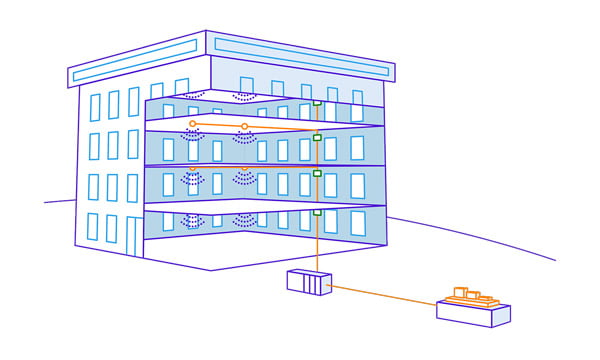
Overall, the omni ceiling antenna is a convenient and effective solution for improving wireless signal coverage in indoor environments, ensuring that devices can connect to the network and communicate effectively.
Why choose a multi-band ceiling mount DAS antenna?
Opting for a multi-band ceiling mount DAS (Distributed Antenna System) antenna offers significant advantages over traditional single-band models—especially when it comes to installation and long-term flexibility.
With a multi-band antenna, you can support multiple frequency ranges—such as those used for 4G, 5G, Wi-Fi, or public safety communications—using just a single device. This means:
- Simpler installation: There’s no need to install separate antennas for each frequency band. A single unit covers all your bases, streamlining the setup process and reducing clutter.
- Future-proofing: As wireless technologies evolve, a multi-band antenna is ready to accommodate new frequency bands without requiring you to upgrade or replace your antenna system.
- Cost and space efficiency: Installing fewer antennas means lower equipment and labor costs, as well as preserving ceiling space—an especially valuable consideration in densely populated offices or modern workspaces.
- Enhanced aesthetic: With fewer visible devices overhead, you can maintain a clean and professional appearance throughout your environment.
In short, a multi-band ceiling mount DAS antenna delivers efficient, versatile coverage while minimizing complexity and cost, making it an attractive solution for both new builds and retrofits in any space seeking strong, reliable wireless connectivity.
What is the use of an omni ceiling antenna?
Omni ceiling antennas are designed to provide 360-degree coverage, meaning they can transmit and receive signals from all directions. This allows them to effectively distribute signals throughout a room or building, providing better coverage and signal strength compared to other types of antennas.

These antennas are typically mounted on the ceiling, allowing them to be positioned at a central location and cover a large area. They can be connected to a variety of wireless devices, such as routers, access points, or cellular boosters, to improve the signal strength and coverage within a building.
The use of omni ceiling antennas can help eliminate dead zones and improve signal quality in indoor environments. By providing consistent connectivity, they ensure that users can stay connected to the internet, make calls, or access wireless services without interruption. This is particularly important in settings such as hospitals, where reliable communication is crucial for patient care, or in schools and large retail spaces where a large number of people need to access wireless networks simultaneously.
Overall, omni ceiling antennas are an effective solution for enhancing signal strength, improving coverage, and ensuring reliable wireless connectivity in indoor environments.
What types of ceiling mount omni-directional DAS and public safety antennas are available?
There’s a wide variety of ceiling mount omni-directional antennas designed to meet the demands of distributed antenna systems (DAS), including options specifically built for public safety communications. These antennas vary in frequency range, construction, and features to adapt to different indoor environments and regulatory needs.
Common types you’ll encounter include:
- Wideband Indoor DAS Antennas: These provide coverage across broad frequency ranges, such as 380 MHz to 6 GHz, making them suitable for both cellular (LTE, 5G) and public safety bands. Wideband models are ideal if you want a “one antenna fits many” solution for multi-service venues like offices or hospitals.
- Public Safety Rated Antennas: Some antennas are engineered with strict PIM (Passive Intermodulation) ratings and robust performance in key public safety bands, including the 700/800 MHz range and UHF (380–520 MHz). These are critical in environments like schools, airports, and government buildings, ensuring reliable communication for first responders.
- Multi-band Antennas: cURL Too many subrequests.
- cURL Too many subrequests. cURL Too many subrequests.
- cURL Too many subrequests. cURL Too many subrequests.
- cURL Too many subrequests. cURL Too many subrequests.
cURL Too many subrequests.
cURL Too many subrequests.
cURL Too many subrequests.
cURL Too many subrequests.
- cURL Too many subrequests. cURL Too many subrequests.
- cURL Too many subrequests. cURL Too many subrequests.
- cURL Too many subrequests. cURL Too many subrequests.
- cURL Too many subrequests. cURL Too many subrequests.
- Emerging Technologies: Support for LTE-M and NB-IoT bands makes these antennas suitable for next-generation mobile applications, such as real-time equipment monitoring or smart healthcare solutions.
- Wi-Fi Distribution: They also effectively distribute Wi-Fi signals, providing more uniform wireless coverage for offices, schools, hospitals, and other large indoor spaces.
By accommodating a range of wireless technologies, ceiling mount DAS and public safety antennas ensure that buildings remain connected, future-proof, and ready to meet the demands of both everyday users and mission-critical services.
What’s the frequency and range of ceiling mount antennas?
The frequency and range of ceiling mount antennas can vary depending on the specific model, design and applications. However, most ceiling mount antennas are designed for Wi-Fi and cellular signals, which typically operate within the range of 600MHz to 6GHz frequency bands. Some advanced models may support additional frequency bands such as 900 MHz 3.5 GHz.
Many modern ceiling mount antennas feature multi-band capabilities, eliminating the need to purchase different antennas for each frequency. For example, some models are designed to cover multiple bands commonly used for both Wi-Fi and cellular services, including 698-960 MHz, 1710-2700 MHz, and even up to 4900-6000 MHz. This makes them ideal for distributed antenna systems (DAS) and public safety applications, as well as supporting LPWAN/IoT technologies like LoRa, LTE-M, and NB-IoT.
By offering flexible frequency coverage in a single, discreet device, ceiling mount antennas can efficiently serve a variety of wireless needs within indoor environments—whether for boosting cellular, Wi-Fi, or specialized IoT signals. The range of these antennas can also vary but is typically designed to cover a relatively small area, such as a single room or small office space, with a range of around 15 to 50 feet.
Are there options for 2×2 MIMO ceiling mount DAS antennas?
Yes, 2×2 MIMO (Multiple Input, Multiple Output) ceiling mount DAS antennas are available for those seeking even greater signal performance and reliability in indoor environments. These antennas are purpose-built to support advanced wireless technologies and high-capacity networks, making them an excellent choice for busy offices, hospitals, conference centers, and other locations with demanding connectivity requirements.
2×2 MIMO ceiling mount antennas typically operate across wide frequency bands such as 698–960 MHz and 1710–2700 MHz, covering common cellular and wireless standards. By utilizing two separate input and output paths, these antennas can deliver enhanced data speeds, improved signal stability, and increased network capacity. This makes them particularly well-suited for environments where multiple users need stable, high-speed signals at the same time.
When considering a 2×2 MIMO ceiling mount antenna, look for models rated for low PIM (Passive Intermodulation) performance to minimize interference and maximize signal clarity—especially important in critical applications like healthcare and enterprise networks. Many reputable manufacturers offer these antennas, providing versatile options to fit different indoor setups and system requirements.
What is the difference between standard and low PIM rated ceiling mount DAS antennas?
When choosing a ceiling mount Distributed Antenna System (DAS) antenna, you’ll often encounter standard models as well as those rated for low Passive Intermodulation (PIM). Both types serve the core purpose of distributing cellular and WiFi signals throughout indoor environments, but they differ in terms of signal quality and the types of applications they best support.
cURL Too many subrequests. DAS antennas are designed for general wireless coverage in buildings, supporting a wide variety of frequency bands—including those used for WiFi, public safety, and most cellular carriers. These antennas are suitable for most everyday environments like offices, schools, or retail spaces, where high user volume is expected but ultra-clean signal transmission isn’t mission-critical.
Low PIM rated DAS antennas, on the other hand, are built to minimize signal distortion from Passive Intermodulation—a common issue when multiple frequencies are used in close proximity. Low PIM antennas are especially important in environments where high signal purity is critical, such as hospitals, large enterprise buildings, or public safety systems. These antennas help ensure clear, uninterrupted communication, which is essential for emergency services, cellular networks using advanced data technologies (like LTE-M or NB-IoT for IoT applications), or any setting dominated by multi-band, high-density wireless traffic.
In short, while both antenna types offer broad frequency support (ranging from UHF and 600 MHz up to AWS-3 and beyond), low PIM options provide superior reliability and clarity where consistent and interference-free performance is vital.
What are the advantages and disadvantages of ceiling mount antennas?
Advantages of ceiling mount antennas:
1. Better signal coverage: Ceiling mount antennas are positioned at a higher elevation, which allows them to provide better signal coverage compared to antennas mounted on walls or other lower locations.
2. Aesthetically pleasing: Ceiling mount antennas are discreetly positioned on the ceiling, making them less noticeable and more visually appealing compared to other types of antennas.
3. Reduced interference: By being positioned on the ceiling, these antennas are often away from potential sources of interference like furniture, walls, or other electronic devices, leading to better signal quality.
4. Easy installation: Ceiling mount antennas can be easily installed on the ceiling without requiring additional hardware or complex wiring.
Disadvantages of ceiling mount antennas:
1. Limited range: Ceiling mount antennas may have a limited range compared to antennas mounted at higher locations, such as rooftops or outdoor poles. This can result in weaker signals or reduced coverage in larger areas.
2. Limited adjustment options: Once a ceiling mount antenna is installed, it may be challenging to adjust or reposition it to optimize signal strength or coverage.
3. Potential for signal blockage: Depending on the building’s structure, the ceiling mount antenna’s signal may be obstructed by walls, floors, or other objects, leading to reduced signal quality.
4. Higher cost: Ceiling mount antennas may be more expensive compared to other types of antennas due to their design, installation requirements, and potentially specialized features.
Ceiling mount antennas for home
Ceiling mount antennas are designed to be installed on the ceiling of a building, providing better signal coverage and reception. These antennas are commonly used in commercial buildings, such as offices, hotels, and shopping centers, to improve cell phone and Wi-Fi signals throughout the building.

However, ceiling mount antennas can also be beneficial in residential settings. Here are some reasons why you might consider installing a ceiling mount antenna in your home:
1. Multi-story homes: If you live in a multi-story home, you may experience weak signals on the upper floors. This can lead to dropped calls, slow internet speeds, and poor Wi-Fi coverage. Installing a ceiling mount antenna on the top floor can help amplify the signals and improve reception throughout the house.
2. Basements: Basements are notorious for having weak cell phone and Wi-Fi signals. The concrete walls and floors can block the signals from reaching the basement area. A ceiling mount antenna can be installed in the basement to bring in stronger signals and enhance connectivity.
3. Large homes: If you have a large home with multiple rooms and areas, you may find that certain parts of the house have poor signal reception. This can be due to the distance from the cell tower or the presence of obstacles like walls and furniture. A ceiling mount antenna can help distribute the signals more evenly throughout the house, ensuring better coverage in all areas.
cURL Too many subrequests.
cURL Too many subrequests.
cURL Too many subrequests.
cURL Too many subrequests.
cURL Too many subrequests.
cURL Too many subrequests.
cURL Too many subrequests.
cURL Too many subrequests. cURL Too many subrequests.cURL Too many subrequests.
cURL Too many subrequests.
cURL Too many subrequests.
cURL Too many subrequests.
cURL Too many subrequests.
- cURL Too many subrequests.
- cURL Too many subrequests. cURL Too many subrequests.. cURL Too many subrequests.
- cURL Too many subrequests.
- cURL Too many subrequests. $52 to $166 range. The low PIM rating is ideal for critical applications where maximum signal integrity is needed.
- Wideband and Specialty Frequency Antennas (including 380-6000 MHz):
- For broader frequency support, such as those required for public safety or newer wireless technologies, expect prices to start around $165 and go up, depending on additional features and coverage.
- MIMO (Multiple-In, Multiple-Out) Configurations:
- For maximum data speeds and reliability (especially where more robust Wi-Fi or LTE coverage is needed), MIMO-enabled ceiling mount antennas can cost approximately $188 and up.
These price ranges should help you budget for the right ceiling mount DAS antenna to suit your connectivity needs.
cURL Too many subrequests.
In conclusion, selecting the correct ceiling mount antenna involves understanding your space’s unique requirements and the features of the antennas available. By choosing the appropriate model, you can enhance your wireless connectivity significantly, ensuring strong and stable network performance for all users in the area.
 German (Switzerland)
  English
  Spanish
  German
  French (France)
  Korean
  Russian
  Indonesian
  French (Canada)
  Vietnamese
  Armenian
  Albanian
  Assamese
  Acehnese
  Amharic
  Czech
Czech  Bulgarian
  Cebuano
  Malayalam
  Japanese
  Dutch
Dutch