 Skip to content

In the diverse world of telecommunications, the grid antenna stands out as a pivotal tool for enhancing long-range communications. Known for its unique construction and exceptional performance in challenging environments, this type of antenna plays a crucial role in modern communication infrastructures, bridging vast distances with remarkable efficiency.
A grid antenna is a type of directional antenna that uses a mesh grid of parallel bars as a reflector to focus radio waves more effectively. Its design allows for high directional gain, reduced wind load, and cost-efficiency, making it ideal for point-to-point communication across large distances.
As we delve deeper into the capabilities and applications of grid antennas, it becomes clear why they are favored in many advanced communication setups, especially those exposed to environmental challenges.
How does a grid antenna work?
The grid antenna consists of a metallic grid structure with a parabolic shape. The wires of the grid are spaced apart at regular intervals, forming a series of parallel bars. These bars act as the elements of the antenna.
Relationship Between Grid Spacing and Frequency
The distance between the bars on a grid antenna isn’t arbitrary—it’s carefully designed to match the frequency the antenna is intended to handle. In general, as the operating frequency increases, the spacing between the grid elements becomes smaller. Conversely, for lower frequencies, the bars can be spaced further apart. This precise arrangement ensures the grid reflects and focuses radio waves efficiently, optimizing performance across different frequency bands.
How does the grid reflector function as a polarizing filter and reflector?
The grid reflector in a grid antenna serves a dual purpose. Not only does its mesh structure efficiently reflect radio waves to the focal point, but it also acts as a polarizing filter. Because the metallic bars are arranged in parallel, only radio waves with an electric field aligned parallel to those bars are effectively reflected. Waves with other polarization orientations tend to pass through the gaps.
This means the antenna inherently favors and enhances linearly polarized signals, making the overall system more efficient in receiving or transmitting signals of the desired polarization while minimizing interference from unwanted polarizations.
What type of polarization do grid antennas reflect?
Grid antennas are designed to reflect only linearly polarized radio waves whose electric field runs parallel to the direction of the grid wires. This means the orientation of the bars acts much like a polarizing filter—radio waves with matching polarization are efficiently reflected and focused, while those with a perpendicular orientation pass through the grid with minimal interaction. As a result, aligning the antenna’s grid with the desired polarization is crucial for optimal performance.
When radio waves are received by the grid antenna, they strike the metallic bars of the grid. The bars reflect and concentrate the radio waves towards the focal point of the parabolic shape. At the focal point, a feed element, such as a dipole or a horn antenna, is placed to capture the concentrated waves and convert them into electrical signals.
Similarly, when transmitting, the feed element generates radio waves, which are then focused by the grid and radiated in a specific direction. The grid acts as a reflector, directing the waves towards the desired target.

The grid structure of the antenna has several benefits. Firstly, it reduces wind resistance, making the antenna more stable in windy conditions. Secondly, the grid design allows for the passage of rain, snow, or other debris, preventing them from accumulating on the surface and affecting performance. Additionally, the grid structure is lightweight, making the antenna easier to install and maintain.
Overall, grid antennas are popular for their high gain, narrow beamwidth, and directional capabilities, making them suitable for long-range communication and point-to-point links.
What is a grid antenna used for?
A grid antenna is used for various purposes in the field of telecommunications and wireless communications. Some common applications of grid antennas include:
1. Wireless networking: Grid antennas are commonly used in wireless networking systems, such as Wi-Fi networks, to transmit and receive signals over long distances. They provide high gain and directional coverage, allowing for a stronger and more focused signal.
2. Point-to-point communication: Grid antennas are often used for cURL Too many subrequests. links, where signals need to be transmitted between two specific locations. These antennas offer high gain and narrow beamwidth, enabling long-range communication with minimal interference.
3. Long-range wireless links: Grid antennas are suitable for establishing long-range wireless links, such as connecting remote buildings or extending network connectivity to distant locations. They can transmit signals over several miles with high signal strength and minimal signal degradation.
4. Wireless backhaul: In wireless communication systems, grid antennas are frequently used for wireless backhaul, which involves transmitting data from a remote site to a central location. Grid antennas provide high capacity and low latency connections, making them ideal for backhaul applications.
5. Radio broadcasting: Grid antennas are used in radio broadcasting to transmit signals over a wide area, such as for FM or AM radio stations. They offer high gain and can be designed to operate at specific frequencies.
Overall, grid antennas are utilized for applications that require long-range, high-gain, and directional wireless communication, such as wireless networking, point-to-point links, and radio broadcasting.
What are the benefits of a grid antenna?
There are several benefits of a grid antenna, including:
1. High gain: Grid antennas are known for their high gain, which means they can focus the signal in a specific direction and provide a stronger signal strength. This makes them ideal for long-range communications or in areas with weak signals.
2. Directional radiation pattern: Grid antennas have a narrow beamwidth, which allows them to concentrate the signal in a specific direction. This helps in reducing interference and increasing the overall signal quality.

3. Low wind resistance: The design of a grid antenna, with its open mesh structure, allows wind to pass through it easily. This reduces wind resistance and makes it more stable during high winds or storms.
4. Lightweight and compact: Grid antennas are typically lightweight and have a compact design. This makes them easy to install and mount on various structures, such as rooftops or poles.
5. Cost-effective: Grid antennas are generally more affordable compared to other high-gain antennas, such as parabolic or Yagi antennas. This makes them a cost-effective solution for long-range or point-to-point communication needs.
6. Durable: Grid antennas are often made of sturdy materials, such as aluminum or stainless steel, which makes them durable and capable of withstanding harsh weather conditions.
7. Versatile applications: Grid antennas can be used in various applications, including wireless internet service providers (WISPs), point-to-point wireless links, Wi-Fi networks, cellular signal boosters, and amateur radio.
cURL Too many subrequests.
cURL Too many subrequests.
cURL Too many subrequests.
cURL Too many subrequests.
cURL Too many subrequests.
cURL Too many subrequests.
cURL Too many subrequests.

cURL Too many subrequests.

cURL Too many subrequests.

cURL Too many subrequests.
Yagi antennas cURL Too many subrequests.
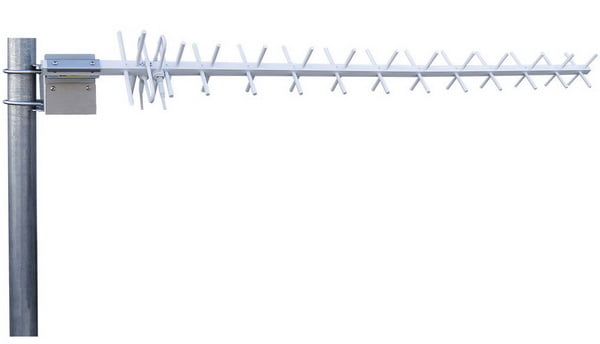
cURL Too many subrequests.
cURL Too many subrequests.
cURL Too many subrequests.
cURL Too many subrequests.
cURL Too many subrequests.
cURL Too many subrequests.
cURL Too many subrequests.
In summary, grid antennas are an important component of modern telecommunication systems, particularly for long-distance and point-to-point communication. They are highly effective in providing reliable communication over large areas, even in less than ideal conditions, making them a preferred choice in both rural and urban settings.
 German (Switzerland)
  English
  Spanish
  German
  French (France)
  Korean
  Russian
  Indonesian
  French (Canada)
  Vietnamese
  Armenian
  Albanian
  Assamese
  Acehnese
  Amharic
  Czech
Czech  Bulgarian
  Cebuano
  Malayalam
  Japanese
  Dutch
Dutch