 Skip to content

In today’s technologically driven world, ensuring the integrity of signal transmission is paramount. Among the various options available for achieving this, low loss coaxial cables stand out for their efficiency and reliability. But what exactly makes a coaxial cable “low loss,” and why is it important?
A low-loss coaxial cable employs multi-layer shielding that blocks radio frequency (RF) more efficiently than standard RG coax. This feature is crucial for applications where maintaining signal strength over long distances or through potentially interfering environments is necessary.
Transitioning from the basics to a deeper dive, it becomes clear that the world of coaxial cables is vast and varied. Understanding the nuances of low loss coaxial cables can significantly impact the performance and reliability of your technological applications.
What is considered low loss coax cable?
Low loss coaxial cables are designed with the specific aim of minimizing signal attenuation. By using materials such as tinned copper and aluminum tape for shielding, these cables achieve superior shielding effectiveness compared to their RG counterparts.
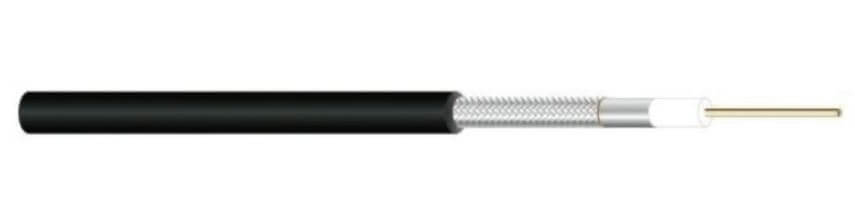
Low loss coax cable is a type of coaxial cable that has minimal signal loss over distance. It is designed to transmit high frequency signals with minimal attenuation. The term “low loss” is subjective and can vary depending on the specific application and industry standards.
Specifically, low loss coax cable typically has an attenuation of less than 3 dB per 100 feet (30 meters) at a frequency of 1 GHz. Some examples of low loss coax cables include 5d-FB, 7D-FB, LMR195, LMR240, LMR-400, and LMR-600. These cables are designed with high-quality materials and construction techniques to minimize signal loss and maintain signal integrity over long distances.
In summary, low loss coax cable is a type of cable that has minimal signal loss over long distances and typically has an attenuation of less than 3 dB per 100 feet (30 meters) at a frequency of 1 GHz.
What are the losses of coaxial cable?
Signal loss in coaxial cables can stem from several sources, including radiation, resistive losses in the conductors, and signal absorption in the cable’s dielectric material. Each of these factors can degrade the signal quality over distance.
1. Radiation Loss: Coaxial cables have a characteristic impedance that helps prevent the loss of signals through radiation. However, if the cable is not properly terminated or if there are imperfections in the cable, some of the signal energy can escape as radiation, leading to signal loss.
2. Conductor Resistance: The conductors in coaxial cables have a small amount of resistance, which causes some of the electrical energy to be converted into heat. This resistance increases with the length of the cable, resulting in signal loss.
3. Dielectric Absorption: Coaxial cables have an insulating material, called the dielectric, between the inner conductor and the outer shield. Some of the electrical energy can be absorbed by the dielectric material, leading to signal loss.
4. Dielectric Loss: The dielectric material in coaxial cables also has a certain amount of resistance, known as dielectric loss. This resistance converts some of the electrical energy into heat, resulting in signal loss.
5. Skin Effect: At high frequencies, the current tends to flow more towards the outer surface of the conductor, known as the skin effect. This reduces the effective cross-sectional area of the conductor, increasing its resistance and causing signal loss.
6. Frequency-Dependent Loss: Coaxial cables can have different loss characteristics at different frequencies. This is known as frequency-dependent loss or frequency-dependent attenuation. It means that the cable may attenuate certain frequencies more than others, resulting in signal distortion and loss.
7. Connector Loss: Connectors used to join coaxial cables can introduce additional signal loss due to imperfect connections or impedance mismatches.
Overall, the combination of these losses can result in a decrease in signal strength and quality as the signal travels through the coaxial cable.
What are the different types of cable losses?
There are several types of cable losses, including:
1. Conductor resistance loss: This loss occurs due to the resistance of the conductive material used in the cable. It results in the conversion of electrical energy into heat as current flows through the cable.
2. Dielectric loss: Dielectric loss occurs in the insulating material (dielectric) surrounding the conductor. It happens due to the conversion of electrical energy into heat as the dielectric material experiences polarization and depolarization under the influence of an alternating electric field.
3. Radiation loss: Radiation loss occurs when energy is radiated from the cable into the surrounding space. It is common in open-wire transmission lines or unshielded cables.
4. Skin effect loss: Skin effect loss is a phenomenon that occurs at high frequencies. It causes the current to concentrate near the surface of the conductor, resulting in increased resistance and energy loss.
5. Dielectric absorption loss: This loss occurs when the dielectric material stores energy and releases it slowly after the electric field is removed. It can cause signal distortion and energy loss.
6. Connector and splice loss: These losses occur at connection points or splices in the cable, where some energy is lost due to imperfect connections or impedance mismatches.
7. Bending loss: Bending loss occurs when a cable is bent or twisted beyond its minimum bend radius. It can cause signal attenuation and energy loss due to increased resistance and changes in the cable’s electrical characteristics.
How much cable loss is acceptable?
The acceptable amount of cable loss depends on the specific application and the desired performance. In general, lower cable loss is preferred as it results in better signal quality and higher efficiency.
However, the acceptable cable loss can vary depending on factors such as the frequency range, distance, and power level of the signal being transmitted. For example, in high-frequency applications such as cellular networks, cable loss should be kept to a minimum, typically below 3 dB. In other applications, such as home audio or video systems, cable loss of up to 6 dB may be acceptable.
Which coaxial cable has the least amount of signal loss?
The coaxial cable with the least amount of signal loss is typically the one with the lowest attenuation, which is measured in decibels per meter (dB/m). Cables with lower attenuation values have less signal loss over distance.
However, it is important to note that there are different types and grades of coaxial cables, each with different specifications and performance characteristics. The specific cable with the least amount of signal loss may vary depending on the application and specific requirements.
cURL Too many subrequests.
cURL Too many subrequests.
cURL Too many subrequests.
cURL Too many subrequests.
cURL Too many subrequests.
cURL Too many subrequests.
cURL Too many subrequests.
cURL Too many subrequests.
cURL Too many subrequests.
cURL Too many subrequests.
cURL Too many subrequests.
cURL Too many subrequests.
cURL Too many subrequests.
cURL Too many subrequests.
cURL Too many subrequests.
cURL Too many subrequests.
cURL Too many subrequests.
cURL Too many subrequests.
cURL Too many subrequests.
3. Multiply the length of the cable by the attenuation rate to find the total loss in decibels (dB). For example, if the attenuation rate is 0.2 dB/ft and the cable length is 50 ft, the total loss would be 0.2 dB/ft * 50 ft = 10 dB.
4. Consider the frequency of the signal being transmitted. Coaxial cables often have different attenuation rates at different frequencies. Consult the manufacturer’s specifications to determine the attenuation rate at the specific frequency of interest.
5. Multiply the total loss by the frequency-dependent attenuation rate to calculate the actual loss at the desired frequency. For example, if the total loss is 10 dB and the frequency-dependent attenuation rate at the desired frequency is 1.5 dB/dB, the actual loss at that frequency would be 10 dB * 1.5 dB/dB = 15 dB.
Note that these calculations assume ideal conditions and do not account for other factors like impedance mismatch, connector losses, or environmental interference.
Most Popular Low Loss Cable Types
Among the most widely used low loss coaxial cables are the LMR-400, LMR195, and LMR240 types. These cables are distinguished by their exceptional balance of flexibility, performance, and cost-effectiveness, making them ideal choices for a broad spectrum of applications.
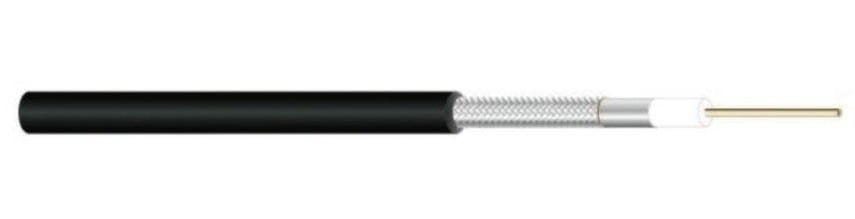
- LMR-400 is renowned for its low loss characteristics in a variety of settings, making it a go-to choice for professionals seeking reliability and performance.
- LMR195 offers a thinner, more flexible option for situations where space is at a premium, without significantly compromising on the loss characteristics.
- LMR240 serves as a middle ground between LMR195 and LMR400, providing a compromise between flexibility and low loss performance, suitable for diverse applications from amateur radio to commercial installations.
In summary, low loss coaxial cables are essential in a wide range of industries and applications, including telecommunications, aerospace, defense, and broadcasting. These cables offer low signal loss, high frequency capabilities, and excellent shielding properties, making them ideal for transmitting high-quality signals over long distances. When selecting a low loss coaxial cable, it is important to consider factors such as frequency range, power handling capacity, and environmental conditions. By choosing the right cable for your specific needs, you can ensure optimal signal integrity and performance for your systems.
 German (Switzerland)
  English
  Spanish
  German
  French (France)
  Korean
  Russian
  Indonesian
  French (Canada)
  Vietnamese
  Armenian
  Albanian
  Assamese
  Acehnese
  Amharic
  Czech
Czech  Bulgarian
  Cebuano
  Malayalam
  Japanese
  Dutch
Dutch