 Skip to content
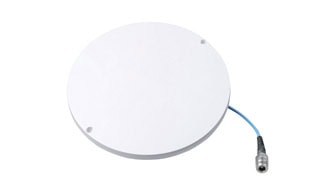
In the fast-paced world of wireless tech, low PIM (Passive Intermodulation) antennas are key to optimal performance. Essential for clear communication, these antennas combat signal degradation effectively. What makes them so vital?
A Low PIM Antenna is a device that is designed to minimize Passive Intermodulation Distortion, a common source of interference in cellular network systems. By ensuring cleaner, stronger signal transmission, these antennas enhance network performance, resulting in better call quality, faster data speeds, and improved overall user experience.
As we delve deeper into the nuances of low PIM technology, it becomes apparent how this feature is not just beneficial but indispensable for modern communication systems.
What does PIM mean on an antenna?
PIM stands for Passive Intermodulation. It refers to the creation of unwanted signals or interference caused by non-linearities in the materials and components of an antenna or the surrounding environment. These non-linearities can generate intermodulation products, which are unwanted signals that can interfere with the desired signals being transmitted or received by the antenna.
What is the PIM rating of an antenna?
Passive intermodulation distortion (PIM) is a type of interference that occurs when two or more signals mix together within a passive device, such as an antenna. This mixing creates additional unwanted signals at different frequencies, which can cause interference and degrade the performance of the antenna system.
The PIM rating of an antenna is a measure of how much passive intermodulation distortion it generates. It is typically expressed in decibels relative to the carrier (dBc). A lower PIM rating indicates better performance, as it means the antenna generates less interference.
Industry standards and requirements for PIM ratings vary depending on the application and the specific antenna system. In general, higher-performance systems and applications demand lower PIM ratings to ensure minimal interference and optimal performance.
Antennas with high PIM ratings can cause problems in wireless communication systems, particularly in high-capacity networks like 4G and 5G. PIM can result from various factors, including loose connections, corrosion, poor grounding, and non-linear behavior of materials. Therefore, selecting an antenna with a low PIM rating is important to maintain the quality and reliability of wireless communication systems.
What is a PIM rated antenna?
Passive intermodulation (PIM) is a phenomenon that occurs when two or more signals interact with each other within a passive device, such as an antenna, causing unwanted interference and distortion. PIM can degrade the performance of wireless communication systems, especially in high-power and high-frequency applications.
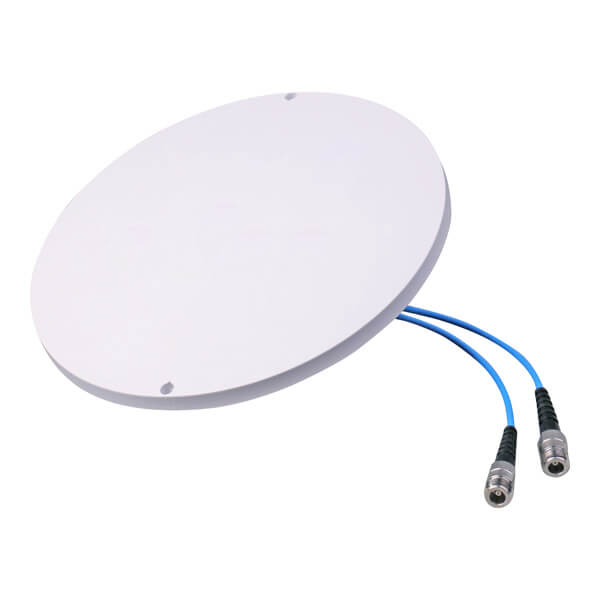
To address this issue, PIM rated antennas are designed and manufactured to minimize PIM and ensure reliable and high-quality wireless communication. These antennas undergo rigorous testing and certification processes to meet specific PIM standards set by industry organizations, such as the International Electrotechnical Commission (IEC).
PIM rated antennas are commonly used in cellular networks, distributed antenna systems (DAS), and other wireless communication systems where PIM can significantly impact signal quality and system performance. By using PIM rated antennas, operators can reduce the risk of PIM-related issues and maintain optimal network performance.
What is considered low PIM?
PIM stands for passive intermodulation, which is a form of interference that can occur in wireless communication systems. When two or more signals pass through a passive device, such as an antenna or a connector, they can interact with each other and create additional unwanted signals at different frequencies. These unwanted signals can cause interference and degrade the performance of the wireless network.
To minimize the impact of PIM, antennas with low PIM characteristics are used. The PIM rating of an antenna indicates the level of unwanted signals it generates. A lower PIM rating means that the antenna produces fewer unwanted signals and is therefore considered to have better performance.
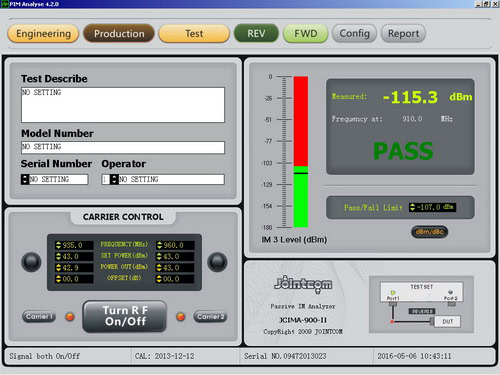
The specific threshold for what is considered low PIM can vary depending on the application and the industry. However, a common standard is a PIM rating of -150 dBc or lower. The “dBc” refers to decibels relative to the carrier, which is a unit used to express the power level of the unwanted signals compared to the power level of the desired signal. A PIM rating of -150 dBc or lower ensures that the unwanted signals are significantly weaker than the desired signal, minimizing their impact on the wireless network.
What does PIM mean in RF?
In RF (Radio Frequency), PIM stands for Passive Intermodulation. Passive Intermodulation refers to the interference caused by non-linearities in passive components such as connectors, cables, and antennas in a wireless communication system. PIM can degrade the performance of the system by generating unwanted signals at frequencies different from the desired ones, resulting in reduced signal quality and capacity.
What is the cause of PIM?
PIM (Passive Intermodulation) is primarily caused by non-linearities in the components and connections of the network. These non-linearities can occur when two or more signals combine and create unwanted intermodulation products. The main causes of PIM in cellular networks include:
1. Loose or corroded connectors: Poorly tightened or corroded connectors can create small gaps or resistance points, causing non-linearities and generating PIM.
2. Imperfect cable terminations: Improperly terminated cables can cause reflections and create non-linearities, resulting in PIM.
3. Multi-band antennas: Multi-band antennas that cover multiple frequency bands can experience PIM due to the interaction between the different frequency signals.
4. High-power signals: High-power signals can cause non-linearities in the system, especially when they pass through components such as amplifiers, filters, or cables.
5. Multi-carrier signals: In multi-carrier systems, where multiple signals are transmitted simultaneously, the interaction between these signals can cause intermodulation products and generate PIM.
6. Poorly designed or manufactured components: Low-quality or poorly designed components may have inherent non-linearities that lead to PIM.
7. Environmental factors: Changes in temperature, humidity, or other environmental conditions can affect the materials used in the network components, leading to PIM.
PIM can degrade the performance of cellular networks by creating interference and reducing signal quality, resulting in dropped calls, reduced data speeds, and poor network coverage.
What is the difference between PIM and VSWR?
PIM (Passive Intermodulation) is a phenomenon that occurs when two or more signals mix together in a non-linear device, such as a corroded connector or a loose connection. This mixing generates additional frequencies, known as intermodulation products, that can interfere with the desired signals and cause degradation in signal quality. PIM is typically measured in decibels relative to the carrier (dBc) and is a measure of the unwanted signal frequencies generated.
On the other hand, VSWR cURL Too many subrequests.
cURL Too many subrequests.
cURL Too many subrequests.
cURL Too many subrequests.
cURL Too many subrequests.
cURL Too many subrequests.
cURL Too many subrequests.
cURL Too many subrequests.
 German (Switzerland)
  English
  Spanish
  German
  French (France)
  Korean
  Russian
  Indonesian
  French (Canada)
  Vietnamese
  Armenian
  Albanian
  Assamese
  Acehnese
  Amharic
  Czech
Czech  Bulgarian
  Cebuano
  Malayalam
  Japanese
  Dutch
Dutch