 Skip to content

Discover the essential world of microwave antennas—a cornerstone in modern communication, radar, and electronic warfare. Whether you’re a techie, engineer, or product manager, understanding these devices unlocks a new dimension of technology.
A microwave antenna is a key device in wireless communication, transmitting signals between two or more locations. It plays a pivotal role in various applications including broadcasting, radar, and radio astronomy, making it indispensable in the tech world.
Let’s delve deeper into its uses, types, and what sets it apart from other antennas.
What is a Microwave Antenna Used For?
Microwave antennas are used to transmit and receive microwave signals. These antennas are designed to operate in the microwave frequency range, typically between 6 GHz (gigahertz) and 90 GHz. They are used in various applications, including:
1. Telecommunications: Microwave antennas are used in cellular networks to transmit and receive signals between cell towers and mobile devices. They allow for wireless communication over long distances and are essential for providing coverage in remote areas.
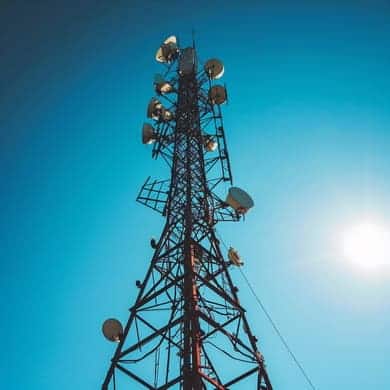
2. Broadcasting: Microwave antennas are used in broadcasting to transmit and receive television and radio signals. They enable the distribution of these signals to a wide audience over large areas.
3. Radar systems: Microwave antennas are used in radar systems for various purposes. They are used in air traffic control to detect and track aircraft, in weather monitoring to detect precipitation and monitor storms, and in navigation systems to determine the position of ships, aircraft, and vehicles.
4. Satellite communication: Microwave antennas are used in satellite communication systems to transmit signals to and receive signals from satellites in orbit. These antennas are used in satellite TV and internet services, allowing for global coverage and connectivity.
5. Wireless data transmission: Microwave antennas are used in wireless data transmission systems, such as Wi-Fi networks. They enable the transmission of data over short distances without the need for physical cables.
Overall, microwave antennas play a crucial role in enabling wireless communication, data transmission, and information exchange in various industries and applications.
What is the frequency of a microwave antenna?
The frequency of a microwave antenna refers to the number of complete cycles of an electromagnetic wave that occur per second. It is typically measured in Hertz (Hz) or its multiples, such as kilohertz (kHz), megahertz (MHz), or gigahertz (GHz).
Microwave antennas are commonly used in various applications, including telecommunications, radar systems, satellite communications, and wireless networks. The frequency range of microwave antennas can vary depending on the specific application. For example:
– In cURL Too many subrequests., the frequency can be 2.4 GHz, 5 GHz or 6 GHz.
– In Wireless Backhaul, the frequency can range from 7.125 GHz to 86 GHz.
– In radar systems, the frequency can range from a few GHz to tens of GHz.
– In satellite communications, the frequency can range from a few GHz to hundreds of GHz.
It is important to note that the frequency of a microwave antenna determines its wavelength, as they are inversely proportional. The higher the frequency, the shorter the wavelength, and vice versa.
What is Another Name for a Microwave Antenna?
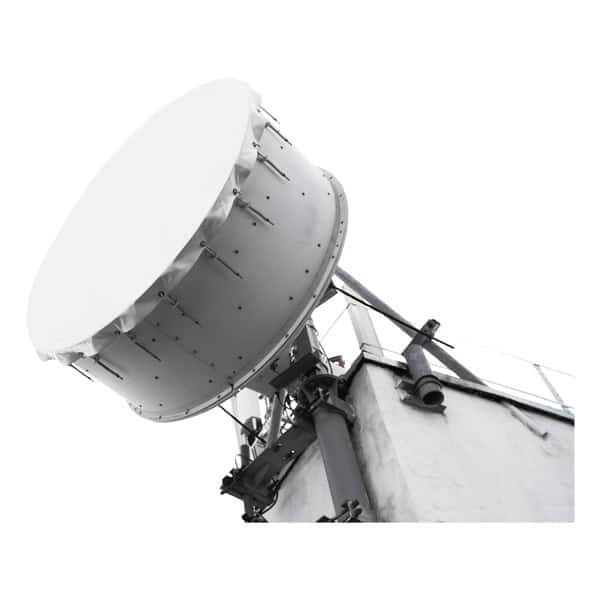
Another name for a microwave antenna is a dish antenna, a parabolic reflector antenna.
What are the Benefits of Microwave Antennas?
1. Fast data transmission: Microwave antennas allow for high-speed data transmission, making them suitable for applications that require real-time communication, such as video conferencing, live streaming, and online gaming.
2. Wide coverage area: Microwave antennas can cover a large area, making them ideal for providing wireless connectivity over long distances. This makes them useful for applications like point-to-point communication, wireless backhaul, and connecting remote areas to the internet.
3. High bandwidth capacity: Microwave antennas can support high bandwidth capacity, enabling the transmission of large amounts of data simultaneously. This is crucial for applications that require heavy data usage, such as internet service providers, data centers, and multimedia content delivery.
4. Low latency: Microwave antennas offer low latency, meaning there is minimal delay in data transmission. This is important for applications that require real-time interaction, such as online gaming, video conferencing, and autonomous vehicles.
5. Reliability: Microwave antennas are less prone to interference from physical obstacles, such as buildings or trees, compared to other wireless technologies. This makes them more reliable for maintaining a stable connection in urban environments or areas with challenging terrain.
6. Cost-effective: Microwave antennas are often more cost-effective than laying physical cables, especially in remote or difficult-to-access areas. They require less infrastructure and can be deployed quickly, saving time and resources.
7. Scalability: Microwave antennas can be easily scaled up or down to accommodate changing network demands. This flexibility makes them suitable for both small-scale and large-scale deployments.
8. Security: Microwave antennas offer a higher level of security compared to some other wireless technologies. The narrow beamwidth and high directivity of microwave signals make it difficult for eavesdroppers to intercept or interfere with the transmission.
9. Versatility: Microwave antennas can be used in various applications, such as telecommunications, broadcasting, satellite communication, military communication, and wireless networking. They can be deployed in different frequencies and configurations to meet specific requirements.
10. Energy efficiency: Microwave antennas require relatively low power consumption compared to other wireless technologies. This makes them more energy-efficient and environmentally friendly.
Overall, microwave antennas offer high-speed, reliable, cost-effective, and flexible communication solutions for a wide range of applications.
What is the Range of a Microwave Antenna?
cURL Too many subrequests.
cURL Too many subrequests. cURL Too many subrequests., cURL Too many subrequests.
cURL Too many subrequests.
cURL Too many subrequests.
cURL Too many subrequests.
cURL Too many subrequests.
cURL Too many subrequests.
cURL Too many subrequests.
cURL Too many subrequests.
cURL Too many subrequests.
cURL Too many subrequests.
cURL Too many subrequests.
cURL Too many subrequests.
cURL Too many subrequests. waveguide, cURL Too many subrequests.
cURL Too many subrequests.
cURL Too many subrequests.
 German (Switzerland)
  English
  Spanish
  German
  French (France)
  Korean
  Russian
  Indonesian
  French (Canada)
  Vietnamese
  Armenian
  Albanian
  Assamese
  Acehnese
  Amharic
  Czech
Czech  Bulgarian
  Cebuano
  Malayalam
  Japanese
  Dutch
Dutch