 Skip to content
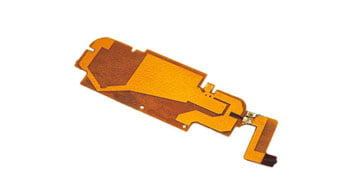
Have you ever wondered about the tiny yet powerful antennas embedded in your mobile devices? The Planar Inverted-F Antenna, or PIFA, might be small, but its impact on modern wireless communication is immense. In this article, we delve into the workings of PIFA antennas, exploring their uses, advantages, and how they compare to other antennas.
A PIFA, or Planar Inverted-F Antenna, is a type of compact antenna widely employed in mobile communication devices. It operates primarily at UHF and microwave frequencies, featuring a unique structure that includes a monopole antenna running parallel and very close to a ground plane, with a portion of the antenna folded back over itself and grounded, optimizing space and enhancing performance.
As we have seen, the PIFA antenna’s unique attributes and functionalities make it a fundamental component in the architecture of modern wireless devices. Let’s delve deeper into how these features translate into real-world applications.
How does the PIFA Antenna Work?
When a signal is applied to the PIFA antenna, it creates an electric field between the patch and the ground plane. This electric field causes the current to flow through the patch and the ground plane, creating a magnetic field around the patch. These electric and magnetic fields combine to generate an electromagnetic wave that is radiated into space.
The shorting pin in the PIFA antenna acts as a connection between the patch and the ground plane. This connection creates a resonant circuit, which allows the antenna to efficiently radiate and receive signals at a specific frequency or range of frequencies.
How Feed Point Position Tunes Impedance
The position of the feed point in a PIFA antenna plays a key role in determining its impedance. By moving the feed point closer to the shorting pin, the impedance of the antenna decreases. Conversely, shifting the feed point farther away from the shorted edge results in a higher impedance.
This simple adjustment allows engineers to fine-tune the antenna for optimal matching with various circuits or devices, ensuring efficient signal transfer. As a result, manufacturers can adapt PIFA antennas for a wide range of wireless applications, from smartphones to IoT sensors.
Making the Shorting Pin Capacitive—An Added Design Lever
Interestingly, the shorting pin in a PIFA antenna doesn’t always have to connect directly to the ground plane. If you intentionally leave a small gap between the end of the pin and the ground, the pin behaves less like an inductor and more like a capacitor within the antenna’s equivalent circuit.
Why is this useful?
By introducing this capacitive element, designers have another way to tweak the antenna’s resonant frequency and impedance without altering the overall size or footprint of the antenna. In practical terms, this extra degree of freedom can help you:
- Fine-tune performance for specific frequency bands,
- Achieve impedance matching more readily,
- Adjust bandwidth and enhance device miniaturization.
Capacitive shorting pins are particularly helpful when balancing limited space and high performance in the latest smartphones, tablets, and IoT devices—where every millimeter and decibel counts.
The size and shape of the patch, as well as the distance between the patch and the ground plane, determine the resonant frequency of the antenna. By adjusting these parameters, the PIFA antenna can be designed to operate at different frequencies or bands.

Capacitive Loading: Making the PIFA Even Smaller
One clever technique engineers use to shrink PIFA antennas even further is called capacitive loading. This involves adding a capacitor—essentially, an extra ‘electrical shortcut’—between the feed point and the open edge of the PIFA. By tweaking this setup, we can compensate for the reduction in size that would otherwise hurt the antenna’s performance.
But how does this trick work? In a typical PIFA design, the segments to the left and right of the feed point naturally act like inductors and capacitors, shaping the antenna’s resonant frequency. When you make the antenna shorter, you lose some of this built-in capacitance. By introducing external capacitance, you restore balance to the antenna’s circuit, allowing it to maintain the desired frequency response even in a smaller form factor.
However, before you downsize every antenna on the block, keep in mind there are trade-offs:
- Reduced Radiation Efficiency: While capacitive loading lets you design a smaller PIFA, it also tends to reduce how effectively the antenna radiates energy. In some mobile devices, this can mean weaker reception.
- Narrower Bandwidth: The range of frequencies the antenna can handle gets smaller. This may make the antenna less versatile for multi-band applications.
- Design Complexity: Achieving the right balance between inductance and capacitance requires careful engineering to avoid unwanted losses.
In short, capacitive loading is a powerful tool in the antenna designer’s toolbox—just remember, every space-saving tweak comes with its own set of challenges and compromises.
Effects of Capacitive Loading on PIFA Antenna Performance
Capacitive loading is a technique often used to further miniaturize PIFA antennas, making them even more suitable for cramped spaces within smartphones and IoT gadgets. By introducing additional capacitance—typically between the feed point and the open edge of the patch—the physical length of the antenna can be reduced without significantly shifting its resonant frequency.
However, this compactness comes with trade-offs. While capacitive loading helps maintain resonance in a smaller footprint, it generally reduces both the radiation efficiency and the operational bandwidth of the antenna. Radiation efficiency suffers because introducing extra capacitance typically causes more of the input signal’s power to be dissipated internally, rather than radiated effectively. Likewise, the bandwidth narrows—meaning the antenna becomes more selective and less capable of operating efficiently over a wider range of frequencies.
In practical terms, while capacitive loading offers valuable space savings—a major design win for slimmer devices—antennas relying heavily on this strategy may exhibit weaker performance in terms of signal strength and versatility across wireless standards. Designers must weigh these drawbacks carefully, ensuring that the benefits of a reduced antenna footprint don’t compromise overall device connectivity.
Overall, the PIFA antenna is a compact and efficient design that allows for effective wireless communication in mobile devices.
What is a Quarter-Wavelength Patch Antenna?
A quarter-wavelength patch antenna is a variation of the standard microstrip (patch) antenna design, where the patch length is approximately one-quarter of the wavelength at the operating frequency and the far end of the patch is connected (or “shorted”) to the ground plane—often using a shorting pin or plate.
cURL Too many subrequests.
cURL Too many subrequests.
cURL Too many subrequests.
cURL Too many subrequests.
cURL Too many subrequests.
cURL Too many subrequests.
cURL Too many subrequests.
cURL Too many subrequests. cURL Too many subrequests. cURL Too many subrequests.
cURL Too many subrequests.
cURL Too many subrequests.
cURL Too many subrequests.
cURL Too many subrequests.
cURL Too many subrequests.
cURL Too many subrequests.
cURL Too many subrequests.
cURL Too many subrequests.
cURL Too many subrequests.
9. Robustness: PIFA antennas are typically robust and resistant to environmental factors such as temperature, humidity, and vibration. This makes them suitable for outdoor and industrial applications.
Why Do PIFA Antennas Have Favorable SAR Properties in Mobile Phones?
Another key advantage of PIFA antennas in mobile devices is their favorable Specific Absorption Rate (SAR) characteristics. SAR is a measure of how much radio frequency (RF) energy is absorbed by human tissue when using wireless devices, such as smartphones. Regulatory bodies like the FCC set strict limits for SAR levels to ensure user safety.
PIFA antennas are cleverly designed to be resonant at a quarter-wavelength, which helps minimize the amount of space they occupy inside the device. More importantly, their structure directs electromagnetic energy away from the phone’s circuit board and, crucially, away from the user’s head. By radiating energy outward from the ground plane—typically towards the back or rear of the device—the PIFA helps keep the majority of transmitted energy pointed away from the user.
As a result, devices equipped with PIFA antennas often report SAR values well below regulatory limits. This not only improves user safety but also enhances the appeal of PIFA antennas for consumer electronics manufacturers who must comply with global safety standards.
What is the Gain of the PIFA Antenna?
The gain of a PIFA antenna can vary depending on the design and operating frequency. However, on average, the gain of a PIFA antenna typically ranges from 2 to 5 dB. This level of gain is suitable for short to medium-range communication, which makes PIFA antennas ideal for consumer mobile devices such as smartphones and tablets.
What is the Difference Between a Dipole Antenna and a PIFA?
A dipole antenna and a PIFA (Planar Inverted-F Antenna) are both types of antennas used in wireless communication systems, but they have some key differences.
1. Structure: A dipole antenna consists of two wire elements, typically half a wavelength long, that are oriented in opposite directions. It is a three-dimensional structure that radiates RF energy in a donut-shaped pattern. On the other hand, a PIFA is a planar structure that consists of a metal plate with a bent or folded element. It is a two-dimensional structure that radiates RF energy in a more directional pattern.
2. Size and Form Factor: Dipole antennas are typically larger in size compared to PIFAs. Dipole antennas are often used in applications where size is not a constraint, such as in base stations or large wireless devices. PIFAs, on the other hand, are designed to be compact and have a low profile. They are commonly used in small wireless devices such as smartphones, tablets, or laptops.
3. Radiation Pattern: The radiation pattern of a dipole antenna is omnidirectional, meaning it radiates RF energy equally in all directions around the antenna. This makes it suitable for applications where signal coverage is required in all directions. PIFAs, on the other hand, have a more directional radiation pattern. They typically radiate RF energy in a specific direction, which can be advantageous in applications where focused signal coverage is desired.
4. Ground Plane: Dipole antennas require a ground plane, which is a conducting surface beneath the antenna, to function properly. The ground plane acts as a reflector and helps in shaping the radiation pattern of the antenna. PIFAs, on the other hand, do not require a ground plane as they are designed to work in conjunction with the device’s printed circuit board (PCB) as the ground plane. This makes them easier to integrate into small wireless devices.
Overall, dipole antennas are larger, omnidirectional, and require a separate ground plane, while PIFAs are smaller, more directional, and do not require a separate ground plane. The choice between the two depends on the specific requirements of the wireless communication system and the form factor of the device.
What is the Difference Between PIFA and Inverted-F Antenna?
PIFA stands for Planar Inverted-F Antenna, while Inverted-F Antenna refers to a more traditional design.
The main difference between the two lies in their applications. PIFAs are designed to be planar and compact, making them more suitable for modern mobile devices such as smartphones and tablets. They are often integrated into the device’s circuit board or placed on the device’s surface.
On the other hand, Inverted-F Antennas are typically larger and are used in applications where size is not a constraint, such as laptops or Wi-Fi routers. They are usually mounted on the device’s exterior and can be adjusted to optimize performance.
In terms of performance, both PIFAs and Inverted-F Antennas can achieve similar results. However, PIFAs are more commonly used in mobile devices due to their compact size and ease of integration.
PIFA Antenna vs Omni-directional
PIFA antennas, or Planar Inverted-F Antennas, are a type of antenna commonly used in mobile devices such as smartphones and tablets. They are known for their compact size and specific performance characteristics.
One key difference between PIFA antennas and traditional omnidirectional antennas is their directionality. PIFA antennas are generally less directional compared to omnidirectional antennas. This means that they do not emit radiation uniformly in all directions like omnidirectional antennas do.
The directional limitation of PIFA antennas is a trade-off for their small size and specific performance requirements in mobile devices. Mobile devices have limited space available for antennas, and PIFA antennas are designed to be compact and fit within the device’s form factor.
Additionally, PIFA antennas are designed to have specific performance characteristics, such as resonating at specific frequencies and having certain radiation patterns. These characteristics are optimized for the specific mobile device they are used in, ensuring optimal wireless connectivity and performance.
Low Profile and Safety Benefits
Another reason for the popularity of PIFA antennas is their low profile, which allows them to be seamlessly integrated into slim devices without protruding elements. This design not only enhances the overall look and ergonomics of modern devices but also supports efficient use of internal space.
A significant advantage of the PIFA design is its impact on user safety, specifically in terms of Specific Absorption Rate (SAR). SAR measures how much radio frequency energy is absorbed by the body when using a wireless device. For example, in a typical smartphone, the PIFA’s radiation is directed away from the ground plane and, consequently, away from the user’s head. This results in a lower SAR value—well below the FCC limit of 1.6 W/kg for devices sold in the US. Many devices featuring PIFA antennas report peak SAR values as low as 0.402 W/kg averaged over 1g of tissue, offering reassurance for health-conscious users.
In summary, PIFA antennas offer a balance between compact design, device integration, and responsible energy emission, making them a smart choice for modern mobile technology.
Conclusion
Overall, the PIFA antenna has revolutionized the mobile technology industry by allowing for more compact and stylish device designs while still maintaining strong connectivity. By understanding the inner workings of these small yet powerful antennas, we gain a better understanding of how design and functionality work together to fuel our interconnected world.
 German (Switzerland)
  English
  Spanish
  German
  French (France)
  Korean
  Russian
  Indonesian
  French (Canada)
  Vietnamese
  Armenian
  Albanian
  Assamese
  Acehnese
  Amharic
  Czech
Czech  Bulgarian
  Cebuano
  Malayalam
  Japanese
  Dutch
Dutch