 Skip to content

Have you ever wondered how information travels through the air or in devices around you? The magic often happens through something called a waveguide, a fundamental component in the world of telecommunications and various technologies. Let’s dive into what makes waveguides so essential.
A waveguide is a physical structure that guides waves, such as electromagnetic waves or sound waves, from one point to another. They are crucial in restricting the wave’s direction, ensuring efficient transmission of energy, particularly in the form of high-frequency radio waves like microwaves.
But how does this concept apply across different fields, and why is it still relevant today?
What is a waveguide in electromagnetism?
A waveguide in electromagnetism is a structure that is used to guide and direct electromagnetic waves. It is typically a hollow tube or channel made of a conductive material, such as metal, that is designed to confine and guide electromagnetic energy. The walls of the waveguide reflect and contain the waves, preventing them from spreading out and losing energy. This allows the waves to propagate over long distances or within small devices without significant loss or interference. Waveguides are used in various applications, including microwave and optical communications, radar systems, and particle accelerators.
What is a waveguide in a microwave communication system?
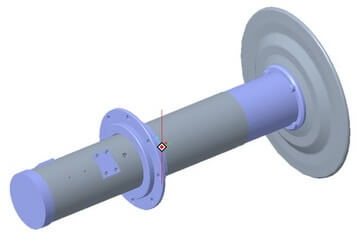
A waveguide in a microwave communication system is a hollow metal tube or channel that is used to guide and transmit microwave signals. It is designed to confine and direct the electromagnetic waves within its structure, allowing them to propagate from one point to another with minimal loss or distortion. The waveguide is typically made of conductive materials such as copper or aluminum and is often used in microwave antennas, radar systems, and satellite communications.
What does a waveguide do?
A waveguide is a structure that guides electromagnetic waves, such as light or radio waves, along a specific path. It acts as a channel or a conduit for the waves to travel through. The main purpose of a waveguide is to minimize energy loss and interference, and to maintain the quality and strength of the waves.
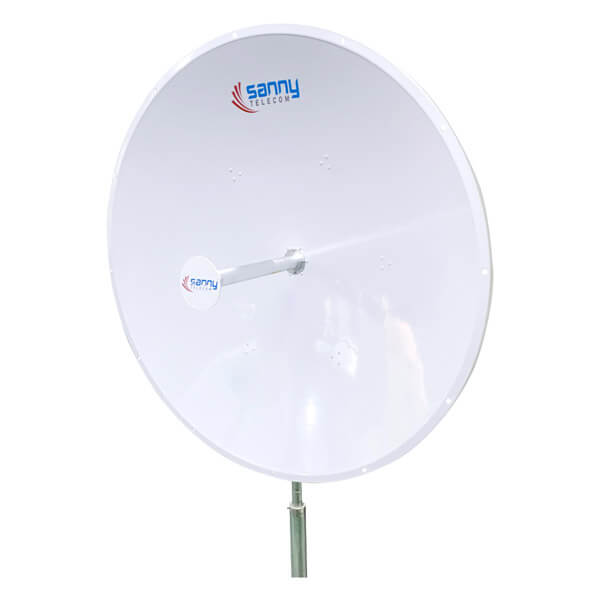
In the context of optical waveguides, they are used in fiber optic cables to transmit light signals over long distances with minimal loss. The waveguide structure inside the fiber optic cable ensures that the light waves stay confined within the cable and do not escape. This allows for efficient transmission of data over long distances.
In the field of radio and microwave engineering, waveguides are used to transmit and receive radio waves and microwaves. The waveguide structure helps to direct the waves in a specific direction and prevent them from spreading out and losing energy. This is important for applications such as radar systems, satellite communications, and microwave ovens.
Waveguides are also used in various other devices and systems, such as antennas, optical sensors, and medical equipment. In these applications, waveguides help to maintain the integrity and strength of the waves, ensuring accurate and reliable signal transmission or sensing.
Are waveguides still used today?
Yes, waveguides are still used today in various applications. Some examples include:
1. Radar and electronic warfare systems: Waveguides are used to transmit and receive electromagnetic waves in radar and electronic warfare systems. They are used to guide the high-frequency signals with low loss and high power handling capabilities.
2. Satellite terminals: Waveguides are used in satellite communication systems to transmit high-frequency signals between the antenna and the transceiver. They are used to minimize the signal loss and maintain the signal integrity over long distances.
3. Medical systems: Waveguides are used in medical systems like linear accelerators, which are used for cancer treatment. They are used to transmit high-power microwaves to accelerate electrons or protons for radiation therapy.
4. Telecommunication systems: Waveguides are used in high-frequency telecommunication systems to transmit signals between different components. They are used to guide the signals with minimal loss and interference.
5. Industrial applications: Waveguides are used in various industrial applications, such as microwave heating systems, plasma generation systems, and material processing systems. They are used to deliver high-power microwaves or electromagnetic waves to the target materials or processes.
Overall, waveguides continue to play a significant role in both established and emerging technologies due to their unique properties and capabilities in guiding high-frequency electromagnetic waves.
What is a waveguide used for?
Some specific applications of waveguides include:
1. Communication systems: Waveguides are commonly used in microwave and radio frequency communication systems to transmit signals with low loss and high efficiency. They are used in satellite communication, radar systems, and cellular networks.
2. Antennas: Waveguides are used as feeders for antennas to transmit and receive electromagnetic waves efficiently. They are used in radar systems, satellite communication, and wireless communication systems.
3. Optical communication: In optical communication systems, waveguides are used to guide and transmit light signals. Optical fibers, which are a type of waveguide, are used extensively in telecommunication networks to transmit data over long distances.
4. Microwave devices: Waveguides are used in various microwave devices such as circulators, isolators, filters, and couplers. These devices are used in radar systems, microwave ovens, and wireless communication systems.
5. Medical imaging: Waveguides are used in medical imaging devices such as MRI (Magnetic Resonance Imaging) machines. They guide and transmit radio waves or electromagnetic waves to create detailed images of the human body.
6. Particle accelerators: Waveguides are used in particle accelerators to guide and accelerate charged particles such as electrons or protons. They are used in research facilities and in medical applications such as cancer treatment.
7. Industrial applications: Waveguides are used in industrial applications such as plasma cutting, welding, and heating. They guide and focus electromagnetic waves to perform specific tasks.
8. Scientific research: Waveguides are used in various scientific research fields such as spectroscopy, astronomy, and particle physics. They help in guiding and analyzing electromagnetic waves for scientific experiments and observations.
What is an example of a waveguide?
Another practical example of a waveguide is the coaxial cable used to transmit television signals. Coaxial cables consist of a central conductor surrounded by a dielectric material and an outer conductor. The dielectric material acts as a waveguide, confining the signal within the cable and allowing it to be transmitted over long distances without significant loss of signal quality.
Waveguides are also commonly used in radar systems. Radar antennas are often designed as waveguides to direct and focus the electromagnetic waves emitted by the radar system. This allows for accurate detection and tracking of objects at a distance.
In addition, waveguides are used in medical imaging devices such as MRI machines. In an MRI, a waveguide is used to transmit radio frequency pulses into the body and receive the resulting signals. The waveguide helps to guide and control the electromagnetic waves used in the imaging process, allowing for detailed and precise images to be produced.
Overall, waveguides are essential components in various technologies, enabling the efficient transmission and control of electromagnetic waves for a wide range of applications.
cURL Too many subrequests.
cURL Too many subrequests.
cURL Too many subrequests.
cURL Too many subrequests.
cURL Too many subrequests.
cURL Too many subrequests.
cURL Too many subrequests.
cURL Too many subrequests.
cURL Too many subrequests.
cURL Too many subrequests.
An cURL Too many subrequests. cURL Too many subrequests.
cURL Too many subrequests.
cURL Too many subrequests.
 German (Switzerland)
  English
  Spanish
  German
  French (France)
  Korean
  Russian
  Indonesian
  French (Canada)
  Vietnamese
  Armenian
  Albanian
  Assamese
  Acehnese
  Amharic
  Czech
Czech  Bulgarian
  Cebuano
  Malayalam
  Japanese
  Dutch
Dutch