 Skip to content
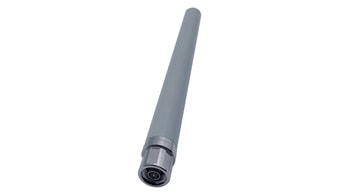
In the world of wireless communication, selecting the correct type of antenna is pivotal for achieving reliable and efficient connectivity. Omni-directional antennas stand out due to their ability to send and receive signals in all directions, making them a cornerstone of modern RF communication systems.
An omni-directional antenna is a versatile and indispensable tool in the field of wireless communication, designed to broadcast and receive signals in all horizontal directions. This makes it ideal for applications where the signal direction cannot be predetermined.
As we delve deeper into the applications and benefits of omni-directional antennas, it becomes evident that their versatility in signal distribution is unmatched, especially in dynamic environments.
What does an omni antenna do?
An omni antenna is a type of antenna that radiates and receives radio waves in all directions equally. It is designed to provide a 360-degree coverage pattern, allowing for communication in all directions without the need for constant adjustment or alignment. Omni antennas are commonly used in wireless communication systems, such as Wi-Fi routers, cell towers, and radio broadcasting, to provide a wider coverage area and reach multiple devices simultaneously.
What is an omni antenna used for?
An omni antenna, short for omni-directional antenna, is used for transmitting and receiving radio waves in all directions equally. It is designed to provide a 360-degree coverage pattern, allowing it to communicate with multiple devices or receive signals from multiple directions simultaneously. Omni antennas are commonly used in wireless communication systems, such as Wi-Fi networks, cellular networks, and radio broadcasting, where the signal needs to be distributed evenly in all directions.

What’s the range of Omni-directional antennas?
The range of omni-directional antennas can vary depending on several factors such as the frequency used, the power output of the transmitter, the height and placement of the antenna, and the surrounding environment. However, in general, the range of omni-directional antennas can be anywhere from a few meters to a few hundred meters.
What are the advantages of an omni-directional antenna?
There are several advantages of an omnidirectional antenna:
1. 360-degree coverage: An omnidirectional antenna radiates and receives signals in all directions, providing a full 360-degree coverage. This means it can communicate with multiple devices located in different directions without needing to be reoriented.
2. Simplicity: Omnidirectional antennas are relatively simple in design and construction, making them easier to install and maintain compared to directional antennas. They do not require precise alignment or adjustment to work effectively.
3. Ease of use: Due to their wide coverage pattern, omnidirectional antennas are more user-friendly. Users do not need to worry about aiming the antenna towards the desired signal source or adjusting it when the signal direction changes.
4. Suitable for mobile applications: Omnidirectional antennas are commonly used in mobile devices such as smartphones, tablets, and laptops. These antennas enable seamless communication while the device is in motion, as they can receive signals from any direction.
5. Better for multipoint communication: If you need to communicate with multiple devices or access points simultaneously, an omnidirectional antenna is the ideal choice. It allows for easy connectivity with multiple devices located in different directions without the need for multiple antennas.
6. Improved signal strength: Omnidirectional antennas have a higher gain compared to built-in or internal antennas found in many devices. This means they can provide better signal strength and range, resulting in improved wireless connectivity.
Where would you use an omni-directional antenna?
An omni-directional antenna is commonly used in various applications where signals need to be transmitted or received from multiple directions without the need for constant antenna adjustment. Here are a few examples of where omni-directional antennas are used:
1. Wireless networking: In home or office environments, omni-directional antennas are often used with Wi-Fi routers to provide wireless internet access to multiple devices in all directions within a certain range.
2. Cellular communication: Omni-directional antennas are used in cell towers to provide coverage in all directions around the tower, allowing mobile devices to connect to the cellular network.
3. Broadcast radio and television: In radio and television broadcasting, omni-directional antennas are used to transmit signals in all directions so that anyone within the broadcast range can receive the signal with a regular antenna.
4. Public safety communications: Emergency services, such as police, fire, and ambulance, often utilize omni-directional antennas to ensure reliable communication coverage in all directions within their service area.
5. Marine and aviation communication: In the maritime and aviation industries, omni-directional antennas are used for communication systems to provide coverage in all directions, allowing vessels or aircraft to communicate with control towers or other vessels/aircraft.
Overall, omni-directional antennas are used in various applications where it is necessary to transmit or receive signals in multiple directions without the need for constant antenna adjustment.
When should an omni-directional antenna be considered?
An cURL Too many subrequests. should be considered when there is a need to receive or transmit signals in all directions equally. This is particularly useful in scenarios where the source or destination of the signals is not fixed or known in advance. Some common situations where an omnidirectional antenna may be considered include:
1. Wireless networking: In a home or office environment, an omnidirectional antenna can be used to provide Wi-Fi coverage in all directions, ensuring that all devices within the coverage area can connect to the network.
2. Mobile communications: In mobile phones or other mobile devices, an omnidirectional antenna is used to receive and transmit signals to and from cell towers or other communication devices, regardless of the direction in which they are located.
3. Broadcasting: In radio or television broadcasting, an omnidirectional antenna is used to transmit signals in all directions, allowing anyone within the broadcast range to receive the signals using a compatible receiver.
4. Public safety communications: In emergency services or public safety communication systems, such as police, fire, or ambulance services, an omnidirectional antenna is used to ensure that signals can be received and transmitted in all directions, enabling effective communication in any situation.
Overall, an omnidirectional antenna is suitable when there is a need for equal signal coverage in all directions, without the need for focusing or directing the signals towards a specific target.
How do you set up an omni-directional antenna?
cURL Too many subrequests. cURL Too many subrequests.:
cURL Too many subrequests.
cURL Too many subrequests.
cURL Too many subrequests.
cURL Too many subrequests.
cURL Too many subrequests.
cURL Too many subrequests.
cURL Too many subrequests.
cURL Too many subrequests.
cURL Too many subrequests.
cURL Too many subrequests.
cURL Too many subrequests.
cURL Too many subrequests.
cURL Too many subrequests.
cURL Too many subrequests.
In summary, omni-directional antennas cURL Too many subrequests.
 German (Switzerland)
  English
  Spanish
  German
  French (France)
  Korean
  Russian
  Indonesian
  French (Canada)
  Vietnamese
  Armenian
  Albanian
  Assamese
  Acehnese
  Amharic
  Czech
Czech  Bulgarian
  Cebuano
  Malayalam
  Japanese
  Dutch
Dutch