 Skip to content
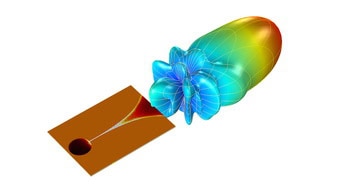
cURL Too many subrequests. Vivaldi antenna represents a breakthrough in modern technology, offering advanced capabilities for a wide array of applications. Known for its distinctive tapered slot design, the Vivaldi antenna combines form and function to deliver impressive performance across various frequencies. This has made it a go-to solution for engineers and technology enthusiasts seeking reliability and efficiency. Its ability to handle a broad bandwidth and maintain high directivity makes it ideal for both commercial and scientific applications, including radar systems, wireless communications, and even space exploration. As we delve deeper into its innovative features and practical uses, it becomes clear why the Vivaldi antenna stands out in the field of antenna technology.
A Vivaldi antenna is a type of tapered slot antenna designed for wide bandwidth and high directivity. Its low cost and ease of fabrication make it ideal for various applications, especially in wireless communications. By utilizing printed circuit technology, these antennas achieve compact designs without compromising performance.
Understanding the theory behind Vivaldi antennas is crucial to appreciating their functionality and advantages.
What is the theory of the Vivaldi antenna?
The Vivaldi antenna is a type of wideband antenna that was invented by Johann Vivaldi in 1952.Sometimes referred to as the Vivaldi notch antenna or tapered slot antenna (TSA), it is celebrated for its ultra-wide bandwidth and straightforward fabrication on a circuit board. The unique design, featuring a tapered slot etched onto a dielectric substrate, enables the antenna to support a broad range of frequencies with remarkable efficiency.
First introduced to the engineering community through academic publications in the late 1970s, the Vivaldi antenna quickly gained recognition for its aperiodic, continuously scaled structure—an innovation that offers theoretically unlimited instantaneous bandwidth. This combination of broad frequency coverage, high directivity, and ease of manufacture has made the Vivaldi antenna a cornerstone in modern antenna technology, widely used in radar, wireless communications, and scientific research.
Why is it called a “Vivaldi” antenna?
The name “Vivaldi antenna” carries an interesting backstory rooted in a blend of art and science. The most widely accepted explanation ties the name to the antenna’s distinctive shape, which is said to resemble the graceful curves of a violin or cello—musical instruments famously associated with Antonio Vivaldi, the renowned Baroque composer. This connection between form and function highlights the antenna’s elegance in both design and performance.
However, those with firsthand knowledge have shared additional insights. According to colleagues of the antenna’s inventor, Peter Gibson, the name was inspired by Gibson’s passion for music. He noted the antenna’s profile bore a resemblance to the cross-section of an early trumpet—a nod to Vivaldi, who composed a trumpet concerto. Coincidentally, the naming also coincided with the 300th anniversary of Vivaldi’s birth in 1678, making the tribute even more fitting.
While there may be a few poetic versions of the story, it is clear that the combination of musical heritage and the antenna’s unique shape inspired its memorable name. It is a tapered slot antenna that is designed to operate over a wide frequency range.
The theory behind the Vivaldi antenna is based on the principles of electromagnetic radiation and wave propagation. The antenna consists of a tapered slot that is etched onto a dielectric substrate. The tapering of the slot allows the antenna to radiate and receive electromagnetic waves over a wide frequency range.
When a signal is applied to the antenna, it creates an electric field that excites the slot. This excitation causes the antenna to radiate electromagnetic waves into free space. The tapering of the slot allows the antenna to radiate waves of different frequencies with equal efficiency.
The Vivaldi antenna is a popular choice for applications that require wideband performance, such as radar systems and wireless communication systems. Its wideband characteristics make it well-suited for these applications, as it can operate over a wide frequency range without the need for multiple antennas.
Peter Gibson, the inventor of the Vivaldi antenna
To truly appreciate the impact of the Vivaldi antenna, it’s worth looking at the life of its inventor, Peter Gibson. Gibson’s journey into the world of microwave engineering was anything but conventional. Born in Gillingham, Kent, in December 1934, Gibson began his technical training early, attending Chatham Technical School before embarking on an electrical engineering apprenticeship at Chatham Dockyard at just 16.
After completing his apprenticeship, Gibson continued to build his expertise by earning both Ordinary and Higher National Certificates through part-time study at Croydon College. Although he never attended university, his dedication paved the way for him to become a chartered engineer recognized by the Institution of Electronics and Radio Engineers (which would later become part of the Institution of Engineering and Technology, or IET).
Most of Gibson’s professional career unfolded at Philips, initially at Mullard Research Laboratories in Redhill, a hub for innovation in microwave technology. It was here, during the late 1970s, that he pioneered the development of the Vivaldi antenna—a breakthrough born out of his extensive work with microwave components and antenna systems. His focus shifted entirely to antennas during the early 1980s, leading to numerous publications and the advancement of microstrip array technology.
For his contributions, Gibson was honored as a Fellow of the IERE in the mid-1980s, recognizing a lifetime dedicated to microwave engineering and antenna design. Later, he took his expertise to MEL in Crawley, contributing to the development of advanced broadband antennas used in naval detection systems—a testament to his commitment to practical, high-impact technology.
Gibson’s legacy endures not only through the widespread use of the Vivaldi antenna in today’s cutting-edge applications, but also through the practical, accessible path he charted for future engineers.
How does the Vivaldi antenna work?
The Vivaldi antenna is a type of broadband antenna that operates over a wide frequency range. It is named after its inventor, Paul Vivaldi.
The antenna consists of a tapered slot in a metal plate, which is usually made of a conductive material such as copper or aluminum. The slot is wide at one end and narrows down to a point at the other end.

When an electromagnetic wave passes through the slot, it causes the electrons in the metal plate to move. This movement of electrons creates an electric current, which then generates a magnetic field. The combination of the electric and magnetic fields radiates the electromagnetic wave away from the antenna.
The tapered shape of the slot allows the antenna to operate over a wide range of frequencies. As the frequency of the incoming wave changes, the size of the slot changes as well, allowing the antenna to efficiently radiate the wave at different frequencies.
The Vivaldi antenna is commonly used in applications such as radar systems, wireless communication systems, and satellite communication systems, where a wide bandwidth and high gain are required.
What are the advantages of the Vivaldi antenna?
The Vivaldi antenna, a type of ultra-wideband antenna, offers several advantages:
1. Wide Bandwidth: Vivaldi antennas are known for their ability to operate over a broad frequency range, making them suitable for applications that require wideband performance, such as radar and communication systems.
2. Compact Size: Despite their wide bandwidth, Vivaldi antennas can be designed to be relatively compact, which is beneficial for applications where space is limited.

3. High Gain: The design of the Vivaldi antenna allows for high gain, particularly at higher frequencies, which enhances signal strength and range.
4. Directional Radiation Pattern: Vivaldi antennas typically exhibit a directional radiation pattern, which can help focus the signal in a specific direction, improving performance in applications like point-to-point communication.
5. Ease of Fabrication: Vivaldi antennas can be easily fabricated using printed circuit board (PCB) technology, making them cost-effective and suitable for mass production.
6. Low Profile: Their low profile makes Vivaldi antennas suitable for integration into various platforms, including mobile devices, automotive applications, and wearable technology.
7. Good Impedance Matching: Vivaldi antennas can achieve good impedance matching over their operational bandwidth, minimizing signal reflections and losses.
8. Versatility: They can be used for various applications, including telecommunications, medical devices, and sensor networks, due to their adaptability to different frequency ranges.
9. Robust Performance: Vivaldi antennas are known for their robust performance in challenging environments, making them suitable for outdoor and industrial applications.
These advantages make the Vivaldi antenna a popular choice in modern communication and radar systems.
What is the Vivaldi antenna used for?
Vivaldi antennas find applications in various fields, including telecommunications, radar systems, and remote sensing. Their wide bandwidth and compact design make them particularly useful in 5G and 6G technologies, as well as in automotive and aerospace sectors.
cURL Too many subrequests.

cURL Too many subrequests.
cURL Too many subrequests.
cURL Too many subrequests.
cURL Too many subrequests.
cURL Too many subrequests.
cURL Too many subrequests.
cURL Too many subrequests.
cURL Too many subrequests.
cURL Too many subrequests.
cURL Too many subrequests.
cURL Too many subrequests.
cURL Too many subrequests.
cURL Too many subrequests.
cURL Too many subrequests.
- cURL Too many subrequests.
- cURL Too many subrequests.
- cURL Too many subrequests.
cURL Too many subrequests.
Vivaldi Antenna Design
The design of a Vivaldi antenna indeed focuses on several critical factors to achieve optimal performance while minimizing size and weight. Here are some key considerations and design aspects:

1. Material Selection:
– Substrate Material: The choice of substrate affects the antenna’s performance. Common materials include FR-4, Rogers, or Teflon, which offer good dielectric properties and lightweight characteristics.
– Conductive Material: Copper is typically used for the conductive parts of the antenna due to its excellent conductivity and ease of fabrication.
2. Geometry of the Tapered Slot:
– Slot Shape: The tapering of the slot is crucial for achieving wideband performance. The angle and length of the taper can be adjusted to optimize the impedance matching across the desired frequency range.
– Width of the Slot: The width can be varied to control the bandwidth and radiation pattern. A wider slot generally leads to broader bandwidth.
– End-Fire Radiation Pattern: The design should ensure that the antenna radiates effectively in the desired direction, often achieved by shaping the taper appropriately.
3. Integration with Other Components:
– Feeding Mechanism: The feed design (e.g., microstrip line, coplanar waveguide) should be carefully integrated to minimize reflections and ensure efficient power transfer.
– Matching Network: A matching network may be required to optimize the impedance at the feed point and enhance bandwidth.
– Compact Design: The integration of the Vivaldi antenna with other electronic components (such as amplifiers, filters, or RF front-ends) should be done in a way that minimizes the overall footprint while maintaining performance.
cURL Too many subrequests.
– Radiation Pattern Control: The design should consider the desired radiation pattern, which can be affected by the geometry of the tapered slot and the overall antenna structure.
– Bandwidth Enhancement: Techniques such as using multiple slots or modifying the taper profile can be employed to enhance bandwidth.
– Gain Improvement: The design can be optimized for gain by adjusting the slot dimensions and the overall antenna shape, potentially including the use of reflectors or directors.
5. Simulation and Prototyping:
– Electromagnetic Simulation Tools: Software tools (like HFSS, CST Microwave Studio, or FEKO) are often used to simulate the antenna’s performance before fabrication.
– Prototyping: After simulations, prototypes should be fabricated and tested to validate performance metrics such as gain, radiation pattern, and bandwidth.
By carefully considering these factors, a Vivaldi antenna can be designed to achieve the desired performance while keeping size and weight to a minimum, making it suitable for various modern applications.
Typical Vivaldi Antenna Structure
A practical Vivaldi antenna design often features a microstrip line running on one side of the substrate, crossing over a slot line etched into the ground plane on the opposite side. The microstrip line is commonly terminated in an open circuit a quarter wavelength from the slot intersection, while the slot line itself is terminated with a short circuit, also a quarter wavelength away. This configuration enables efficient energy transfer from the microstrip to the slot line, launching the signal into the tapered slot where it propagates outward.
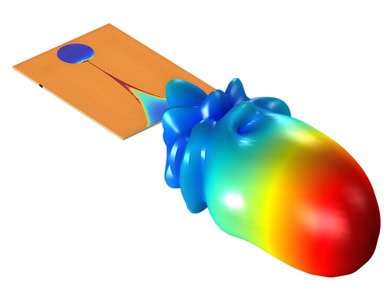
As the slot line widens according to a specific taper profile, the electromagnetic energy transitions smoothly from the guided mode to free space, resulting in the characteristic end-fire radiation pattern. The precise shape of the taper is governed by mathematical equations designed to optimize bandwidth and radiation efficiency, but in many practical applications, an exponential or fixed-radius taper is used for simplicity and effectiveness.
These foundational design aspects—material selection, taper geometry, integration, and feed structure—all contribute to the Vivaldi antenna’s versatility and robust performance in demanding environments. The thoughtful coordination of these elements helps ensure wideband operation, high gain, and reliable signal transmission, making the Vivaldi antenna a popular choice in modern communication and radar systems.
Vivaldi Antenna Frequency
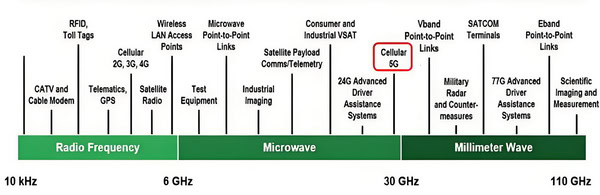
Vivaldi antennas are known for their wide bandwidth capabilities, often exceeding 10:1, which makes them suitable for a range of applications, including ultra-wideband (UWB) communications, radar systems, and various wireless technologies. Their design typically features a tapered slot that allows for effective radiation across a broad frequency spectrum.
The frequency range of Vivaldi antennas can vary based on their specific design and dimensions, but they are commonly used in applications that require operation from several gigahertz up to tens of gigahertz. For example, a typical Vivaldi antenna might operate from around 3 GHz to 30 GHz, making them ideal for modern communication protocols like Wi-Fi, LTE, and 5G.
Frequency Ranges in Patented Vivaldi Antenna Designs
Patented Vivaldi antenna designs have demonstrated wide operational frequency ranges, underscoring the versatility of this antenna type. For instance, some documented applications specify operating bands from approximately 6.3 GHz up to 12 GHz, covering much of the X-band, which is particularly relevant for radar and advanced communication systems. These ranges are not limits, however. Many patents leave the frequency scope broadly defined, recognizing that the underlying design principles of Vivaldi antennas can be scaled for use well beyond specific frequency bands—even up toward V-band frequencies and beyond.
This flexibility in frequency coverage is a hallmark of the Vivaldi architecture, supporting a broad spectrum of applications while allowing for further innovation and adaptation in emerging wireless technologies.
The ability to handle multiple frequencies simultaneously without significant degradation in performance is a key advantage of Vivaldi antennas, ensuring their relevance in the rapidly evolving landscape of wireless technology. Their compact size and planar structure also make them suitable for integration into various devices, including smartphones, IoT devices, and automotive applications.
Vivaldi Antenna Polarization
Vivaldi antennas are known for their ability to achieve dual polarization, which is a significant advantage in various applications. By being able to transmit and receive signals in both horizontal and vertical orientations, these antennas enhance their versatility in communication systems, radar, and remote sensing.
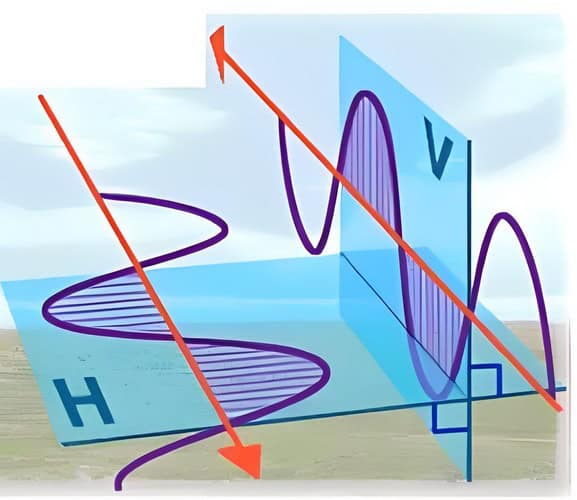
The dual polarization capability allows for improved signal quality and reliability, as it helps mitigate the effects of multipath propagation and interference. This is particularly beneficial in environments where signals may be reflected or scattered, such as urban areas or complex indoor settings.
Additionally, Vivaldi antennas are characterized by their wide bandwidth and compact design, making them suitable for a range of frequencies and applications, including wireless communications, imaging systems, and automotive radar. Their ability to maintain robust signal integrity across different polarizations further enhances their performance in diverse environments, making them a popular choice for modern antenna systems.
Achieving Circular or Switch Polarization with Vivaldi Antenna Arrays
Vivaldi antennas can be configured within arrays to support advanced polarization capabilities, including circular or switchable polarization modes. This is typically accomplished by arranging individual Vivaldi elements so that the array operates in both orthogonal planes. By thoughtfully positioning and orienting each antenna element, the array can be engineered to produce the desired polarization—either by alternating between modes or by combining signals to achieve circular polarization.
One practical method involves constructing the array using interleaved or “egg crate” frameworks, where sets of antennas are aligned along both horizontal and vertical axes. This configuration allows independent control over each plane’s polarization, enabling the array to transmit and receive in multiple modes. Such versatility is especially valuable in applications like radar, MIMO communication systems, and environments subject to multipath interference, where adaptable polarization improves performance and reliability.
With proper design, Vivaldi antenna arrays can seamlessly transition between linear and circular polarization, further expanding their utility in dynamic wireless and sensing environments.
cURL Too many subrequests.
cURL Too many subrequests.
cURL Too many subrequests.
cURL Too many subrequests.
cURL Too many subrequests.
cURL Too many subrequests.
cURL Too many subrequests.
cURL Too many subrequests.
cURL Too many subrequests.
cURL Too many subrequests.
cURL Too many subrequests.
cURL Too many subrequests.
cURL Too many subrequests.
cURL Too many subrequests.
cURL Too many subrequests.
cURL Too many subrequests.
cURL Too many subrequests.
cURL Too many subrequests.
cURL Too many subrequests.
cURL Too many subrequests.
 German (Switzerland)
  English
  Spanish
  German
  French (France)
  Korean
  Russian
  Indonesian
  French (Canada)
  Vietnamese
  Armenian
  Albanian
  Assamese
  Acehnese
  Amharic
  Czech
Czech  Bulgarian
  Cebuano
  Malayalam
  Japanese
  Dutch
Dutch