 Skip to content

In today’s interconnected world, the term “backhaul” often comes up in discussions about networking and telecommunications. Understanding what backhaul is and how it functions is crucial for consumers, tech enthusiasts, and professionals alike. Whether you’re a technician looking to optimize network performance or a techie curious about the intricacies of data transmission, this guide will provide you with a comprehensive understanding of backhaul.
Wireless Backhaul refers to the intermediate connections between the core network and the smaller subnetworks at the edge of the network. It is crucial for expanding network coverage and ensuring efficient data transmission. Backhaul uses various mediums like copper, fiber, or wireless links to connect the core network to the smaller subnetworks.
Let’s dive deeper into the various aspects of backhaul, its purposes, and applications to better understand its significance in modern networking.
What is the meaning of backhaul?
Backhaul refers to the process of transmitting data from a remote site or location back to a central or main location. It is typically used in telecommunications and networking to describe the transmission of data from a cell tower or remote site to the main network or data center. Backhaul is an essential part of the network infrastructure that enables the connection and communication between remote sites and the central network.
What is the purpose of backhaul?
The purpose of backhaul is to transport data or voice traffic from a remote site or location back to a central site or location. It is typically used in telecommunications networks to connect cell towers or remote sites to the main network.

How does the backhaul work?
The backhaul refers to the process of transmitting data from a remote site or cell tower back to the central network or data center. It is an essential component of telecommunications networks and is typically used in wireless networks such as cellular networks.
The backhaul works by establishing a connection between the remote site or cell tower and the central network or data center. This connection can be wired or wireless, depending on the infrastructure and technology being used.
In wired backhaul, a physical connection is established using cables such as fiber optic cables, Ethernet cables, or other high-speed data cables. These cables are laid out between the remote site or cell tower and the central network or data center, allowing for the transmission of data.
In wireless backhaul, the connection is established using wireless technologies such as microwave, satellite, or radio frequency. Microwave backhaul uses microwave signals to transmit data between the remote site or cell tower and the central network or data center. Satellite backhaul uses satellite communication to transmit data, while radio frequency backhaul uses radio waves to establish the connection.
Once the connection is established, data is transmitted from the remote site or cell tower back to the central network or data center. This data can include voice calls, internet traffic, video streaming, or any other type of data that needs to be transmitted.
The backhaul is typically a high-capacity connection to ensure that large amounts of data can be transmitted quickly and efficiently. This is important to support the increasing demand for data in modern telecommunications networks.
What are the benefits of backhaul?
There are several benefits of backhaul:
1. Cost savings: Backhaul allows for the efficient use of network resources, reducing the need for additional infrastructure and saving costs.
2. Increased capacity: Backhaul helps increase the capacity of the network by providing a high-speed connection between the access network and the core network.
3. Improved network performance: Backhaul helps improve network performance by reducing latency and increasing bandwidth, resulting in faster data transfer and better user experience.
4. Scalability: Backhaul allows for easy scalability of the network, as additional capacity can be added by upgrading the backhaul connection.
5. Flexibility: Backhaul provides flexibility in network design, as it enables the use of different access technologies and allows for the integration of multiple access networks into a single core network.
6. Support for new services: Backhaul enables the delivery of new services that require high-speed and low-latency connections, such as video streaming, online gaming, and IoT applications.
What does 5G backhaul mean?
5G backhaul refers to the network infrastructure that connects the 5G base stations (also known as small cells or nodes) to the core network. It is the link that carries the data traffic from the base stations to the central network, allowing for high-speed and low-latency communication between the base stations and the core network. The backhaul is responsible for transmitting large amounts of data quickly and efficiently to support the high bandwidth requirements of 5G networks.
What is backhaul in Wi-Fi?
Backhaul in Wi-Fi refers to the connection between the access points (APs) and the network infrastructure. It is the link that carries the data traffic between the APs and the wired network, such as the router or switch. The backhaul connection can be wired or wireless, depending on the deployment scenario. In large-scale Wi-Fi networks, the backhaul is an important consideration to ensure sufficient bandwidth and reliable connectivity between the APs and the network infrastructure.
What is backhaul in 5G?
Backhaul in 5G refers to the process of connecting the 5G base stations (also known as small cells) to the core network. It involves the transmission of data between the base stations and the core network, enabling the exchange of information and allowing users to access the internet and other services. Backhaul is an essential component of 5G networks as it provides the necessary infrastructure for the delivery of high-speed, low-latency connectivity to users.

What does a backhaul consist of?
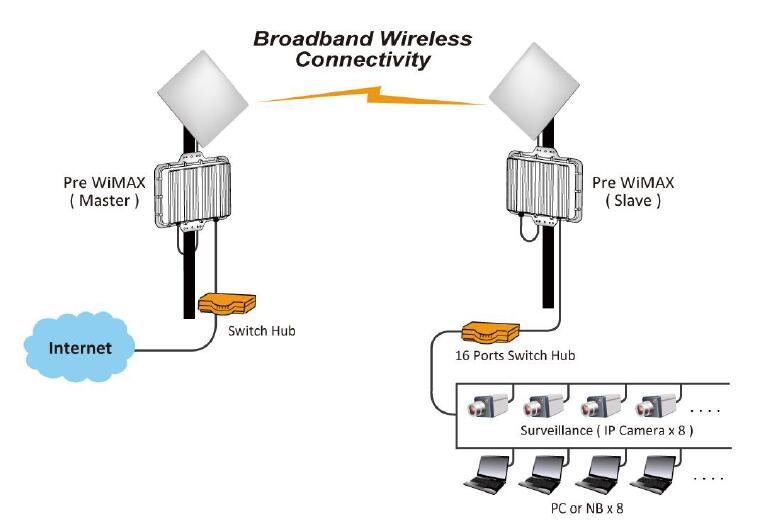
A wireless backhaul network consists of a series of wireless links that connect the access points or base stations of a wireless network to the core network. These links are typically point-to-point or point-to-multipoint connections that transmit data over the air using radio frequencies. The network may also include antennas, radios, switches, routers, and other equipment to facilitate the transmission of data between the access points and the core network.
What’s the best antenna for the wireless backhaul?
The microwave antenna or parabolic dish antenna is the best antenna type for long-range point-to-point backhaul in microwave communication. Parabolic dish antennas have high gain and are highly directional, allowing for long-range communication with minimal signal loss. They focus the signal in a narrow beam, providing a high signal-to-noise ratio and reducing interference from other sources. Parabolic dish antennas are commonly used in microwave communication systems for their ability to achieve long-range, high-capacity links.
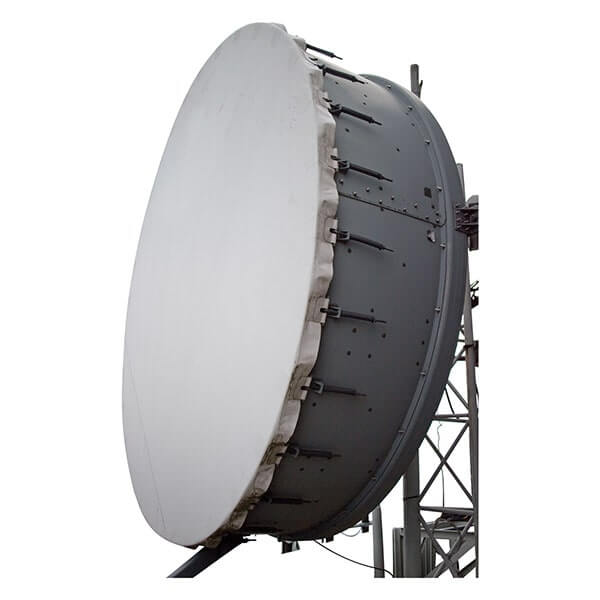
What would be an example of a backhaul connection?
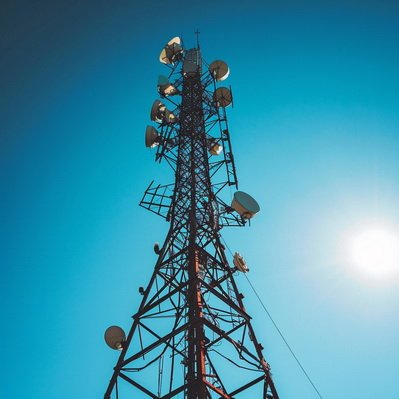
An example of a wireless backhaul connection is a point-to-point microwave link.
What are the applications of the backhaul?
The point-to-point backhaul is used in a variety of applications, including:
cURL Too many subrequests.
cURL Too many subrequests.
cURL Too many subrequests.
cURL Too many subrequests.
cURL Too many subrequests.
cURL Too many subrequests.
cURL Too many subrequests.
cURL Too many subrequests.
cURL Too many subrequests.
cURL Too many subrequests.
cURL Too many subrequests.
cURL Too many subrequests.
cURL Too many subrequests.
cURL Too many subrequests.
cURL Too many subrequests.
cURL Too many subrequests.
cURL Too many subrequests.
 German (Switzerland)
  English
  Spanish
  German
  French (France)
  Korean
  Russian
  Indonesian
  French (Canada)
  Vietnamese
  Armenian
  Albanian
  Assamese
  Acehnese
  Amharic
  Czech
Czech  Bulgarian
  Cebuano
  Malayalam
  Japanese
  Dutch
Dutch