 Skip to content
Yagi Antenna vs Log-periodic Antenna
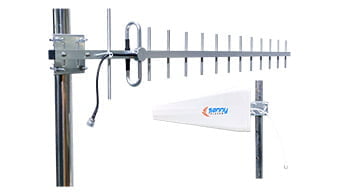
The Yagi antenna is a highly directional antenna that is designed to receive and transmit signals in a specific direction. It is ideal for situations where you want to focus your signal in a particular area. The log-periodic antenna, on the other hand, is a multi-directional antenna that can receive and transmit signals from multiple angles simultaneously. It is ideal for situations where you want to pick up signals from multiple sources or in multiple directions.
What Is A Log-periodic Antenna?
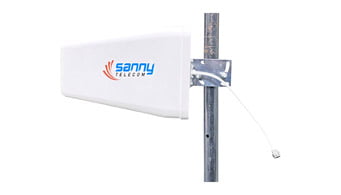
A log-periodic antenna is a directional, multi-element antenna designed to operate over a wide range of frequencies. Its unique geometric structure allows for consistent performance and gain across its bandwidth, making it ideal for applications that require robust, frequency-agile communication solutions.
What Is A PIFA Antenna?
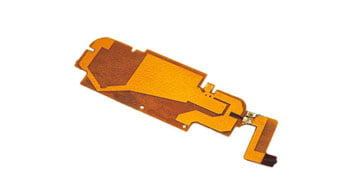
A PIFA, or Planar Inverted-F Antenna, is a type of compact antenna widely employed in mobile communication devices. It operates primarily at UHF and microwave frequencies, featuring a unique structure that includes a monopole antenna running parallel and very close to a ground plane, with a portion of the antenna folded back over itself and grounded, optimizing space and enhancing performance.
What Is A Magnetic Mount Antenna?
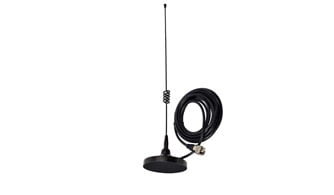
A magnetic mount antenna typically consists of a strong magnet as its base, which is used to attach the antenna securely to the metal body of a vehicle. This design not only facilitates easy installation but also ensures that the antenna remains firmly in place during movement, making it ideal for mobile communications.
Parabolic Grid Antenna vs Parabolic Dish Antenna: How to Choose?
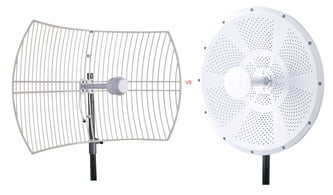
If you are looking for a smaller, lighter, and more affordable option, the parabolic grid antenna may be the better choice. On the other hand, if you need a more powerful antenna with a longer range, the parabolic dish antenna may be the better option.
What Is A FPC Antenna?
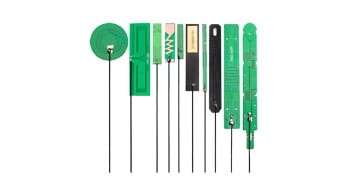
An FPC antenna is a type of wireless antenna made on a flexible polymer substrate, which allows it to bend, fold, and conform to small or irregular spaces without losing its effectiveness. This adaptability makes it an ideal choice for today’s compact and complex electronic architectures.
 English
  Spanish
  German
  French (France)
  Korean
  Russian
  Indonesian
  French (Canada)
  Vietnamese
  Armenian
  Albanian
  Assamese
  Acehnese
  Amharic
  Czech
Czech  Bulgarian
  Cebuano
  Malayalam
  German (Switzerland)
  Japanese
  Dutch
Dutch