 Skip to content

In the era of rapid technological advancements, wireless parabolic dish antennas have emerged as a cornerstone of modern communication systems. Renowned for their efficiency in directing radio waves, these antennas play a critical role in a wide array of applications across various sectors. This article delves into the top 5 applications of wireless parabolic dish antennas, showcasing their versatility and indispensable nature in today’s digital world.
General Specifications of a 15dBi Parabolic WiFi Antenna
A 15dBi parabolic WiFi antenna is engineered for efficient, long-distance, and reliable wireless connectivity. Here’s a breakdown of its typical specifications:
- Frequency Range: Operates in the 2.4 GHz ISM band (2400–2483 MHz), making it suitable for standard WiFi applications.
- Antenna Gain: Delivers a robust 15dBi, providing focused energy for extended reach and enhanced link performance.
- Polarization: Supports either horizontal or vertical polarization to match system requirements.
- Beamwidth: Offers approximately 16° horizontal and 21° vertical beamwidth for targeted, directional coverage.
- VSWR (Voltage Standing Wave Ratio): Maintains an efficient signal transfer with a VSWR below 1.5.
- Front-to-Back Ratio: Exceeds 20dB, minimizing interference from unwanted directions.
- Connector Type: Equipped with an N-Female connector for standard coaxial cable compatibility.
- Input Impedance: Rated at 50 ohms, ensuring seamless integration with most wireless equipment.
- Construction Materials: Typically crafted from durable aluminum and steel for longevity and weather resistance.
- Mounting: Designed for pole mounting (1.25″ to 2″ diameter pole), with flexible installation options for rooftops or towers.
- Operating Temperature: Capable of withstanding extreme environments, typically ranging from -40°F to 149°F.
- Wind Loading: Rated to handle wind speeds of up to 85 mph.
- Physical Dimensions & Weight: Compact form factor, around 15.75″ wide by 11.8″ high, and weighing approximately 3.3 lbs.
- Warranty: Commonly backed by a 1-year limited warranty, coverage may vary by manufacturer.
These technical features make the 15dBi parabolic WiFi antenna a practical solution for point-to-point wireless links, rural broadband, and other applications demanding focused, long-range connectivity.
Superior Construction: Parabolic Dish vs. TV-Quality Yagi Antennas
When it comes to build quality, parabolic dish antennas often stand head and shoulders above standard TV-quality Yagi antennas. Many parabolic models feature cast aluminum reflectors and robust, high-grade materials that enhance both durability and performance.
In contrast, TV-grade Yagi antennas typically utilize more lightweight materials, which might suffice for basic reception but may not withstand harsh outdoor environments nearly as well. This solid construction not only improves signal reliability over long distances but also makes the parabolic dish antenna a more resilient and weather-resistant option for demanding installations.
Wireless Internet Service Providers (WISPs)
The parabolic dish antennas used by WISPs are designed to focus and direct the wireless signal in a specific direction, allowing for long-range connections. These antennas are typically mounted on tall structures such as towers or rooftops to achieve line-of-sight communication between the base station and the customer’s location.

The dish antenna consists of a curved metal reflector, called the parabolic reflector, and a small feed antenna located at the focal point of the reflector. The feed antenna is connected to a radio transceiver, which transmits and receives the wireless signals.
When the radio transceiver sends out a signal, it is directed towards the feed antenna. The feed antenna then broadcasts the signal towards the parabolic reflector. The curved shape of the reflector causes the signal to bounce off and reflect towards a specific direction, forming a narrow beam. This beam is then transmitted over long distances to the customer’s premises.
On the customer’s end, a dish antenna is also installed to receive the signal. The dish antenna at the customer’s location is pointed towards the WISP’s base station, allowing it to capture the narrow beam of the transmitted signal. The feed antenna at the customer’s premises then sends the received signal to the customer’s wireless router or modem, which converts it into a usable internet connection.
Note: The parabolic dish antenna is an accessory and must be used in conjunction with other essential equipment, such as a compatible radio transceiver and proper mounting hardware. It cannot function as a standalone device.
The use of parabolic dish antennas in WISP networks allows for reliable and high-speed internet connections over long distances. However, it is important to have a clear line of sight between the base station and the customer’s location, as obstacles such as trees or buildings can block or weaken the signal. Additionally, the dish antennas need to be properly aligned to ensure optimal signal strength and performance.
How Far Can a 15dBi Directional WiFi Antenna Extend Your Signal?
A 15dBi directional WiFi antenna, particularly one in a parabolic dish design, can dramatically extend wireless coverage. When properly installed and aligned, these antennas are capable of transmitting and receiving WiFi signals over distances of up to 3 miles (approximately 5 kilometers) in clear, line-of-sight conditions. The secret lies in their focused narrow beam—typically around 16° horizontal and 21° vertical—which not only boosts range but also helps reduce interference from neighboring wireless devices.
In practical terms, this makes the 15dBi antenna ideal for point-to-point connections, such as linking buildings on a campus, outbuildings on a farm, or even sharing internet service between friendly neighbors (with the necessary permissions, of course). Compared to standard omnidirectional or Yagi antennas of similar gain, the focused beam of a parabolic dish ensures a more reliable and stable signal across greater distances, provided there are no major physical obstructions like hills, dense trees, or large structures blocking the path.
Proper alignment is essential for optimal performance. If both locations have a clear line of sight, a setup using these antennas can deliver fast, stable wireless connectivity where regular routers or lower-gain antennas would struggle.
Sharing Wireless Service With a Neighbor
Yes, with the appropriate permissions, a parabolic dish antenna can be configured to extend a wireless network to a neighbor’s home. By precisely aligning two dish antennas—one at your location and one at your neighbor’s—you can create a stable, long-distance connection that shares your internet service. This approach essentially forms a point-to-point wireless bridge between properties.
Before proceeding, it’s essential to ensure both households have a clear line of sight between the antennas, free of obstructions like trees or tall buildings, to maintain reliable performance. It’s also important to check with your internet service provider regarding any service-sharing restrictions or local regulations.
This type of setup is commonly used in rural communities where high-speed options may be limited and allows neighbors to benefit from a single fast, wireless connection without sacrificing signal quality.
Comparing Parabolic Dish and Yagi Antennas: Range and Interference
When considering long-range wireless connections, parabolic dish antennas generally outperform Yagi antennas of similar gain. Thanks to their much narrower beam width—for example, typically around 16° horizontally and 21° vertically—parabolic dishes are especially effective at focusing radio waves precisely where you need them. This concentrated focus not only extends the useful range but also helps to minimize the chances of interference from other nearby WiFi networks or devices.
In comparison, Yagi antennas, while directional, have a broader beam width and are more likely to pick up unwanted signals from neighboring sources. As a result, parabolic dish antennas are preferred for scenarios requiring robust, stable links across greater distances, particularly in environments where signal interference is a concern.
Point-to-Point Communication
Parabolic dish antennas are highly directional antennas that use a parabolic reflector to focus radio waves to a specific point or to receive radio waves from a specific direction. These antennas have a high gain, which means they can transmit or receive signals over long distances with minimal signal loss.

One of the main advantages of parabolic dish antennas is their ability to establish stable and secure connections. Due to their high gain, they can transmit and receive signals with high power and sensitivity, resulting in a strong and clear connection. This makes them ideal for applications like video surveillance, where a stable and high-quality video feed is essential.
Parabolic dish antennas are also commonly used for voice communication. They can transmit voice signals over long distances with minimal distortion, ensuring clear and understandable communication. This makes them suitable for applications like two-way radios or intercom systems.
In addition to video surveillance and voice communication, parabolic dish antennas are also used for data transmission. They can transmit data at high speeds over long distances, making them suitable for applications like connecting two buildings or locations that are far apart. This is particularly useful in situations where running cables or laying fiber optic lines is not feasible or cost-effective.
Overall, parabolic dish antennas are versatile and reliable tools for point-to-point communication links. Their high gain, stability, and security make them ideal for applications like video surveillance, voice communication, and data transmission over long distances.
Wireless Backhaul
Wireless backhaul networks are used to connect remote base stations to the core network in order to provide mobile users with high-speed and reliable connectivity. These networks are essential for mobile operators to deliver services to their customers.
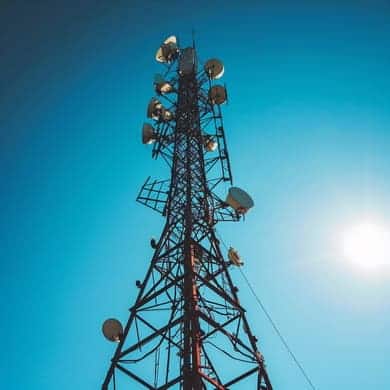
Wireless parabolic dish antennas are a key component of wireless backhaul networks. These antennas are designed to transmit and receive radio signals over long distances, often several kilometers or more. They are typically used in point-to-point configurations, where one dish antenna is connected to another dish antenna at the other end of the link.
The parabolic shape of the dish antenna allows it to focus the radio signal into a narrow beam, which increases the range and signal strength. This enables the antennas to transmit data over long distances without significant loss of signal quality.
Wireless parabolic dish antennas are often used in licensed frequency bands, which means that mobile operators have exclusive rights to use those frequencies. This helps to minimize interference from other wireless devices and ensures that the backhaul network operates at optimal performance.
In addition to their long-range capabilities, wireless parabolic dish antennas also support high data rates. They are capable of transmitting data at speeds of several gigabits per second, which is essential for supporting the increasing demand for mobile data.
Overall, wireless parabolic dish antennas play a critical role in wireless backhaul networks. They enable mobile operators to connect remote base stations to the core network, ensuring seamless connectivity and high data rates for mobile users.
Long-Distance Wireless Surveillance
Wireless parabolic dish antennas are designed to focus and direct wireless signals in a specific direction. They consist of a curved metal dish, called a reflector, with a small antenna, called a feed, placed at its focal point. The shape of the dish helps to collect and concentrate the wireless signals, while the feed captures and transmits the signals.

In long-distance wireless surveillance systems, a wireless parabolic dish antenna is typically installed on both the camera and the monitoring station. The camera antenna is pointed towards the monitoring station, while the monitoring station antenna is pointed towards the camera. This alignment ensures optimal signal strength and quality.
When the camera captures a video feed, it converts it into a wireless signal and transmits it through the parabolic dish antenna. The antenna focuses the signal and sends it towards the monitoring station. The monitoring station antenna receives the signal, which is then converted back into a video feed and displayed on the monitoring station’s screen.
Wireless parabolic dish antennas are ideal for long-distance wireless surveillance systems due to their ability to transmit signals over several miles. They can overcome obstacles such as buildings, trees, and terrain that would typically hinder wireless signals. This makes them suitable for providing surveillance and security in remote areas, large properties, or areas where running cables is not practical or cost-effective.
In addition to their long-range capabilities, wireless parabolic dish antennas also offer high signal gain. Signal gain refers to the ability of an antenna to amplify the strength of a signal. The parabolic shape of the dish helps to collect as much signal as possible and focus it towards the feed, resulting in increased signal strength and improved transmission quality.
Overall, wireless parabolic dish antennas are an effective solution for long-distance wireless surveillance systems. They enable the transmission of video feeds from remote surveillance cameras to monitoring stations, providing real-time surveillance and security in areas where wired connections are not feasible.
Radio Link for Remote Control
The parabolic dish antenna is a key component in radio links for remote control applications. It is designed to focus radio waves in a specific direction, allowing for long-range communication between the control station and the remote device.
The parabolic shape of the dish antenna helps to concentrate the radio waves onto a single point, known as the focal point. This focal point is where the radio waves are received or transmitted by the antenna. By focusing the radio waves in this way, the dish antenna is able to achieve high gain, which is the ability to amplify the signal strength.
The high gain of the parabolic dish antenna enables long-range communication for remote control applications. This means that the control station can be located far away from the remote device, while still maintaining a strong and reliable connection. This is particularly useful in situations where the remote device is operating in a hazardous or hard-to-reach location, such as underground tunnels or high-rise buildings.
The remote control radio link allows for the remote operation of machinery, vehicles, and equipment. For example, a remote control radio link can be used to operate a robotic arm in a manufacturing facility, allowing for precise control and manipulation of objects. It can also be used to remotely control vehicles, such as drones or unmanned aerial vehicles (UAVs), for surveillance or delivery purposes.
Overall, the parabolic dish antenna plays a crucial role in radio links for remote control applications. Its ability to focus and amplify radio waves enables long-range communication between the control station and the remote device, making it possible to remotely operate machinery, vehicles, and equipment.
Suitability in Harsh Weather Conditions
A key advantage of this parabolic dish antenna is its robust construction, which makes it well-suited for use in harsh weather environments. The reflector is crafted from precision-cast aluminum alloy and finished with a durable powder coat, providing excellent resistance to corrosion and environmental wear. This ensures long-term reliability even when exposed to rain, wind, or fluctuating temperatures.
Additionally, the aerodynamic design of the antenna minimizes wind resistance, reducing the risk of damage during storms or high winds. Compared to standard TV-grade Yagi antennas, the higher quality materials and sturdy build of this parabolic dish make it a more resilient and dependable choice for installations in challenging outdoor settings.
Whether deployed in remote, open areas or regions prone to severe weather, this antenna is designed to maintain high performance and structural integrity, delivering reliable communication and data transmission when you need it most.
In conclusion, wireless parabolic dish antennas are an essential technology for long-distance communication and data transmission. They offer high gain, narrow beamwidth, and low interference, making them ideal for various applications.
As technology advances and our need for reliable and high-speed communication increases, the use of wireless parabolic dish antennas will continue to grow. They will play a crucial role in shaping our digital future and connecting people around the world.
 English
  Spanish
  German
  French (France)
  Korean
  Russian
  Indonesian
  French (Canada)
  Vietnamese
  Armenian
  Albanian
  Assamese
  Acehnese
  Amharic
  Czech
Czech  Bulgarian
  Cebuano
  Malayalam
  German (Switzerland)
  Japanese
  Dutch
Dutch