 Skip to content

In the modern automotive landscape, the car antenna is an unsung hero, often unnoticed yet playing pivotal roles in both vehicle performance and passenger experience. This slender piece of technology, which extends beyond the car’s metal body, is far more than a simple radio signal catcher. Its applications range from enhancing communication to safety features, proving that this component, though small, is mighty in functionality. Here, we delve into the top 8 applications of the car antenna, shedding light on its indispensable contributions to automotive technology.
Radio Broadcasting Reception
In the early days of radio broadcasting, car antennas were typically long, metal rods that were mounted on the exterior of the vehicle. These antennas were designed to pick up AM radio signals, which have a longer wavelength and can travel long distances. However, they were not very efficient at picking up FM radio signals, which have a shorter wavelength and require a more sensitive antenna.

Whip Antennas: What Are They and Why Use Them?
When it comes to classic car antennas, the whip antenna is perhaps the most recognizable. Visually, it’s the straight, thin rod you’ve likely seen rising from fenders or rear quarters—sometimes waving in the breeze as you zip down the highway.
But what exactly sets whip antennas apart? To start, their design is as straightforward as it gets: a single, flexible rod (often stainless steel or fiberglass) that stands vertically from the car’s exterior. This simplicity is part of their enduring charm and utility.
Key Advantages of Whip Antennas:
- Omnidirectional Reception: Whip antennas are engineered to pick up signals from every direction, making them reliable for receiving AM and even FM broadcasts regardless of vehicle orientation.
- Versatility: Their effectiveness isn’t limited to car radios. Whip antennas are commonly used for two-way communication (think CB radios or emergency handhelds), thanks to their broad frequency compatibility.
- Durability and Flexibility: The materials—notably flexible steel—allow the antenna to bend rather than break if struck by low branches or a curious bird, leading to impressive longevity in real-world driving conditions.
- Efficient Performance: Despite their unflashy appearance, these antennas provide solid signal strength without the need for complex installation.
So, whether you’re tuning in to your favorite radio station on a cross-country road trip or reaching out with a handheld transceiver in a pinch, the humble whip antenna remains a dependable ally in vehicular communication technology.
What Is a Telescoping Antenna and How Does It Work?
Among the various types of car antennas, the telescoping antenna is particularly notable for its flexibility and practical design. As its name suggests, this antenna can be extended or compressed, much like a handheld radio aerial, allowing users to tailor its length according to their needs.
This adjustability isn’t just for show. By changing the length of the telescoping antenna, you can fine-tune its effectiveness across different frequencies. For example, extending the antenna helps capture longer wavelength signals (such as AM radio), while retracting it can improve reception of shorter wavelengths (like those used by FM broadcasts).
Beyond vehicles, telescoping antennas have also been widely used in portable devices, such as classic Sony and Panasonic radios, portable televisions, and even some walkie-talkies. Their omnidirectional nature means they can receive signals from all directions, ensuring consistent and reliable performance as you drive through varied terrains.
Whether extended to maximize AM coverage on a long highway or retracted for urban FM clarity, the telescoping antenna remains a simple yet ingenious solution for optimizing your in-car listening experience.
As car radios became more popular and FM radio stations started to emerge, car manufacturers began to include antennas specifically designed for FM reception. These antennas were typically shorter and more compact than their AM counterparts, and they were often mounted on the rear window or embedded in the windshield.
In recent years, car antennas have become even more sophisticated. Many modern cars now come equipped with shark-fin antennas, which are sleek, aerodynamic designs that are mounted on the roof of the vehicle. These antennas are not only more aesthetically pleasing, but they also provide better reception and reduce noise interference.
Some car manufacturers have even started to hide the antenna altogether. These hidden antennas are typically embedded in the windshield or rear window, making them virtually invisible to the naked eye. While these antennas may not provide the same level of reception as a traditional antenna, they are often sufficient for most people’s needs.
Types of Car Antennas
The evolution of car antennas hasn’t just been about where they’re placed—it’s also about the variety of designs that cater to different needs and environments. Here’s a look at some of the most common types you’ll find on the road today:
- Fiberglass Antennas: Built for durability and flexibility, these are often seen on vehicles that brave harsh conditions, such as off-roaders and marine vehicles. The metal radiating element is encased in fiberglass, offering both protection from the elements and reliable signal quality.
- Telescoping Antennas: Remember the classic “pull-up” antennas? Telescoping antennas let you extend or retract their length, allowing drivers to optimize signal reception for AM, FM, or even handheld radios. This adaptability means better performance across varying frequencies.
- Whip Antennas: The iconic straight, flexible rods seen on many older vehicles and handheld transceivers. Whip antennas are omnidirectional, picking up signals from all directions, making them a simple but effective choice for radio communication.
- GPS Antennas: With navigation now a staple in modern cars, GPS antennas have become ubiquitous. These capture signals directly from satellites, ensuring precise location tracking—even in challenging environments—without relying on terrestrial towers.
Overall, the evolution of car antennas has greatly improved radio reception in vehicles. Whether you’re listening to AM, FM, or satellite radio, you can now enjoy clear, high-quality sound while on the move.
Satellite TV Reception
Satellite television in vehicles is made possible through an integrated car antenna designed to capture broadcast signals from satellites orbiting high above the Earth. Unlike traditional radio antennas, these specialized antennas are engineered to track satellites even while the car is in motion, ensuring a consistent connection regardless of your location.
When you activate satellite TV in your vehicle, the antenna locks onto the appropriate satellite signal, receiving transmissions that carry audio, video, and data content. This allows passengers to enjoy a wide range of television channels—news, sports, entertainment, and even Internet-based services—directly on the vehicle’s display system.
In effect, the car antenna serves as a dedicated gateway, relaying real-time satellite broadcasts with minimal interference. This technology not only enhances long-distance travel but also transforms the in-car experience, turning your vehicle into a mobile entertainment hub.
Fiberglass Antennas
Among the wide variety of antenna designs used in vehicles, fiberglass antennas stand out for their resilience and versatility. These antennas feature a metal core that acts as the signal conductor, which is then encased in a tough fiberglass sheath. This protective layer shields the antenna from the effects of sun, rain, wind, and even accidental impacts, making it particularly well-suited for challenging environments.
You’ll often find fiberglass antennas on vehicles that venture far beyond the paved roads—think rugged off-road trucks, RVs navigating across the country, or boats braving open waters. Their omnidirectional nature allows them to receive signals from all directions, which is especially useful when you’re not sure where the nearest transmission tower might be hiding.
The combination of flexibility and strength means that, whether you’re winding through backcountry trails, fishing on choppy rivers, or just need a reliable connection in less-than-ideal conditions, a fiberglass antenna can handle the task—without snapping or losing signal quality.
GPS Navigation
The GPS navigation system in a vehicle works by receiving signals from multiple GPS satellites orbiting the Earth. These satellites transmit signals that contain information about their location and the exact time the signal was sent.
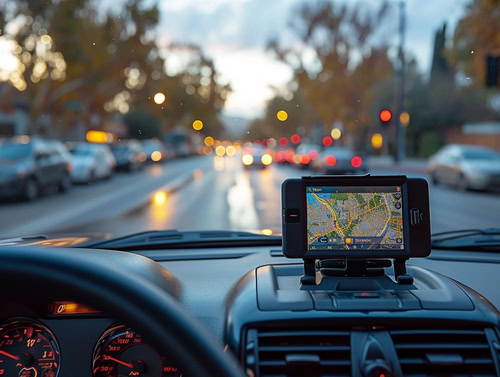
The car antenna is responsible for capturing these signals and sending them to the GPS receiver in the vehicle. The receiver then calculates the time it took for the signal to travel from each satellite to the antenna. By comparing the time it took for the signal to reach the antenna from different satellites, the GPS receiver can determine the distance between the antenna and each satellite.
Once the GPS receiver has the distance measurements from multiple satellites, it can use a process called trilateration to determine the vehicle’s location on the Earth’s surface. Trilateration involves intersecting the spheres created by the distance measurements from each satellite to find the exact location where all the spheres intersect.
With the vehicle’s location determined, the GPS navigation system can provide a wide range of useful information and services. It can give turn-by-turn directions to a specific destination, taking into account the vehicle’s current location and the desired destination. The system can also provide real-time traffic updates, helping the driver avoid congested areas and choose the most efficient route.
In addition to these features, GPS navigation systems can also offer other useful services. They can provide information about nearby points of interest, such as gas stations, restaurants, and hotels. Some systems can even offer weather updates, fuel price information, and other helpful data.
Overall, the car antenna is a critical component of a GPS navigation system. It allows the system to receive signals from GPS satellites, accurately determine the vehicle’s location, and provide a wide range of useful services to the driver.
Mobile Phone Signal Enhancement

Car antennas that enhance mobile phone signals are particularly useful in areas with poor cellular coverage. They amplify the signal inside the vehicle, allowing for better call quality and consistent mobile data reception. By extending the reach of your phone’s antenna, it ensures that you stay connected, whether for personal calls or business communication, without the frustration of dropped calls or slow data speeds.
Emergency Assistance Services
Emergency assistance services play a crucial role in vehicle safety by providing quick and efficient access to emergency services or roadside assistance. They can be accessed through specialized car antennas, mobile apps, or connected car platforms.

In the event of an accident, the car antenna sends signals directly to the service provider, who can then pinpoint the location and dispatch emergency services or roadside assistance. This rapid communication can be lifesaving in critical situations.
Emergency assistance services are not limited to accidents, but can also be utilized in other emergency situations such as medical emergencies or car breakdowns. Having access to these services can provide peace of mind and ensure that help is readily available when needed.
Keyless Entry Systems
Keyless entry systems are convenient and secure, and they rely on the car’s antenna to receive radio signals from the key fob. When a button is pressed on the key fob, a small battery in the fob transmits a radio signal to the car. The car’s antenna picks up the signal and sends it to the car’s computer, which responds accordingly. This could involve unlocking the doors, starting the car’s engine, or opening the trunk.

There are several advantages to using keyless entry systems over traditional key-based systems. For one, it is much quicker and easier to unlock a car with a keyless entry system. Rather than having to physically insert a key into the lock, all the driver has to do is walk up to the car with the key fob in their pocket or purse. The doors will unlock automatically when the key is in close proximity to the car.
Another advantage of keyless entry systems is that they add an extra layer of security. In order for the doors to unlock, the key fob must be within a certain range of the car. This means that even if someone has a copy of the key, they cannot unlock the car unless they are physically close to it. This makes it much more difficult for someone to steal a car with a keyless entry system.
While keyless entry systems are generally very secure, there is one potential drawback. The radio signal that is transmitted between the key fob and the car can be intercepted and copied by someone with the right equipment. This means that a thief could potentially steal a car by intercepting the signal from the key fob and using it to unlock the car. To combat this, many car manufacturers have implemented additional security measures. For example, they may encrypt the radio signal or require a secondary verification step, such as pressing a button on the key fob, in order to unlock the car.
Overall, keyless entry systems are a convenient and secure way to unlock and start a car. They rely on the car’s antenna to receive radio signals from the key fob and enable the doors to unlock automatically. While they do have some potential security vulnerabilities, car manufacturers have taken steps to mitigate these risks and ensure the safety of their customers.
Tire Pressure Monitoring
Tire pressure monitoring systems (TPMS) are now standard in most new vehicles, alerting drivers to any significant changes in tire pressure. These systems use antennas to communicate wirelessly with sensors placed in each tire. By ensuring that tire pressure is maintained at optimal levels, the antenna aids in preventing accidents caused by underinflated tires and in promoting fuel efficiency.
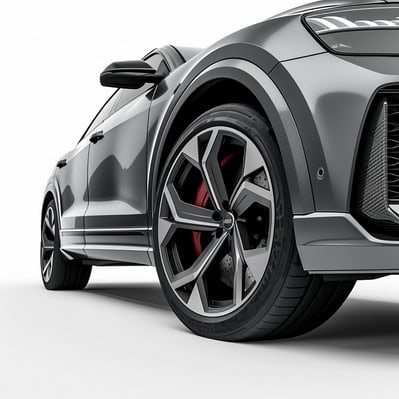
In addition to alerting drivers to changes in tire pressure, TPMS antennas also provide valuable information to the vehicle’s onboard computer system. This information can be used to calculate tire rotation speed, which is important for functions such as anti-lock braking systems and traction control.
TPMS antennas are typically mounted inside the wheel well or on the underside of the vehicle. They are designed to withstand harsh weather conditions, such as extreme temperatures and exposure to road salt.
There are two types of TPMS antennas: direct and indirect. Direct TPMS antennas work by directly measuring the pressure inside each tire using sensors. These sensors send a signal to the antenna, which then communicates with the vehicle’s computer system. Indirect TPMS antennas, on the other hand, use the vehicle’s existing anti-lock braking system to monitor tire pressure. They measure the rotation speed of each tire and compare it to the others. If one tire is rotating at a different speed, it indicates a change in tire pressure.
Overall, TPMS antennas play a crucial role in ensuring that tire pressure is maintained at optimal levels. By doing so, they help to prevent accidents, improve fuel efficiency, and prolong the life of the tires.
Wi-Fi Connectivity
Wi-Fi connectivity in cars has become increasingly popular as cars become more connected. Car antennas enable this by connecting to mobile data networks and creating a Wi-Fi hotspot within the car. This allows passengers to browse the internet, stream music or videos, and stay connected on tablets or laptops during long trips. This makes the journey more enjoyable and productive.

Car antennas can also enable other connected car features, such as providing real-time traffic updates, weather information, and navigation assistance. They can also enable remote vehicle diagnostics and software updates, allowing car manufacturers to monitor and maintain the performance of their vehicles.
Car antennas can also support the growth of autonomous vehicles. As self-driving cars become more prevalent, they will need to be constantly connected to the internet in order to communicate with other vehicles, traffic infrastructure, and the cloud. Car antennas can provide the necessary connectivity to enable these communications, ensuring that autonomous vehicles can operate safely and efficiently.
In summary, car antennas are an important component of connected cars. They enable onboard Wi-Fi, support other connected car features, and facilitate the growth of autonomous vehicles. As cars continue to become more connected, the demand for car antennas will only continue to grow.
Bluetooth Connectivity
Bluetooth technology has become a staple in modern vehicles, offering drivers a safer and more convenient way to connect their smartphones and other devices. The car antenna plays a pivotal role here by boosting the strength and reliability of the Bluetooth connection between devices and the vehicle’s infotainment system.
Without a robust antenna, drivers can experience dropped connections, audio interruptions, or reduced functionality. But with a well-designed antenna, pairing is smoother and coverage within the cabin is more consistent. This means you can enjoy uninterrupted music streaming, make clear hands-free calls, and seamlessly use other Bluetooth-enabled features, whether you’re on a solo commute or a family road trip.
By ensuring a strong and stable Bluetooth link, the car antenna not only enhances entertainment but also supports safer driving habits, allowing for voice commands and minimized distractions.
Vehicle-to-Everything (V2X) Communication
V2X communication allows vehicles to communicate with each other and the surrounding environment using wireless technology. This enables vehicles to exchange information such as location, speed, direction, and intentions, allowing them to make informed decisions and take appropriate actions in real-time.

Car antennas play a vital role in V2X communication by transmitting and receiving signals between vehicles and other entities. These antennas need to be highly efficient and reliable to ensure seamless communication. They need to be able to transmit and receive signals over long distances, in various weather conditions, and in high-speed scenarios.
V2X communication has numerous potential applications. In terms of V2V communication, vehicles can exchange information such as their positions and speeds, allowing them to maintain safe distances and avoid collisions. V2I communication enables vehicles to communicate with traffic lights, road signs, and other infrastructure, allowing for better traffic management and coordination. V2P communication allows vehicles to detect and communicate with pedestrians, enhancing safety for both drivers and pedestrians.
One of the main benefits of V2X communication is its potential to improve road safety. By enabling vehicles to communicate with each other, they can share information about their intentions and potential hazards, allowing them to take preventive measures. This can help avoid accidents and reduce the severity of collisions. V2X communication can also help reduce traffic congestion by enabling vehicles to communicate with traffic lights and other infrastructure, allowing for more efficient traffic flow.
Another advantage of V2X communication is its potential to improve environmental efficiency. By allowing vehicles to communicate with each other and the infrastructure, they can optimize their routes and speeds, reducing fuel consumption and emissions. This can help reduce air pollution and improve overall environmental sustainability.
In conclusion, V2X communication has the potential to revolutionize the way vehicles interact with each other and the infrastructure. Car antennas play a crucial role in enabling this communication, and their efficiency and reliability are essential for its success. V2X communication promises to enhance road safety, reduce traffic congestion, and improve environmental efficiency, making it a key technology for the future of transportation.
Antennas Beyond Passenger Cars
While car antennas are commonly associated with personal vehicles, their benefits extend far beyond just cars. In fact, these antennas are regularly deployed in a wide range of vehicles—including buses, trucks, emergency response units, and even commercial fleets.
This versatility is possible because vehicle antennas are engineered to operate across multiple frequencies and withstand diverse environments. Whether it’s a city bus streaming real-time route updates, or a long-haul truck relying on GPS and cellular connectivity for logistics, antennas play an equally essential role. Their robust construction allows for reliable signal reception and transmission, which is just as critical for a bus navigating urban streets as it is for a delivery van traversing remote highways.
Key benefits of using antennas in various types of vehicles include:
- Improved Connectivity: Seamless internet access for passengers and operators in public transit and commercial vehicles.
- Enhanced Navigation: Dependable GPS for trucks and buses, especially important for route optimization and fleet tracking.
- Safety and Communication: Support for systems like emergency alerts, V2X communication, and vehicle diagnostics across transportation sectors.
So, whether you’re riding in a tour bus, driving a freight truck, or managing a municipality’s vehicle fleet, antennas deliver the critical connectivity and communication modern transportation demands.
In short, the car antenna is an essential component of modern vehicles, serving multiple purposes beyond just receiving radio signals. It plays a crucial role in ensuring safety, providing connectivity, and enabling advanced features like GPS and satellite radio. As technology advances, car antennas will continue to evolve and adapt to meet the changing needs of the automotive industry. Whether it’s for improving reception, enabling better communication, or facilitating autonomous driving, the car antenna will remain an integral part of the driving experience.
 English
  Spanish
  German
  French (France)
  Korean
  Russian
  Indonesian
  French (Canada)
  Vietnamese
  Armenian
  Albanian
  Assamese
  Acehnese
  Amharic
  Czech
Czech  Bulgarian
  Cebuano
  Malayalam
  German (Switzerland)
  Japanese
  Dutch
Dutch