 Skip to content

Point-to-multipoint communication antennas play a vital role in today’s wireless communication systems. These antennas allow for efficient transmission of data over long distances, making them essential for a wide range of applications. In this article, we will explore what point-to-multipoint communication antennas are, their advantages, different types, applications, and more.
A point-to-multipoint communication antenna is a type of antenna used to transmit data from one central point to multiple endpoints. This setup allows a single base station to connect with several remote locations, enabling efficient wireless communication for applications such as internet access, surveillance systems, and broadcasting.
As we delve deeper into the realm of point-to-multipoint communication antenna, let’s explore its underlying principles, how it works and deployment scenarios and applications.
What is the Point of Multipoint Communication Systems?
The point of multipoint communication systems is to allow multiple users to communicate with each other simultaneously. This is useful in situations where multiple people need to be involved in a conversation or where information needs to be shared with a group of people at the same time. Multipoint communication systems can be used in a variety of settings, including business meetings, classrooms, and video conferences.
What is an Example of a Point-to-Multipoint Network?
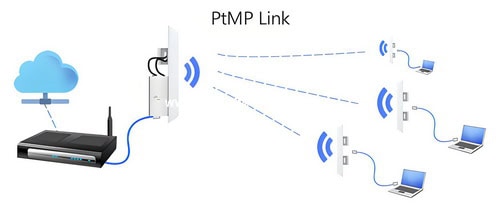
One example of a point-to-multipoint network is a wireless internet service provider (WISP). In this configuration, the WISP’s base station has a central antenna that communicates with multiple subscriber units located in different areas. This enables the provider to offer internet services to many customers without having to run individual wires to each location. Another example is in surveillance systems, where a central monitoring station receives video feeds from multiple cameras spread across a large area.
What is the Point-to-Multipoint Communication Antenna Used For?
A point-to-multipoint communication antenna is used to transmit and receive signals between a single base station and multiple remote stations. It is commonly used in wireless communication systems such as Wi-Fi networks, cellular networks, and satellite communication systems.
These antennas are designed to deliver data wirelessly from one transmitter to many receivers, making them ideal for situations where running cables to every endpoint isn’t practical. Point-to-multipoint (PtMP) setups are found in a wide range of network environments and leverage different technologies based on requirements for speed, coverage area, and reliability.
Common Technologies and Use Cases
- Wi-Fi PtMP networks: In smaller environments like public hotspots, campuses, or outdoor venues, Wi-Fi equipment can be set up in a point-to-multipoint configuration. Modern standards such as Wi-Fi 6E and Wi-Fi 7 provide greater range and capacity, making these deployments more effective and scalable.
- Fixed Wireless Access (FWA): FWA is often used to extend internet connectivity to homes or businesses where fiber or cable isn’t available. In these cases, PtMP antennas operate over licensed spectrum or shared bands like CBRS in the U.S., making broadband access possible for rural, suburban, or developing urban areas.
- Microwave and mmWave PtMP links: For high-speed, low-latency connections in business parks, industrial zones, or dense urban environments, microwave and millimeter wave technologies are a popular choice. These solutions can support impressive speeds, though they require clear line of sight and can be affected by weather conditions.
By connecting a central antenna to multiple endpoints, point-to-multipoint systems provide a flexible, scalable solution for delivering internet access, video surveillance, and real-time communication across a wide variety of settings.
How Do Businesses with Remote Offices Use Point-to-Multipoint Networks?
For organizations with multiple branches or remote offices, point-to-multipoint (PtMP) networks offer a smart and cost-effective solution for connecting everything together. Rather than setting up separate internet lines and network infrastructures at each location, businesses can utilize a single central hub—typically their headquarters—with a PtMP communication antenna. This central hub wirelessly links to antennas at each remote office, creating a unified network without the need for extensive cabling or costly individual service plans.
This approach greatly simplifies network management and helps reduce operational expenses. By consolidating their connectivity through one primary antenna, companies can more efficiently maintain secure communications, streamline IT support, and ensure consistent data access across all their sites—whether those sites are in the heart of a city or in more rural settings. PtMP networks are widely adopted by corporations with distributed environments, educational institutions with separate campuses, and even healthcare providers linking multiple clinics under a common system.
How Does Point-to-Multipoint Communication Antenna Work?
A point-to-multipoint communication antenna is a type of antenna that is used to transmit and receive signals between a single point (the base station) and multiple points (the client devices). This type of antenna is commonly used in wireless communication systems, such as Wi-Fi networks and cellular networks, to provide connectivity to multiple devices over a wide area.
The point-to-multipoint communication antenna works by using a combination of directional and omnidirectional antennas. The base station is equipped with a directional antenna that is pointed towards the client devices. This directional antenna allows for a focused and concentrated signal to be transmitted in the direction of the client devices.

The client devices, on the other hand, are equipped with omni-directional antennas. These antennas are designed to receive signals from all directions, allowing the client devices to receive the signal from the base station regardless of their location or orientation.
When the base station transmits a signal, the directional antenna focuses the signal towards the client devices. The client devices, using their omnidirectional antennas, receive the signal and send back any necessary data or information to the base station.
The use of a combination of directional and omnidirectional antennas allows for efficient and reliable communication between the base station and the client devices. The directional antenna provides a strong and focused signal to the client devices, while the omnidirectional antennas on the client devices ensure that the signal is received regardless of their location.
Overall, a point-to-multipoint communication antenna is a key component in wireless communication systems, enabling the transmission of signals between a single point and multiple points over a wide area.
The typical range of a point-to-multipoint (PtMP) wireless network varies depending on environmental conditions and equipment quality, but most commercial setups can reliably cover distances from about 1 mile up to 20 miles. Factors such as line of sight, potential obstacles (like trees or buildings), and local weather conditions—think heavy rain or snow—can impact signal strength and, ultimately, how far your network will reach.
For example, on a clear day with unobstructed views, a PtMP system using high-gain antennas from well-known manufacturers like Ubiquiti or Cambium Networks can stretch toward the upper end of that range. In contrast, denser urban areas or hilly terrain may shorten the effective coverage area. Proper site planning and choosing the right equipment are crucial if you want to maximize your network’s reach.
How are Wi-Fi, Fixed Wireless Access (FWA), CBRS, Microwave, and mmWave Technologies Used in Point-to-Multipoint Communication?
Point-to-multipoint (PtMP) communication systems harness a range of wireless technologies to connect multiple users or sites from a single central location. Each technology plays a unique role depending on the requirements for range, speed, reliability, and environment.
Wi-Fi in PtMP Networks
Wi-Fi is commonly used for smaller PtMP deployments, such as public hotspots in parks, schools, or event spaces. By pairing directional antennas at the base station with omnidirectional antennas at each client device, Wi-Fi networks can efficiently cover an area and connect a group of users wirelessly. Recent standards like Wi-Fi 6E and Wi-Fi 7 increase both the range and the number of simultaneous users, making Wi-Fi more viable for larger-scale PtMP applications than ever before.
Fixed Wireless Access (FWA) and CBRS
Fixed Wireless Access leverages PtMP technology to deliver high-speed internet in locations where laying traditional fiber or cable is impractical—think rural communities, industrial sites, or rapidly growing suburban neighborhoods. In the U.S., the Citizens Broadband Radio Service (CBRS) spectrum is frequently used for this purpose, providing reliable connections over moderate distances without the cost and complexity of wired infrastructure.
Microwave and mmWave Links
Microwave and millimeter wave (mmWave) technologies excel in PtMP setups where very high bandwidth and low latency are essential, such as office parks, manufacturing facilities, or dense city blocks. These frequencies are ideal for short-range, high-speed connections, but they do require a clear line of sight between the base station and each client antenna. While they’re less tolerant of physical obstructions and adverse weather, their capacity for rapid data transfer is unmatched in environments where reliability and speed are critical.
By carefully selecting the appropriate technology—whether Wi-Fi, FWA with CBRS, or high-frequency microwave/mmWave—PtMP networks can be tailored to meet the demands of a variety of settings and user needs.
What Issues Arise from Bandwidth Sharing in Point-to-Multipoint Networks?
One of the main challenges with point-to-multipoint (PtMP) networks is the way bandwidth is distributed among connected devices. Since all clients share a single connection from the base station, network performance can suffer when many users are active at the same time. This shared arrangement means that the more devices connected, the more each device competes for available bandwidth.
This competition can lead to lower data transfer speeds, especially during peak usage periods. In environments where critical applications like VoIP calls or video conferences need to perform smoothly, administrators often implement traffic prioritization techniques—sometimes known as Quality of Service (QoS)—to ensure essential services have the bandwidth they require. Without such measures, common issues include slower browsing, video buffering, or even dropped connections for certain users.
Managing bandwidth allocation and setting priorities help keep the network balanced and functional, but it’s important to factor in these potential challenges when designing or scaling a PtMP network.
What is Wireless or Wired Backhaul in the Context of PtMP?
In a point-to-multipoint (PtMP) network, the base station must still be connected to the broader internet—this crucial connection is known as the “backhaul.” Backhaul links make it possible for all the remote devices in the network to access external data and services.
There are generally two main types of backhaul connections:
- Wired backhaul: This typically uses fiber optic cables, high-capacity Ethernet lines, or similar terrestrial infrastructure to connect the base station directly to the internet or a core network. Wired backhaul is popular in urban and suburban areas where laying cable is practical.
- Wireless backhaul: In areas where installing cables is difficult or cost-prohibitive—such as remote, rural, or hard-to-reach locations—wireless backhaul becomes essential. Technologies like microwave links or millimeter wave (mmWave) radios provide high-speed connections between the base station and the internet gateway without the need for physical wiring.
A stable, high-performance backhaul—whether wired or wireless—is vital to ensure that the PtMP network delivers reliable connectivity to all users and devices relying on the base station.
How Does Deploying Quality of Service (QoS) Help Point-to-Multipoint Networks?
Implementing Quality of Service (QoS) in point-to-multipoint (PtMP) networks ensures that critical applications—such as voice-over-IP (VoIP), video conferencing, or business operations software—always receive the bandwidth they require. This prioritization keeps essential communications clear and uninterrupted, even when the network experiences heavy usage.
By managing and prioritizing network traffic, QoS prevents less important data transfers from interfering with time-sensitive tasks. For example, a video call during a busy workday won’t suddenly freeze because someone else started a large file download. Instead, the network intelligently allocates resources, helping maintain smooth performance for everyone connected to the PtMP system.
Why is Encryption Important in Point-to-Multipoint Networks?
Encryption plays a crucial role in ensuring the security and privacy of point-to-multipoint (PtMP) communication systems. Since wireless signals travel through open air, they are susceptible to interception by unauthorized parties. Without encryption, sensitive data being transmitted between the base station and multiple client devices could easily be accessed or tampered with by outsiders.
Implementing strong encryption protocols such as WPA3, VPNs, or secure tunnels helps prevent common threats like eavesdropping, spoofing, and unauthorized access. Encryption ensures that only intended recipients can decode and make use of the transmitted information, keeping your communications confidential and protecting users’ privacy.
Beyond confidentiality, encryption helps maintain the integrity and reliability of the network. It minimizes the risk of data manipulation or attacks that could disrupt service for multiple users. By securing wireless transmissions, organizations can confidently support many users and devices in a PtMP setup without exposing themselves to unnecessary security vulnerabilities.
How Does Regular Monitoring and Maintenance Benefit PtMP Networks?
Regular monitoring and maintenance are essential for keeping point-to-multipoint (PtMP) networks operating smoothly. By routinely checking network health—including uptime, latency, and signal strength—administrators can quickly spot potential issues before they disrupt service. This proactive approach helps prevent unexpected outages and keeps connectivity reliable for all users.
Some of the key advantages include:
- Early Detection of Problems: Constant monitoring allows teams to identify signal degradation or equipment faults early, minimizing downtime.
- Improved Performance: Routine maintenance ensures equipment such as antennas and cables remain in optimal condition, supporting faster and more stable connections.
- Increased User Satisfaction: When issues are resolved before users even notice, overall satisfaction with the network remains high.
- Reduced Operational Costs: Addressing small issues before they escalate helps avoid costly emergency repairs and service interruptions.
Incorporating regular maintenance into your PtMP network management is a practical way to maintain robust, dependable wireless communication for every connected site.
What are the Benefits of a Point-to-Multipoint Antenna?
1. Increased coverage: A point-to-multipoint antenna allows for a wider coverage area compared to a point-to-point antenna. This makes it ideal for providing wireless connectivity to multiple locations or users within a specific area.
2. Cost-effective: With a point-to-multipoint antenna, you can connect multiple locations or users using a single antenna, reducing the need for multiple antennas and associated equipment. This can help save on installation and maintenance costs.
3. Scalability: Point-to-multipoint antennas are highly scalable, allowing you to easily add or remove users or locations from the network without significant changes to the infrastructure. This makes it a flexible solution for growing networks or changing requirements. Whether you’re expanding coverage in a rural community, connecting new offices in the city, or simply accommodating more users as your needs grow, point-to-multipoint systems make it easy—just add more antennas or client devices as needed. There’s no need to lay new cables or overhaul your setup each time the network grows.
4. Simplified installation: Setting up a point-to-multipoint antenna is generally easier and faster compared to a point-to-point antenna. With a single antenna, you can connect multiple locations or users, eliminating the need for precise alignment and configuration of multiple antennas. This quick deployment is especially valuable in situations where immediate connectivity is needed, such as temporary events, pop-up offices, or emergency response scenarios. Because you’re not waiting on permits or trenching for new wires, you can often get your network up and running in days instead of months.
5. Improved network performance: Point-to-multipoint antennas typically have higher throughput and capacity compared to point-to-point antennas. This allows for faster data transfer and better performance, especially in situations where multiple users or locations are accessing the network simultaneously.
6. Reduced interference: Point-to-multipoint antennas can be designed to operate on different frequencies or channels, reducing the chances of interference between different users or locations. This can help maintain a stable and reliable network connection.
7. Versatility: Point-to-multipoint antennas can be used in various applications, including wireless internet service providers (WISPs), video surveillance, remote monitoring, and industrial automation. They can be deployed in urban or rural areas, making them suitable for a wide range of environments.
Comparing Point-to-Multipoint and Point-to-Point Antennas
To better understand these benefits, it helps to compare point-to-multipoint (PtMP) and point-to-point (PtP) antenna setups:
| Feature | Point-to-Multipoint (PtMP) | Point-to-Point (PtP) |
| Communication model | One-to-many | One-to-one |
| Typical setup | One base station connects to many endpoints | Direct link between two locations |
| Best use case | Scaling access to multiple sites or users | High-speed connection between two specific sites |
| Bandwidth | Shared across endpoints | Dedicated to the two endpoints |
| Deployment complexity | Lower—no need to build new links for every user | Higher—each new link requires new infrastructure |
| Security and performance | Good for general use, depends on signal strength and interference | Ideal for secure, high-throughput communication |
| Where commonly used | Connecting branches, field sites, or remote teams | Linking a data center to HQ or other mission-critical site |
As shown in the table above, point-to-multipoint antennas are particularly effective for scenarios where you need to connect many users or sites from a single base station—such as wireless internet service providers, campus networks, or rural connectivity projects. In contrast, point-to-point antennas excel where a dedicated, high-speed, secure link is needed between just two locations.
This versatility and ease of deployment make point-to-multipoint antennas a popular choice for expanding network coverage without the complexity and cost of building direct links for every connection.
What are the Challenges and Limitations of Point-to-Multipoint Antennas?
While point-to-multipoint antennas offer numerous benefits, they also come with their own set of challenges and limitations that users should keep in mind.
1. Susceptibility to Interference:
Physical obstacles such as trees, buildings, or even power lines can disrupt wireless signals and affect performance. Environmental factors like rain, snow, or heavy winds may also interfere with connectivity, so ensuring a clear line of sight between the base station and the client devices is essential for optimal results.
2. Shared Bandwidth:
In a point-to-multipoint setup, all connected devices share the available bandwidth from the base station. If too many users or locations are connected, the overall network speed can decrease, especially during periods of peak usage. Proper network planning and load balancing are necessary to maintain consistent performance.
3. Security Considerations:
Wireless networks are inherently more vulnerable to unauthorized access or eavesdropping compared to wired systems. To mitigate these risks, it’s important to use robust encryption standards (such as WPA3) and implement best practices like traffic segmentation and private virtual networks.
4. Range Limitations:
The effective range of point-to-multipoint antennas can be limited by the power of the transmitter, the sensitivity of the receivers, and environmental factors. Deployments in especially large or challenging terrains may require additional repeaters or relay stations to extend coverage.
5. Frequency Congestion:
When operating in unlicensed frequency bands, point-to-multipoint antennas may encounter interference from other wireless systems, including neighboring networks or common devices like microwave ovens and cordless phones. This can negatively impact signal quality and reliability.
In summary, recognizing these potential hurdles allows for better planning and more reliable implementation of point-to-multipoint wireless solutions. By proactively addressing these limitations, users can ensure their network remains robust and efficient, regardless of application.
Is Point-to-Multipoint Better Than Fiber or Wired Networks?
It depends on your needs and the specific situation. While fiber and traditional wired networks typically offer the fastest speeds and most consistent connections, they can be expensive and time-consuming to deploy—especially in remote, rural, or hard-to-reach locations. Point-to-multipoint (PtMP) antennas, on the other hand, are popular for their cost-effectiveness and rapid installation, making wireless connectivity accessible where laying physical cables isn’t practical.
In summary:
- Fiber and wired networks are best when speed and stability are top priorities and infrastructure already exists, like in urban centers or business districts.
- PtMP antennas shine in places where quick deployment is needed or laying cables would be costly, disruptive, or logistically challenging.
Choosing between the two often comes down to the specific requirements of your site, budget constraints, and desired network flexibility.
What are the Applications of the Point-to-Multipoint Antennas?
The applications of point-to-multipoint antennas include:
1. Wireless broadband internet: Point-to-multipoint antennas are commonly used to provide wireless internet access to multiple users in a specific area. This is especially useful in rural or remote areas where laying cables for wired internet infrastructure is not feasible.
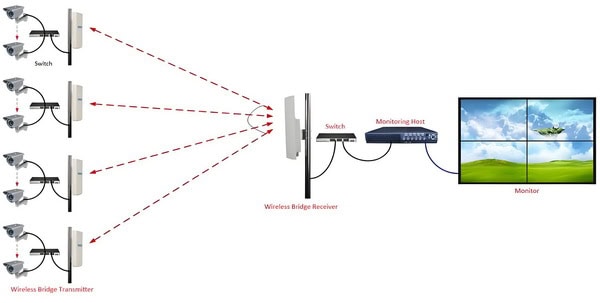
2. Video surveillance: Point-to-multipoint antennas can be used to transmit video feeds from multiple surveillance cameras to a central monitoring station. This allows for effective monitoring and surveillance of large areas.
3. Telecommunications: Point-to-multipoint antennas are used in telecommunications networks to provide wireless connectivity for voice and data communication. This is particularly useful in areas where it is difficult or expensive to lay cables.

4. Public safety: Point-to-multipoint antennas are used by public safety agencies such as police, fire departments, and emergency medical services to establish wireless communication networks during emergencies or disaster situations.
5. Smart grid: Point-to-multipoint antennas are used in smart grid systems to enable communication between various devices and sensors in the grid. This allows for efficient monitoring and control of the power grid.
6. Industrial automation: Point-to-multipoint antennas are used in industrial automation systems to enable wireless communication between various devices and sensors. This allows for remote monitoring and control of industrial processes.
7. Transportation: Point-to-multipoint antennas are used in transportation systems such as railways, airports, and seaports to provide wireless communication for various applications including ticketing, passenger information, and security.
8. Education: Point-to-multipoint antennas are used in educational institutions to provide wireless internet access to students and staff. This allows for flexible and convenient access to educational resources.
9. Hospitality: Point-to-multipoint antennas are used in hotels, resorts, and other hospitality establishments to provide wireless internet access to guests. This is essential for guest satisfaction and convenience.
10. Event management: Point-to-multipoint antennas are used in event management to provide wireless internet access to attendees and staff. This allows for efficient communication and coordination during events.
Point-to-multipoint (PtMP) antennas are also a key technology backbone for a variety of industries beyond the ones mentioned above. Sectors such as telecom, logistics, manufacturing, education, and the rapidly expanding realm of smart cities all rely on PtMP setups for flexible, scalable, and reliable networking. From enabling real-time data transfer on factory floors, to connecting fleets and warehouse operations in global logistics, to supporting seamless communication in city-wide public Wi-Fi or traffic management systems, the versatility of PtMP antennas continues to drive innovation across industries. Whether it’s connecting classrooms, powering IoT devices in a smart grid, or managing surveillance in public spaces, the adaptability of point-to-multipoint solutions makes them an integral part of modern wireless communication infrastructure.
Enterprise Applications: Connecting Branch Offices with PtMP Antennas
In the enterprise world, point-to-multipoint antennas play a crucial role in linking remote offices, warehouses, and branch locations to a central headquarters. Instead of maintaining separate network infrastructure and multiple internet service contracts for each site, organizations can leverage a single, robust connection that serves all locations over a wireless PtMP setup.
This approach streamlines operations by:
- Centralizing network management: IT teams can oversee and troubleshoot all branches from one location, simplifying support and reducing downtime.
- Reducing costs: By avoiding the need for costly leased lines or separate broadband plans for each branch, businesses like logistics firms or retail chains keep expenses in check.
- Scaling with ease: As a company grows, adding new offices or remote workspaces becomes as simple as installing a compatible antenna, without major changes to the core network.
Whether it’s a financial institution connecting rural bank branches or a franchise keeping multiple storefronts online, PtMP antennas deliver fast, secure, and reliable enterprise connectivity—no matter how far-flung the network.
Pop-Up and Mobile Networks: A Flexible Solution
Point-to-multipoint antennas are particularly well-suited for temporary network installations, such as pop-up sites and mobile operations. In scenarios like disaster recovery zones, outdoor festivals, or mobile medical units, quick and reliable connectivity is essential but often difficult to achieve with traditional wired infrastructure.
With a single base station, you can provide high-speed wireless internet to several locations or mobile units spread across a wide area. This eliminates the need for complex cabling or time-consuming setup. For example, emergency response teams can deploy point-to-multipoint systems to connect command vehicles, field tents, and triage areas within minutes, even in challenging terrains.
Similarly, event organizers can use these antennas to bring robust internet access to concessions, ticketing booths, and security stations at large outdoor venues or temporary gatherings, ensuring smooth operations and communication no matter where the action takes place.
How Can Point-to-Multipoint Networks Be Secured and Optimized?
Ensuring the reliability and security of point-to-multipoint networks requires both careful planning and ongoing management. Here are some key strategies to consider:
- Implement robust security measures: Protect your network against unauthorized access by enabling strong encryption protocols such as WPA3, and consider using Virtual Private Networks (VPNs) or other secure channels. Regularly update passwords and monitor for potential vulnerabilities to safeguard sensitive data.
- Prioritize critical applications with QoS: Quality of Service (QoS) settings help reserve bandwidth for essential services like voice communications, video conferencing, or industrial monitoring systems, ensuring these applications run smoothly even during peak usage times.
- Optimize antenna placement: Thoroughly evaluate installation sites before deployment. Proper positioning of antennas helps minimize interference, expand coverage, and prevent signal dead zones. This is particularly important in environments with numerous obstacles or sources of radio frequency noise.
- Monitor network health regularly: Continuous monitoring of network performance metrics—such as uptime, latency, and signal strength—allows for proactive troubleshooting. Utilizing network management tools can help detect issues early, helping you maintain a stable and efficient connection.
By combining these approaches, you can significantly enhance the performance, reliability, and security of your point-to-multipoint network.
What Security Concerns Are Associated with PtMP Networks?
While point-to-multipoint (PtMP) antennas offer remarkable flexibility and reach, they also introduce unique security considerations. Wireless transmissions can be susceptible to unauthorized access, especially if encryption protocols are not robustly implemented. This makes it essential to secure PtMP networks using advanced encryption standards such as WPA3 or similar, to help prevent eavesdropping and unauthorized data interception.
Additionally, because PtMP networks often serve multiple users or locations from a single access point, isolating network traffic between individual clients becomes important. Techniques like VLAN segmentation and traffic isolation can minimize the risk of internal breaches, ensuring one compromised endpoint does not grant access to the full network.
It’s also worth noting that using equipment from reputable providers and regularly updating firmware helps protect against potential vulnerabilities. Proper network planning, including careful frequency management and authentication practices, goes a long way toward maintaining both the reliability and security of your PtMP setup.
How to Choose the Point-to-Multipoint Communication Antenna?
Point-to-multipoint communication antennas are used to transmit and receive signals between a central base station and multiple remote locations. These antennas are commonly used in wireless communication systems such as Wi-Fi networks, cellular networks, and satellite communication systems.
When choosing a point-to-multipoint communication antenna, there are several factors to consider to ensure the best performance and reliability. Here are some important factors to consider when choosing the right point-to-multipoint communication antenna:
1. Frequency Range: The first thing to consider is the frequency range of the antenna. Different communication systems operate at different frequencies, so it is important to choose an antenna that is compatible with the frequency range of your communication system. Make sure to check the frequency range of the antenna and compare it with the frequency range of your system.
2. Gain: The gain of an antenna determines its ability to focus and amplify the signal in a particular direction. Higher gain antennas can transmit and receive signals over longer distances, but they have a narrower beamwidth. Lower gain antennas have a wider beamwidth but can transmit and receive signals over shorter distances. Consider the distance between the base station and the remote locations when choosing the gain of the antenna.
3. Beamwidth: The beamwidth of an antenna determines the coverage area of the signal. Antennas with a narrow beamwidth have a focused signal that can cover a long distance but has a smaller coverage area. Antennas with a wider beamwidth have a broader coverage area but may not be able to transmit and receive signals over long distances. Consider the size and layout of the area you need to cover when choosing the beamwidth of the antenna.
4. Polarization: Antennas can have either single polarization( vertical or horizontal ) or dual polarizations. It is important to choose an antenna with the same polarization as the other antennas in your communication system. Mixing antennas with different polarizations can result in poor signal quality and interference.

5. Mounting Options: Consider the mounting options available for the antenna. Some antennas are designed for pole mounting, while others can be mounted on walls or ceilings. Choose an antenna that is compatible with the mounting options available at your installation site.
6. Environmental Factors: Consider the environmental factors at your installation site. If the site is exposed to harsh weather conditions, you may need to choose an antenna that is designed to withstand these conditions. Additionally, if the site is located in an area with a lot of interference, you may need to choose an antenna with better interference rejection capabilities.
7. Signal Interference and Line of Sight: Keep in mind that obstacles such as trees, buildings, power lines, and even adverse weather can significantly impact wireless signals. Point-to-multipoint (PtMP) systems perform best when there is a clear line of sight between the base station and each endpoint. Take the time to survey your installation area and plan your antenna placement to avoid physical obstructions whenever possible. This proactive approach helps maintain strong, reliable connections and minimizes signal degradation due to interference.
8. Budget: Finally, consider your budget when choosing a point-to-multipoint communication antenna. Antennas with higher gain and better performance tend to be more expensive. Consider your budget and choose an antenna that provides the best performance within your budget constraints.
By considering these factors, you can choose the right point-to-multipoint communication antenna that meets the requirements of your communication system and provides reliable and efficient signal transmission and reception.
Common Questions About Point-to-Multipoint (PtMP) Networks
Point-to-multipoint networks are widely used across multiple industries, but they often raise a few common questions. Here are some frequently asked questions along with clear, concise answers to help you better understand PtMP systems:
Is a PtMP network always better than traditional wired or fiber connections?
Not in every case. While point-to-multipoint networks are generally more affordable and significantly quicker to deploy—particularly in areas where running fiber or cable would be impractical or too expensive—fiber networks typically offer higher speeds and greater stability. In regions with challenging terrain or for temporary deployments, PtMP solutions can be the preferred option.
How does a PtMP network deliver internet connectivity?
The usual setup involves a main base station that connects to a reliable backhaul, such as a fiber or wired link. This base station then transmits wireless signals to multiple remote sites or users, allowing them to access the network without the need for physical connections.
What is the usual coverage range for a PtMP wireless network?
Coverage can vary depending on the technology and environmental factors, but most commercial PtMP systems can reliably span anywhere from 1 mile up to about 20 miles. Keep in mind that obstacles and severe weather conditions can impact effective range.
Which industries commonly use point-to-multipoint wireless solutions?
A variety of sectors benefit from PtMP connectivity, including telecommunications, transportation and logistics, manufacturing, education, and emerging smart city projects. These networks provide the flexibility and scalability needed to support growing demands for wireless access in diverse environments.
The Importance of Thoughtful Network Planning
Careful planning is crucial when designing a point-to-multipoint (PtMP) communication network. The placement of antennas plays a significant role in ensuring optimal performance, as it directly influences signal strength, coverage, and capacity. By thoughtfully mapping out your network before installation, you can minimize interference from surrounding devices, maximize the effective range between the base station and remote sites, and reduce the chances of dead zones or connectivity gaps.
A systematic approach to network planning typically involves:
- Site Surveys: Analyze the physical environment for obstacles such as buildings, trees, or hills that could block or degrade the signal.
- Interference Assessment: Identify sources of radio frequency (RF) interference—like nearby Wi-Fi networks or microwave towers—and adjust antenna orientation and frequency selection accordingly.
- Line-of-Sight Verification: For most PtMP systems, a clear line of sight between antennas will dramatically enhance reliability and throughput.
Taking the time to evaluate these elements not only boosts network efficiency but also saves you from costly adjustments or downtime later on. In short, strategic network planning is a key step in unlocking the full potential of your point-to-multipoint communication system.
Summary
In conclusion, point-to-multipoint communication antennas are essential for efficient wireless communication. They offer numerous benefits, including cost efficiency, scalability, and flexibility. Understanding their applications, types, and how to choose the right antenna can help maximize their advantages in various industries.
 English
  Spanish
  German
  French (France)
  Korean
  Russian
  Indonesian
  French (Canada)
  Vietnamese
  Armenian
  Albanian
  Assamese
  Acehnese
  Amharic
  Czech
Czech  Bulgarian
  Cebuano
  Malayalam
  German (Switzerland)
  Japanese
  Dutch
Dutch