 Skip to content
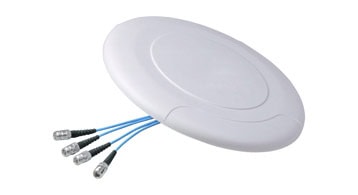
Discover the transformative potential of MIMO (Multiple Input, Multiple Output) antenna technology. This breakthrough in wireless communication allows for more robust, faster, and more efficient data transmission, paving the way for advanced networking solutions.
A MIMO antenna is an antenna system that utilizes multiple antennas at both the transmitting and receiving ends to improve the performance and efficiency of wireless communication. It allows for the simultaneous transmission and reception of multiple data streams, increasing the data capacity and speed of wireless networks. MIMO is crucial in meeting the increasing demand for higher data rates in telecommunications, such as 5G and WLAN networks, by improving signal quality, reducing interference, and ensuring faster and more reliable wireless communication.
But how exactly does this technology work, and what makes it superior to previous generations?
How does MIMO technology enhance wireless communication?
MIMO stands for Multiple-Input Multiple-Output. It is a technology used in wireless communication systems to improve the performance and capacity of the system. MIMO technology uses multiple antennas at both the transmitter and receiver to send and receive multiple streams of data simultaneously.

Understanding 2×2, 4×4, and 8×8 MIMO Configurations
When exploring MIMO technology, you’ll often encounter terms like 2×2, 4×4, or even 8×8 MIMO. These numbers indicate the configuration of antennas within a system—specifically, the count of antennas used for transmitting and receiving signals.
- 2×2 MIMO means there are two transmitting antennas and two receiving antennas.
- 4×4 MIMO uses four antennas at both the transmitter and the receiver.
- 8×8 MIMO raises the bar further with eight antennas each for sending and receiving.
The greater the number of antennas, the more data streams can be sent and received at the same time. This leads to higher throughput, improved coverage, and greater resistance to interference. For example, modern LTE and 5G devices often employ 4×4 MIMO for enhanced speed and reliability, while enterprise-grade Wi-Fi systems may harness 8×8 MIMO for demanding environments.
By scaling up the number of antennas, MIMO systems can unlock even greater performance and efficiency in wireless networks, adapting easily to the growing needs of applications ranging from mobile devices to industrial IoT.
There are several ways in which MIMO technology enhances wireless communication:
1. Increased data transfer speed: With multiple antennas, MIMO technology can send and receive more data simultaneously, increasing the overall data transfer speed. This is especially beneficial in high-bandwidth applications such as video streaming or file downloads.
2. Improved link reliability: MIMO technology reduces errors and improves the reliability of the wireless link. By using multiple antennas, the system can take advantage of the spatial diversity to mitigate the effects of fading and interference. This results in a more stable and reliable wireless connection.
3. Increased capacity: MIMO technology increases the capacity of a radio link. By transmitting multiple streams of data simultaneously, the system can support more users or devices without sacrificing performance. This is particularly useful in crowded environments with many wireless devices.
4. Extended coverage: MIMO technology can also improve the coverage area of a wireless system. By using multiple antennas, the system can focus the transmitted energy in specific directions, increasing the range and coverage area of the wireless signal.
Overall, MIMO technology enhances wireless communication by increasing data transfer speed, improving link reliability, increasing capacity, and extending coverage. These benefits make MIMO technology crucial for modern wireless communication systems, such as Wi-Fi networks, cellular networks, and other wireless applications.
How do spatial multiplexing and beamforming function in Wi-Fi MIMO systems?
To truly appreciate the advancements of MIMO technology in everyday Wi-Fi networks, it’s important to dive deeper into two cornerstones: spatial multiplexing and beamforming.
Spatial Multiplexing:
Spatial multiplexing is a key technique that allows MIMO-equipped devices—like your home router and your smartphone—to transmit multiple independent data streams simultaneously over the same frequency channel. Imagine each antenna acting as a unique lane on a multi-lane highway. Instead of all data traffic crowding onto one path, data packets travel in parallel, so information moves more efficiently. This means you get far higher speeds and increased overall throughput, all without gobbling up extra bandwidth. It’s one of the reasons your latest Wi-Fi 6 router can handle high-definition streaming, video calls, and large file downloads—all at the same time.
Beamforming:
Beamforming adds another layer of intelligence. Rather than broadcasting signals equally in all directions, beamforming enables the router’s antennas to coordinate and focus the signal toward specific devices. Picture the antennas working together like a team of spotlights, illuminating only the stage where the action happens. This guided transmission boosts signal strength where it’s needed most—say, to your laptop across the house—while reducing unnecessary interference elsewhere. The result? Stronger, more reliable connections tailored to each device’s location.
By harnessing both spatial multiplexing and beamforming, Wi-Fi MIMO systems deliver higher data rates, reduced interference, and improved coverage, making your wireless experience faster, smoother, and more reliable than ever before.
What is MU-MIMO and how does it benefit multi-user communication in cellular networks?
MU-MIMO, or Multi-User Multiple Input Multiple Output, is an advanced form of MIMO technology commonly used in both 4G and 5G cellular networks. Unlike traditional MIMO, which typically serves one device at a time, MU-MIMO enables a base station to communicate with several devices simultaneously, each receiving their own unique data stream.
This capability dramatically improves network efficiency in environments with many connected users, such as stadiums, airports, or busy city centers. By directing separate data streams to different devices at the same time, MU-MIMO reduces wait times, increases throughput, and better utilizes available bandwidth. This results in a smoother and faster experience for users—even when the network is highly congested.
For example, with MU-MIMO, a group of users streaming video or downloading files can do so without significant slowdowns, as the system intelligently balances and maintains connections with each device. This makes MU-MIMO essential for supporting the growing demand for high-speed, reliable wireless communication in today’s densely populated mobile environments.
What is spatial multiplexing in the context of MIMO antennas?
Spatial multiplexing is a key advantage offered by MIMO antenna systems. In simple terms, it allows multiple independent data streams to be transmitted simultaneously over the same frequency channel. Each data stream is sent from a different antenna at the transmitter and picked up by separate antennas at the receiver.
By leveraging the space between antennas and the unique paths that radio signals can take, spatial multiplexing enables the wireless network to significantly increase its data throughput without requiring extra bandwidth or additional power. This means a MIMO system can deliver much more information in the same time frame compared to single-antenna (SISO) setups. As a result, users enjoy faster speeds and higher network capacity—key benefits for applications like high-definition video streaming and dense urban environments with many connected devices.
What is MU-MIMO (Multi-User MIMO)?
Building upon the core strengths of MIMO technology, another significant innovation emerges: MU-MIMO, or Multi-User Multiple Input, Multiple Output.
MU-MIMO takes the traditional capabilities of MIMO a step further by enabling a wireless access point or router to serve multiple devices at the same time, rather than sequentially. Instead of having to queue data streams for each device—such as smartphones, laptops, or tablets—MU-MIMO divides the available bandwidth into dedicated streams that can reach several users concurrently.
This advancement is especially valuable in environments where many devices compete for connectivity, like busy households, offices, or classrooms. By efficiently managing network traffic, MU-MIMO reduces congestion, minimizes latency, and ensures a smoother user experience for everyone connected.
It’s important to keep in mind that both the wireless access point and the connected devices need to support MU-MIMO to fully benefit from these improvements. As more devices and networks adopt this technology, overall wireless performance continues to reach new heights.
cURL Too many subrequests.
cURL Too many subrequests.
cURL Too many subrequests.
cURL Too many subrequests.
cURL Too many subrequests.
cURL Too many subrequests.
cURL Too many subrequests.
cURL Too many subrequests.
cURL Too many subrequests.
cURL Too many subrequests.
cURL Too many subrequests.
cURL Too many subrequests.
cURL Too many subrequests.
- cURL Too many subrequests. cURL Too many subrequests.
- cURL Too many subrequests. cURL Too many subrequests.
- cURL Too many subrequests. cURL Too many subrequests.
- Microstrip antennas: Compact and often embedded in portable devices, such as smartphones or wireless routers.
- Whip antennas: Simple and omnidirectional, commonly found on routers and some MIMO modems, though they may have limitations in advanced MIMO configurations.
- Parabolic antennas: Comparable to dish antennas in design and function, though they are more often found in single-antenna (SISO) setups.
When selecting a MIMO antenna, consider your environment, required coverage range, and the specific demands of your wireless application. Each type offers distinct advantages depending on whether you’re prioritizing wide coverage, pinpoint directionality, ease of installation, or mobility.
How do polarized antenna pairs work to transmit more data simultaneously?
Polarized antenna pairs utilize different orientations—such as vertical and horizontal polarizations—to send and receive separate data streams at the same frequency. By arranging one antenna to transmit vertically and another to transmit horizontally (or at +45 and -45 degrees, as sometimes used in advanced systems), the system can effectively “split” the wireless channel into distinct paths.
This approach allows two independent streams of data to travel without interfering with each other, because each polarization acts like a dedicated lane for its own signal. Think of it as organizing traffic on a two-lane road, with each direction kept separate for smoother, more efficient flow.
By adopting polarized antenna pairs, wireless systems can effectively double their data throughput without requiring extra bandwidth, making this technique a cornerstone for high-capacity networks like LTE, 5G, and modern Wi-Fi.
How does antenna gain affect the performance of a MIMO system?
When it comes to MIMO antenna systems, antenna gain is a key factor influencing both system performance and coverage. In simple terms, antenna gain describes how effectively an antenna can direct or concentrate radio frequency energy in a specific direction, which directly impacts the signal’s reach and strength.
Here’s how different gain levels impact MIMO setups:
- Signal Strength and Quality: Higher gain antennas can send and receive signals more powerfully in their intended direction, which often results in better signal quality and faster data rates. This is especially useful in scenarios where maintaining robust links is critical, like in high-density urban environments or for long-range point-to-point wireless links.
- Coverage Area: While high-gain antennas offer a stronger, more focused signal, they also have a narrower beamwidth—meaning the signal covers a smaller, more targeted area. If your goal is to blanket a wide area (like an open office floor), lower gain antennas might be preferable, as they emit a broader beam and cover more ground, albeit with reduced signal intensity.
- Alignment Sensitivity: It’s important to note that antennas with higher gain are more directional and thus more sensitive to alignment. Precise positioning becomes crucial; even small misalignments can lead to significant drops in performance. For setups where devices or users move frequently, or where installation precision is tough, lower gain may provide more forgiving coverage.
In summary, selecting the right antenna gain for your MIMO system is a balancing act. You’ll want to consider your environment, required coverage area, and the necessary signal strength. The right combination ensures your wireless network reaps the full benefits of MIMO—delivering reliable, high-speed connections where you need them most.
MIMO vs. SISO: What’s the difference?
MIMO stands for Multiple Input, Multiple Output. It is a wireless communication technology that uses multiple antennas at both the transmitter and receiver to improve the performance of the system. MIMO systems can achieve higher data rates, increased coverage, and improved reliability compared to SISO systems.
In a MIMO system, multiple antennas are used to transmit and receive multiple data streams simultaneously. This allows for the transmission of more data in the same amount of time, effectively increasing the throughput of the system. MIMO also improves the reliability of the wireless link by using multiple antennas to overcome the negative effects of fading, interference, and other impairments.
One of the most notable performance improvements when moving from SISO (Single Input, Single Output) to MIMO (Multiple Input, Multiple Output) is the boost in connection speeds. For example, upgrading from SISO to a 2×2 MIMO setup can provide around a 30% increase in data rates. Taking it a step further, moving from 2×2 to 4×4 MIMO can offer another 30–40% improvement, so a 4×4 antenna configuration can deliver up to 70% faster data rates than a SISO antenna. These speed increases are especially valuable in environments where the network is congested, as MIMO technology allows more data to be transmitted over the same frequency spectrum, benefiting all users connected to the system.
On the other hand, SISO systems use only one antenna for both transmission and reception. While SISO systems are simpler and less expensive to implement, they are limited in terms of data rate and coverage compared to MIMO systems.
In summary, MIMO systems use multiple antennas to transmit and receive multiple data streams simultaneously, resulting in higher data rates, increased coverage, and improved reliability compared to SISO systems.
Comparing MU-MIMO, SU-MIMO, and Massive MIMO: What Sets Them Apart?
While all MIMO technologies aim to boost data rates, reliability, and network capacity, MU-MIMO, SU-MIMO, and Massive MIMO each take a slightly different approach—making them well-suited to specific scenarios.
MU-MIMO (Multi-User MIMO): Smooth Sailing for Multiple Devices
MU-MIMO (Multi-User MIMO) lets a wireless network communicate with several devices at the same time, rather than lining them up to wait their turn. Imagine it as a traffic cop creating multiple express lanes, so everyone’s packets can zip ahead without congestion. This is especially helpful in busy environments—think crowded offices or homes filled with laptops, phones, and tablets all clamoring for bandwidth. However, for MU-MIMO to shine, user devices like laptops or smartphones also need to support the technology.
SU-MIMO (Single User MIMO): Speed and Stability for One
By contrast, SU-MIMO (Single User MIMO) is like rolling out the red carpet for a single device at a time. Multiple data streams are dedicated to just one user, providing greater speed or beefing up reliability. Depending on how it’s set up, SU-MIMO can either send unique data streams to multiply the data rate or duplicate the same stream for error resistance—a big win for seamless video streaming and downloads on the go. SU-MIMO is common in current Wi-Fi and cellular setups.
Massive MIMO: Powerhouse for High-Density Networks
Massive MIMO takes things to an entirely new scale by deploying dozens or even hundreds of antennas at a base station. It’s the backbone of next-gen cellular networks like 5G, and it works wonders in stadiums, airports, or dense city blocks. Advanced beamforming helps direct wireless energy straight to where it’s needed most—like shining a flashlight instead of a lantern—resulting in higher speeds, better coverage, and more people online at once.
Quick Recap:
- MU-MIMO: Optimizes network efficiency for multiple active users simultaneously—essential in environments with many connected devices.
- SU-MIMOcURL Too many subrequests.
- Massive MIMOcURL Too many subrequests.
cURL Too many subrequests.
cURL Too many subrequests.
cURL Too many subrequests.
cURL Too many subrequests.
cURL Too many subrequests.
cURL Too many subrequests.
cURL Too many subrequests.
cURL Too many subrequests.
cURL Too many subrequests.
cURL Too many subrequests.
cURL Too many subrequests.
- cURL Too many subrequests. cURL Too many subrequests.
- cURL Too many subrequests. cURL Too many subrequests.
- cURL Too many subrequests. cURL Too many subrequests.
- Typical Applications: While 2×2 is sufficient for most everyday consumer use cases, 4×4 shines in enterprise settings, dense urban environments, and for users with more demanding connectivity needs.
Understanding which MIMO system is right for you depends on your required data rates and the complexity of your wireless environment. A 4×4 system offers a clear upgrade in performance, but for many home or small office scenarios, 2×2 may be more than enough.
Choosing Between SISO, 2×2, and 4×4 MIMO Antennas
When it comes to selecting the right antenna—whether SISO, 2×2 MIMO, or 4×4 MIMO—the most important consideration is your device’s capabilities. Here’s how to navigate your options:
- Device Compatibility: Begin by checking the specifications of your device (router, modem, or gateway). For instance, if your device supports 4×4 MIMO, choosing a 4×4 antenna will unlock the full potential for speed and reliability. If your device supports 2×2 MIMO, a matching 2×2 antenna is most effective. Using a higher-order MIMO antenna with a device that only supports SISO (Single Input, Single Output) won’t provide extra benefits.
- Future-Proofing: If you plan to upgrade your hardware soon, investing in a higher-order MIMO antenna might make sense. However, remember that the current device’s capabilities should always take priority for the best immediate performance.
- Installation Considerations: Higher-order MIMO setups, like 4×4, require more space for multiple antennas and can be slightly more complex to install. Make sure your setup location can accommodate the required number of antennas.
In short, match your antenna configuration to your device’s supported MIMO level for optimal performance. This ensures you’ll take full advantage of the speed, reliability, and coverage improvements MIMO technology offers.
Polarized vs. Spaced Antenna Pairs: What’s the Difference?
When it comes to designing MIMO wireless systems, antenna configuration plays a critical role. Two common approaches are polarized antenna pairs and spaced antenna pairs. Despite serving a similar goal—enhancing data transmission—they achieve it in different ways.
Polarized Antenna Pairs
Polarized antenna pairs use antennas oriented at different polarization angles, such as vertical and horizontal (V+H) or ±45 degrees. By transmitting signals along different polarization planes, the system can send multiple independent data streams over the same physical path, with minimal interference between them. Imagine two lanes on a highway running parallel but never crossing—each lane supports its own flow of vehicles (or, in this case, data). This allows you to make more efficient use of the same space, resulting in higher throughput without the signals interfering with each other.
Spaced Antenna Pairs
On the other hand, spaced antenna pairs are separated by a certain distance (often multiple wavelengths apart) at the transmitter, receiver, or both. This spatial separation enables each antenna to experience different “views” of the wireless environment—a phenomenon known as spatial diversity. These separate paths help the MIMO system distinguish between different signal copies, especially in environments with a lot of reflection or scattering (multipath propagation). Think of spaced antennas like separate microphones in a concert hall, each picking up unique acoustics from different spots; together, they capture more information and improve sound quality.
Key Points:
- Polarized antennas maximize the use of available space by leveraging different electromagnetic orientations.
- Spaced antennas leverage physical distance to capture variations in signal path, enhancing reliability, especially in challenging environments.
Both techniques are widely used in modern wireless systems—including Wi-Fi, LTE, and 5G—to boost data rates, reliability, and coverage.
What are the benefits of using MIMO antennas in wireless networks?
1. Higher Data Rates: MIMO antennas use multiple spatial streams to transmit and receive data simultaneously, which increases the overall data rate. This allows for faster downloads and uploads, improving the user experience for data-intensive applications such as video streaming and online gaming.
2. Increased Capacity: By utilizing multiple antennas, MIMO technology increases the capacity of wireless networks. It enables more devices to connect to the network without experiencing significant degradation in performance. This is particularly useful in crowded areas with a high density of users, such as stadiums, airports, and urban environments.
3. Better Signal Quality: MIMO antennas improve the signal quality by reducing the impact of multipath interference. Multipath interference occurs when signals bounce off objects and arrive at the receiver at different times, causing signal degradation. MIMO technology uses the multiple paths created by multipath interference to enhance the signal strength and quality, resulting in a more reliable and stable connection.
To picture how this works, imagine standing at two different spots on the edge of a pond and tossing pebbles in at the same time. Each pebble creates ripples that spread out across the water. Because you’re tossing them from different spots, the ripples don’t overlap immediately, giving you multiple points of reception. Similarly, MIMO antennas, spaced apart, receive signals traveling along different paths—even if one path is blocked or interfered with, another path may still deliver the data successfully. This approach helps sort out confusion caused by signals bouncing around (known as multipath propagation), much like two cars starting from different locations—if one hits a roadblock, the other can still reach the destination. The end result is less signal degradation and a much stronger, more consistent wireless connection.
4. Longer Range: MIMO antennas can extend the range of wireless networks by transmitting multiple spatial streams simultaneously. This allows signals to reach further distances without significant loss of signal strength. As a result, MIMO technology can improve coverage in large areas or environments with obstacles that would otherwise limit the range.
5. Improved Reliability: MIMO technology provides redundancy by transmitting multiple copies of the same data across different antennas and spatial streams. If one path or antenna experiences interference or signal degradation, the receiver can still receive the data from the other paths or antennas. This redundancy improves the reliability of wireless connections and reduces the likelihood of dropped or interrupted signals.
Overall, MIMO antennas enhance the performance and efficiency of wireless networks, enabling higher data rates, increased capacity, improved signal quality, longer range, and better reliability. These benefits are crucial for meeting the demands of modern wireless communication and supporting the growing number of devices and applications that rely on wireless connectivity.
What is a MIMO antenna used for?
MIMO stands for Multiple-Input Multiple-Output. A MIMO antenna system uses multiple antennas at both the transmitter and receiver to improve the performance of wireless communication systems.
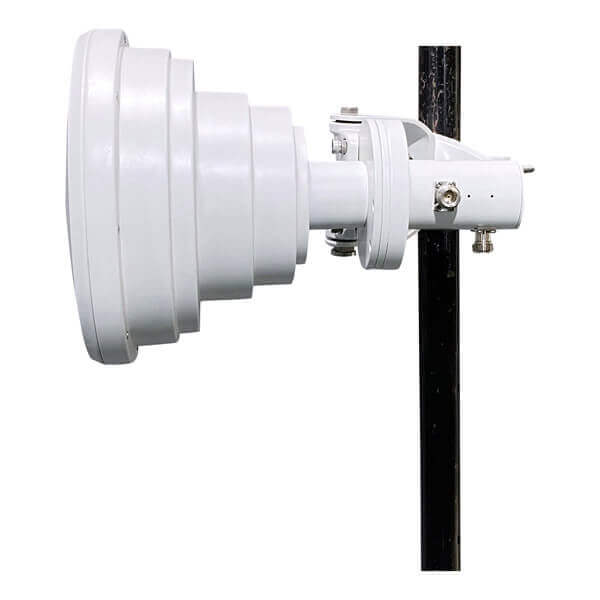
In cellular networks, MIMO antennas are used to increase the capacity and coverage of the network. By using multiple antennas, the system can transmit and receive multiple data streams simultaneously, increasing the data throughput and improving the overall network performance.
In Wi-Fi networks, MIMO antennas are used to improve the range, coverage, and data transfer rates. By using multiple antennas, the system can transmit and receive multiple data streams simultaneously, increasing the speed and reliability of the Wi-Fi connection.
MIMO antennas are also used in other wireless communication systems such as satellite communication, radar systems, and wireless sensor networks, where they help improve the signal quality, data rates, and overall system performance.
How MIMO Differs in Wi-Fi and Cellular Networks
cURL Too many subrequests.
- cURL Too many subrequests. cURL Too many subrequests.
- cURL Too many subrequests., cURL Too many subrequests.
cURL Too many subrequests.
cURL Too many subrequests.
cURL Too many subrequests.
cURL Too many subrequests.
- cURL Too many subrequests. cURL Too many subrequests.
- cURL Too many subrequests. cURL Too many subrequests.
- cURL Too many subrequests. cURL Too many subrequests.
cURL Too many subrequests.
cURL Too many subrequests.
cURL Too many subrequests.
cURL Too many subrequests.
- Device Compatibility: If your device is equipped for 4×4 MIMO, opt for a 4×4 MIMO antenna. Likewise, a device supporting 2×2 MIMO will be best paired with a 2×2 system. Using fewer antennas than your device supports can lead to reduced performance, with some frequency bands potentially not being transmitted or received at all.
- Frequency Coverage: Not all antenna ports on a device transmit or receive every frequency. For example, many 5G devices use 2×2 MIMO on lower frequencies (such as 600 MHz n71 or 700 MHz bands), but take advantage of 4×4 MIMO on mid-band frequencies (like 2500 MHz n41 or 3500 MHz n78). If you connect a 2×2 antenna to a 4×4-capable device, you might miss out on some frequency bands, which could result in compromised signal performance or coverage gaps.
- Connector Count: Check how many external antenna ports your device provides. If there are only two, a 2×2 MIMO antenna suffices. With four ports, a 4×4 configuration is ideal to fully harness your device’s capabilities.
In summary:
- Always match the MIMO configuration of your antenna to what your device supports.
- Avoid mismatches (such as pairing a 2×2 antenna with a 4×4 capable device) to ensure you receive the full benefit across all bands and frequencies your device can access.
By aligning your antenna and device MIMO capabilities, you’ll ensure optimal data speeds, signal reliability, and network coverage—whether you’re streaming a movie downtown or sharing photos from the bleachers at a packed stadium.
Which antenna polarization should be used for MIMO antennas in cellular applications?
For MIMO antennas in cellular applications, ±45° slant polarization is typically recommended. This approach aligns with the polarization used by most modern cell towers, allowing the antennas to maximize signal separation and reduce interference between data streams. By orienting the antenna elements at +45° and -45°, you help ensure optimal compatibility with the cellular infrastructure.
If needed, switching between slant (+/-45°) and vertical/horizontal (H+V) polarization can often be accomplished simply by rotating the antennas by 45 degrees. Most MIMO antennas designed for cellular use come pre-configured for slant polarization, making setup straightforward for the majority of installations.
Using matched polarization improves link reliability and data rates, enhancing wireless performance—especially in challenging environments where maintaining a strong connection is critical.
What is antenna polarization and why does it matter?
Antenna polarization refers to the orientation of the electric field of the radio waves an antenna transmits or receives. Typically, this orientation is either vertical (up and down) or horizontal (side to side), but some antennas use slant or circular polarization as well.
Matching the polarization of an antenna to the polarization of the signal is essential for optimal performance. If the polarizations are mismatched, the received signal can be significantly weaker, leading to reduced data rates, poor connectivity, or increased errors in communication.
This becomes especially important in MIMO systems. By using different polarizations—such as one antenna transmitting vertically while another transmits horizontally—wireless networks can send multiple data streams simultaneously on the same frequency. This efficient use of polarization helps maximize data throughput and ensures multiple signals don’t interfere with each other, further enhancing the speed and reliability of wireless connections.
What are the key considerations when choosing the gain of a MIMO antenna?
When selecting the gain for a MIMO antenna, it’s important to strike a balance between signal strength and coverage to match the needs of your wireless environment.
1. Signal Strength and Data Rates:
Higher-gain MIMO antennas can transmit signals over longer distances by focusing energy in a specific direction. This often results in stronger signals and, potentially, faster data rates—especially helpful in point-to-point setups or when you need to reach distant users. However, this increased focus can sometimes limit the coverage area or make the connection more sensitive to obstacles and alignment.
2. Coverage Area:
Lower-gain MIMO antennas, on the other hand, broadcast signals more broadly. This wider beamwidth is ideal for covering large or irregularly shaped areas—such as in busy office spaces, airports, or convention centers—where it’s more important to connect multiple nearby devices than to maximize range in one direction.
3. Alignment and Installation Considerations:
High-gain antennas typically require more precise positioning. If not aligned correctly, the benefits of higher gain can be lost, and coverage gaps may occur. If your MIMO application is in an environment where alignment is difficult or where devices are moving around frequently, a lower-gain, wider-angle antenna might be more forgiving and provide more consistent results.
4. Application Needs:
Consider the specific requirements of your deployment:
- For outdoor long-range point-to-point links (like connecting buildings), higher gain may deliver better performance.
- For indoor, device-dense environments (like shopping malls or warehouses), lower gain may provide better overall coverage and reliability.
In summary, the ideal antenna gain for a MIMO system depends on balancing distance, coverage shape, installation constraints, and how and where the system will be used. Taking the time to match the antenna’s gain pattern to your environment is essential for getting the most out of your wireless network.
How does antenna gain impact coverage area and alignment requirements?
Antenna gain plays a key role in shaping both the coverage area and how carefully the antenna must be positioned.
- Coverage Area: High-gain antennas concentrate energy into a more focused, narrower beam. This boosts signal strength over greater distances, but at the cost of reducing the overall coverage area—the signal doesn’t spread out as much. This can be useful when you need to direct your signal toward a specific location (like beaming Wi-Fi down a long hallway), but won’t serve you well if you want broad, room-filling coverage.
- Alignment Requirements: Because high-gain antennas send their signal in a tighter pattern, they also require more precise alignment. Even small adjustments or shifts can impact performance, making careful placement vital. In contrast, lower-gain antennas have a wider coverage area and are more forgiving about how they’re aimed, but the signal may not reach as far.
When choosing an antenna, it’s important to consider this balance—higher gain can improve performance in the right direction, but also demands greater accuracy in aiming and may leave areas outside the beam with weak or no signal. Lower gain gives you wider coverage with less hassle, though the signal won’t travel as far. Matching the antenna’s gain to your coverage needs and installation constraints is key for optimal results.
What does antenna gain mean and why is it important for MIMO antennas?
Antenna gain refers to how effectively an antenna directs radio frequency energy in a specific direction compared to a reference antenna, usually expressed in decibels (dB). Essentially, gain indicates how well the antenna focuses its power. Instead of spreading energy equally in all directions, a high-gain antenna concentrates its signal, allowing it to reach further or penetrate obstacles more effectively.
For MIMO antennas, gain plays a crucial role in optimizing system performance. Since MIMO technology relies on multiple antennas working together to send and receive data through different spatial streams, having the right level of antenna gain ensures that each stream can travel efficiently to its intended destination. The benefits include:
- Extended coverage: Higher gain MIMO antennas can help signals travel longer distances, especially in environments with walls or interference—such as large office buildings or multi-story homes.
- Improved signal focus: cURL Too many subrequests.
- cURL Too many subrequests. cURL Too many subrequests.
cURL Too many subrequests.
cURL Too many subrequests.
cURL Too many subrequests.
- cURL Too many subrequests. cURL Too many subrequests.
- cURL Too many subrequests. cURL Too many subrequests.
cURL Too many subrequests.
cURL Too many subrequests.
cURL Too many subrequests.
- cURL Too many subrequests.cURL Too many subrequests.
- cURL Too many subrequests.cURL Too many subrequests.
- cURL Too many subrequests.cURL Too many subrequests.
Each polarization method provides a way to transmit separate signals over the same frequency without interfering with one another. By strategically using different polarizations, wireless systems like MIMO can maximize data throughput and better maintain robust connections, even in challenging conditions.
Why is the positioning and aiming of a MIMO antenna important?
Properly positioning and aiming your MIMO antenna is critical to achieving the best possible performance from your wireless system. Because MIMO antennas take advantage of multiple spatial streams, they work most effectively when each antenna element has a clear path to the signal source. This means that even small adjustments to the antenna’s orientation can have a significant impact on signal strength, data speeds, and overall connection stability.
Careful placement helps to:
- Maximize Signal Strength: Ensuring the antenna faces the cell tower or access point directly boosts the received signal, leading to improved throughput and reliability.
- Reduce Interference: Strategic aiming minimizes the impact of obstacles and sources of interference, making the most of the sophisticated signal processing that MIMO systems offer.
- Take Full Advantage of Multipath: In environments with lots of walls or objects, finding an optimal angle can help the antenna use reflected signals constructively, further enhancing performance.
Investing time in aiming and repositioning your antenna may require patience, but the resulting improvements in speed and connectivity are often dramatic—especially in challenging locations.
Does the gain of a MIMO antenna matter?
Yes, the gain of a MIMO antenna is an important factor to consider, just as it is with traditional antennas.
Antenna Gain Explained
Antenna gain essentially describes how well an antenna can focus energy in a particular direction, compared to a reference antenna. It’s measured in decibels (dB), and higher gain means the antenna can direct signals more efficiently and reach farther distances. However, higher gain doesn’t add extra power; it simply concentrates the signal, much like how a flashlight beam can be made narrower and brighter.
Why Gain Matters for MIMO
In MIMO systems, gain still plays a role—but it’s about balance:
- Signal Reach vs. Coverage Area: A higher-gain MIMO antenna can send and receive signals over longer distances, which is useful for connecting to distant cell towers or access points. However, higher gain usually means a narrower coverage angle, which can reduce signal strength for devices off to the sides.
- Multipath Environments: Most MIMO setups rely on multiple signal paths bouncing off walls or objects (multipath). An antenna with too much gain may not “see” as many of these different paths, potentially limiting the performance benefits of MIMO technology.
- Application-Specific Needs: For fixed installations where you need a focused, long-distance connection, higher gain can be a huge advantage. In contrast, for indoor or mobile applications, moderate gain with wider coverage often leads to better, more consistent results across your environment.
Bottom Line
Choosing the right gain level for your MIMO antenna depends on your specific needs—distance, coverage, and environment all come into play. The goal is to balance focused reach with broad coverage, maximizing the benefits that MIMO technology brings to your wireless network.
What is an omni antenna and when is it best to use one?
An omni antenna is designed to transmit and receive signals in all directions, covering a full 360º radius around the antenna. Unlike directional antennas, which need to be aimed precisely toward a specific signal source, omni antennas capture signals from any direction. This makes them highly versatile for environments where the location of the nearest tower—or signal source—might change or be unknown.
Omni antennas are especially useful in scenarios where:
- You’re trying to boost cellular or Wi-Fi signal across multiple providers or bands.
- The outdoor signal strength is moderate to strong and comes from several directions.
- You need reliable coverage over a wide area, such as inside large homes, offices, RVs, or marine vessels.
In other words, if you want broad, consistent coverage without having to worry about the exact location of the transmitting tower, an omni antenna is often the best choice.
What is a dish antenna and in what situations is it ideal?
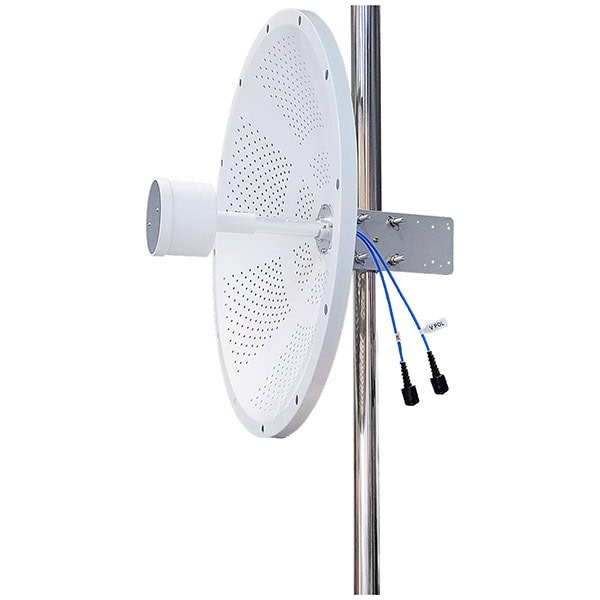
A dish antenna, often recognized by its signature parabolic shape, is a type of highly directional antenna designed to concentrate radio signals into a focused beam. This specialized shape acts much like a satellite dish you might see on rooftops, gathering signals from a specific direction and minimizing interference from unwanted sources.
Dish antennas excel in scenarios where a strong, pinpointed signal is essential over long distances. For example, they’re commonly used for point-to-point wireless links, satellite communications, and microwave transmissions. If you need to establish a reliable connection between two distant buildings, bridge a rural internet gap, or communicate via satellite, a dish antenna is usually the go-to solution. The high level of gain these antennas provide allows them to send and receive signals further than most standard antenna types, making them especially useful when every decibel of signal strength counts.
Are MIMO antennas good?
Yes, MIMO (Multiple-Input Multiple-Output) antennas are generally considered to be good.
MIMO technology uses multiple antennas at both the transmitter and receiver to improve the performance and capacity of wireless communication systems.
MIMO antennas can provide increased data throughput, improved signal quality, and better coverage in various wireless applications such as Wi-Fi, cellular networks, cURL Too many subrequests. wireless routers.
cURL Too many subrequests.
cURL Too many subrequests.
cURL Too many subrequests.
cURL Too many subrequests. base stations cURL Too many subrequests.
cURL Too many subrequests.
cURL Too many subrequests.
cURL Too many subrequests.
cURL Too many subrequests.
cURL Too many subrequests.
cURL Too many subrequests.
cURL Too many subrequests.
cURL Too many subrequests.
cURL Too many subrequests.
cURL Too many subrequests.
cURL Too many subrequests., MIMO antennas cURL Too many subrequests.
cURL Too many subrequests.
cURL Too many subrequests.
Lastly, MIMO technology may not be fully compatible with older devices or legacy systems. In order to take advantage of MIMO capabilities, both the transmitting and receiving devices need to support MIMO. This means that older devices or devices that do not support MIMO will not be able to benefit from the increased performance and capacity that MIMO offers.
It’s also important to note that if you want to use a MIMO antenna for the very best data rates, your device must have external antenna ports to connect with the MIMO antenna. Without these ports, you won’t be able to take advantage of MIMO’s benefits, even if the network supports it. This requirement can limit compatibility, especially with certain smartphones, tablets, or compact devices that often lack external antenna connectors.
In summary, while MIMO provides significant improvements in speed and reliability, getting the most out of it depends not only on network support but also on your device’s hardware features and compatibility.
What are the trade-offs between high-gain and low-gain antennas in MIMO systems?
When choosing between high-gain and low-gain antennas for MIMO setups, it’s important to weigh coverage against signal focus.
- High-gain antennas are designed to concentrate signal energy in a specific direction, boosting the signal’s reach and strength in that direction. This can be especially useful for point-to-point links where you want to maximize data rates over distance. However, the trade-off is a much narrower coverage area—think of a flashlight’s narrow, intense beam versus a lantern’s wide glow. High-gain antennas also require more precise alignment, so even slight shifts can degrade performance.
- Low-gain antennas, in contrast, spread the signal over a wider area, providing broader coverage and making alignment less critical. This is helpful in environments like offices, warehouses, or multi-room homes where signal needs to reach many devices spread across a larger space. The downside is that the signal will be weaker at any given point compared to what a high-gain antenna could deliver.
Ultimately, the right choice depends on your environment and coverage needs: high-gain for focused, long-distance connections; low-gain for broad, local coverage.
Why shouldn’t I use a 2×2 antenna with a 4×4 device?
Using a 2×2 antenna with a 4×4 device is generally not recommended due to compatibility and performance limitations. A 4×4 device is designed to utilize four separate antenna connections to maximize data speeds and coverage, especially across a range of frequency bands. When you connect only a 2×2 antenna, you’re only harnessing half of your device’s capability.
cURL Too many subrequests.
- Frequency Band Coverage: Modern devices often allocate different frequencies to specific antenna ports. For instance, lower frequency bands (such as 600 MHz n71 or 700 MHz band 12/13) may only use two antennas at a time, but mid and high bands (like 2500 MHz n41 or 3500 MHz n78) typically use all four. With just two antennas connected, you may miss out on certain frequency bands altogether—meaning some bands simply won’t be broadcast or received.
- Reduced Performance: Using fewer antennas reduces the potential for multiple data streams. This leads to lower throughput, weaker signal quality, and less reliable connections, particularly in environments where signal conditions fluctuate.
- Device Matching: To get the best performance, match your antenna setup to your device’s specifications. Devices with two antenna ports should be paired with a 2×2 MIMO antenna, while those with four ports will benefit from a 4×4 MIMO antenna kit.
In summary, connecting a 2×2 antenna to a 4×4 device means you’re not utilizing the full capability of your equipment, potentially resulting in degraded performance and incomplete access to available frequency bands. For optimal results, always match the number of external antennas to the number of device ports.
When is a signal booster a better choice than a MIMO antenna?
A signal booster can be a more suitable solution than a MIMO antenna in certain scenarios—particularly when your devices lack external antenna ports for direct connection. If you’re aiming to improve coverage for multiple devices throughout a space (such as an office, home, or vehicle), a signal booster will amplify the signal across the entire area, benefitting all devices within range—not just those connected to an external antenna.
Signal boosters are also ideal when the goal is to enhance signal quality for older devices, legacy equipment, or gadgets that don’t support MIMO technology. In these cases, a booster can help extend coverage and ensure more consistent connectivity where upgrading individual devices isn’t practical.
For anyone needing reliable signal improvement across a wide area or when connecting directly to devices isn’t feasible, a signal booster offers a practical and effective alternative.
Steps to Take Before Permanently Installing a MIMO Antenna
Before committing to a permanent installation, take the time to thoroughly prepare and test your setup. This will help you achieve the best possible performance and avoid unnecessary hassle down the line.
- Assemble all components: Connect your MIMO antenna, router or hotspot, adapters, and cables. Avoid making any permanent connections until you are confident in your arrangement.
- Test placement and orientation: Experiment with different locations and antenna angles to determine where you receive the strongest and most reliable signal. You may need to reference signal strength indicators on your device or use a network analyzer app for more precise measurements.
- Minimize interference: Be mindful of physical obstructions like walls, metal objects, or electronic devices that could impact signal quality.
- Evaluate results: Once you’ve found the optimal position and configuration, run speed tests and assess connectivity throughout your intended coverage area. Make adjustments as needed to address any weak spots.
Only after confirming improved performance and identifying the best location should you proceed with the permanent installation, such as drilling or mounting hardware, to ensure long-term stability and effectiveness.
How to Install a MIMO Antenna: Step-by-Step
Proper installation is key to getting the best performance from your MIMO antenna setup. Here’s a straightforward process to help you make the most of your investment, no advanced engineering degree required.
1. Select the Optimal Location
Begin by identifying the area in your home, office, or vehicle with the strongest signal strength. This may involve some trial and error, testing different spots with your device to see where reception peaks. Higher elevations, such as near windows or rooftops, typically yield better results, especially in urban environments with potential signal obstacles.
2. Assemble Your Equipment Temporarily
Connect your MIMO antenna, cables, and your router or hotspot, but keep everything in a temporary setup at first. This approach allows for adjustments without committing to a permanent installation before you’re sure of the best configuration.
3. Adjust Orientation for Maximum Performance
cURL Too many subrequests.
cURL Too many subrequests.
cURL Too many subrequests.
cURL Too many subrequests.
cURL Too many subrequests.
cURL Too many subrequests.
cURL Too many subrequests.
cURL Too many subrequests.
- cURL Too many subrequests. cURL Too many subrequests.
- Panel Antennas: cURL Too many subrequests.
- cURL Too many subrequests. cURL Too many subrequests.
- cURL Too many subrequests. cURL Too many subrequests.
cURL Too many subrequests.
cURL Too many subrequests.
cURL Too many subrequests.
- cURL Too many subrequests. Noted for their high directivity, horn antennas excel at focusing signal in a targeted direction while minimizing interference from other sources. You’ll often see them used in professional communications, microwave links, and scenarios where signal isolation is critical.
- Sector Antennas: These are essentially larger versions of panel antennas, designed to radiate over a specific sector or slice of an area. They’re commonly deployed in cellular base stations and Wi-Fi coverage for stadiums, campuses, or large outdoor venues, where controlling coverage zones is important.
- Yagi Antennas: Recognizable by their linear, multi-element structure, Yagi antennas are built for efficiency within a narrow frequency range. They’re widely used for television reception, amateur radio, and point-to-point communication over moderate distances.
- Microstrip (Patch) Antennas: Compact and flat, microstrip antennas are often embedded within smartphones, Wi-Fi hotspots, and IoT devices. While they offer modest performance compared to larger antennas, their small footprint makes them ideal where space is limited.
- Whip Antennas: These simple, flexible antennas are a staple on Wi-Fi routers, hotspots, and wireless gateways. Whip antennas radiate signal in all directions (omnidirectional), providing basic all-around coverage, though they can be limited in performance due to single polarization.
- Parabolic (Dish) Antennas: Shaped like satellite dishes, parabolic antennas are all about maximizing gain and focusing energy into a narrow beam. These are typically used for long-distance point-to-point links, satellite communications, and radar systems; however, most are designed for single-input, single-output (SISO) rather than MIMO setups.
Each antenna type brings its own strengths and limitations, so the best choice depends on the specific needs of your wireless application.
What is a panel antenna and what are its pros and cons?
A panel antenna is a type of antenna with a flat, rectangular design that’s often installed either indoors—on walls or ceilings—or outdoors, typically mounted against structures. These antennas emit signals in a specific direction, making them more focused than omni-directional antennas, but not as sharply targeted as highly directional antennas like Yagis or parabolic dishes.
Pros of panel antennas:
- Easy alignment: Since their directionality is moderate, you don’t need to be overly precise when pointing them, which makes installation straightforward.
- Good at handling obstacles: Panel antennas excel at picking up both direct and reflected signals, so they continue to perform well even when obstacles like walls or buildings block a clear line of sight to the signal source.
- Flexible installation: Their compact, low-profile shape means they can be conveniently mounted in a variety of settings where space is tight or aesthetics matter.
Cons of panel antennas:
- Limited range compared to high-gain antennas: They don’t offer the extremely focused reach of more directional antennas, which means they might not be the best choice for long-distance connections.
- Coverage area is narrower than omni antennas: While they focus signal in one direction, coverage is reduced in areas to the sides or behind the antenna.
- Placement is important: Performance drops if the antenna isn’t generally facing the area or source you want to cover or connect to.
Panel antennas strike a balance between ease of use and performance, making them a popular choice for improving connectivity in homes, offices, and certain outdoor locations.
MIMO antenna technology is crucial for improving wireless communication. It offers numerous advantages, such as increased data rates, improved reliability, and enhanced coverage.
MIMO is used in various applications, including Wi-Fi, cellular networks, and satellite communication. However, there are also challenges associated with MIMO, such as increased complexity and the need for more advanced signal processing techniques. Overall, MIMO antenna technology is vital for advancing connectivity and shaping the future of wireless communication.
 German (Switzerland)
  English
  Spanish
  German
  French (France)
  Korean
  Russian
  Indonesian
  French (Canada)
  Vietnamese
  Armenian
  Albanian
  Assamese
  Acehnese
  Amharic
  Czech
Czech  Bulgarian
  Cebuano
  Malayalam
  Japanese
  Dutch
Dutch