 Skip to content
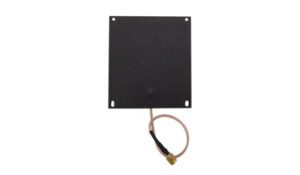
Have you ever wondered how devices communicate securely at extremely close ranges? Near Field antennas are at the heart of technologies like RFID and NFC, enabling everything from contactless payments to keycard access with precision and reliability.
A near-field antenna is a type of antenna that operates primarily within the electromagnetic field close to the antenna known as the near-field. It is crucial for applications requiring close-range and secure communication.
Now that you know what a near-field antenna is, let’s dive deeper into how it works and where it’s used.
What Does Near-Field Mean?
Near-field refers to the region close to a source or an object where the electromagnetic fields are concentrated and their behavior is different from that in the far-field region. In this region, the waves are not fully developed and do not exhibit the same characteristics as they do in the far-field.

Understanding Near-Field vs. Far-Field
In the near-field, electromagnetic fields are more complex and do not behave like the simple plane waves found farther away from the antenna. Here, the electric (E) and magnetic (H) fields may not be perfectly orthogonal to each other or to the direction of propagation. The energy can be tightly coupled to the antenna or object, leading to strong interactions that are essential for close-range communication and sensing.
As you move farther from the antenna—past the near-field—the region transitions to what’s known as the far-field. In this far-field region, the electromagnetic fields are dominated by radiating waves. The E and H fields become orthogonal to each other and to the direction of propagation, behaving like the familiar plane waves that travel long distances.
Understanding the distinction between these two regions helps explain why near-field antennas are designed specifically for short-range, secure, and precise applications, such as RFID and NFC, where reliable communication at very close distances is critical. The near-field region is typically within a distance of one wavelength from the source or object.
What Are the Subdivisions of the Near-Field Region?
The near-field region can be further broken down into two main zones, each with its own unique characteristics:
- Reactive Near Field: This zone lies closest to the antenna itself. Here, the electric and magnetic fields are primarily “reactive,” meaning they store and return energy rather than radiate it away. The interplay between the fields is out of sync, and energy tends to circulate around the antenna rather than moving outward as a wave. Most of the energy in this region is bound to the antenna, making it ideal for short-range, secure communications—think key fobs or access cards that need to operate within inches.
- Radiative (Fresnel) Near Field: Moving a bit farther from the antenna, we enter the radiative or Fresnel near-field region. In this transitional zone, the electromagnetic fields begin to organize in such a way that some energy starts to radiate away from the antenna. The fields are still not fully “mature” like they are in the far-field, so the radiation pattern—the shape in which energy spreads—still changes with distance. This region extends up to about one wavelength from the source and is critical in applications where controlled energy distribution is needed before the signal propagates into open space.
Understanding these subdivisions helps clarify how near-field antennas achieve both security and precision in close-range wireless communication.
What Is the Reactive Near Field?
The reactive near field is the area immediately surrounding the antenna, where the behavior of electromagnetic fields is especially unique. In this tiny zone, the electric (E) and magnetic (H) fields are not working together in perfect harmony. In fact, they are often out of sync—meaning they don’t reach their maximum and minimum values at the same time and aren’t perfectly perpendicular to each other.
This out-of-phase relationship makes the fields primarily “reactive” rather than radiative. Rather than efficiently sending energy outwards, much of the energy in this zone is stored and exchanged between the E and H fields themselves. Think of it as a close-up dance floor crowded with dancers—everyone is jostling for space, but no one has quite hit their stride or moved out into the open yet.
In practical terms, the reactive near field is essential for short-range communication technologies. It’s where the magic happens for devices like RFID tags and NFC readers, which need to interact securely at very close distances without broadcasting their signals over larger ranges.
Understanding the Reactive and Radiative Near-Field (Fresnel) Regions
To truly grasp how near-field antennas operate, it helps to break down the near-field zone itself, as this region isn’t uniform. Instead, it consists of two distinct segments: the reactive near field and the radiative near field—sometimes called the Fresnel region.
Reactive Near Field
This area sits closest to the antenna. Here, the electromagnetic fields—specifically, the electric (E) and magnetic (H) fields—are tightly linked to the antenna and to each other. Rather than radiating away, most of the energy circulates near the antenna and is stored temporarily, which makes this region highly useful for sensing and coupling applications, like RFID tags that only work very close to a reader.
Radiative Near Field (Fresnel Region)
Move a bit farther from the antenna, and you enter the radiative near field, or Fresnel region. In this transition zone, the electromagnetic fields begin to move away from the purely reactive behavior found closer in. The energy starts to radiate outward, but the pattern and strength of the fields can still change dramatically with distance and orientation—unlike in the far field, where things become much more predictable. This region bridges the gap between the complex, energy-storing patterns of the reactive near field and the uniform wave propagation you’ll find farther away from the antenna.
By understanding these two zones, you’ll see why near-field antennas excel at close-range, exact communication tasks—each segment of the near-field region plays a unique role in how these antennas function.
How Does the Near-Field Antenna Work?
A near-field antenna is designed to operate in the near-field region of an electromagnetic wave. This region is typically within a few wavelengths of the antenna.
When an electromagnetic wave is emitted from an antenna, it propagates as a combination of electric and magnetic fields. In the near-field region, these fields are not fully developed and are still evolving. The electric and magnetic fields are not in phase and are not oriented in the same direction.
Near-field antennas are designed to take advantage of this evolving and non-uniform field distribution. They are typically small in size compared to the wavelength of the signal they are designed to receive or transmit. This allows them to operate in the near-field region where the fields are still evolving.
Near-field antennas are often used for close-range communication or sensing applications. They can be used for applications such as radio frequency identification (RFID), wireless power transfer, or near-field communication (NFC). They can also be used for non-communication applications such as medical imaging or non-destructive testing.
In summary, near-field antennas work by operating in the near-field region of an electromagnetic wave. They take advantage of the evolving and non-uniform field distribution in this region to enable close-range communication or sensing applications.
What is a Near-Field Antenna Used For?
Near-field antennas are extensively used in applications requiring short-range communication, such as RFID (Radio Frequency Identification) systems, NFC (Near Field Communication) in smartphones, and contactless payment systems. Their ability to function effectively in environments with physical obstructions and electronic interference makes them ideal for secure and reliable data transmission.

Additionally, near-field antennas are used in wireless power transfer systems, where they are responsible for transmitting power wirelessly over short distances. This technology is commonly used in wireless charging pads for smartphones, smartwatches, and other electronic devices.
cURL Too many subrequests.

cURL Too many subrequests.
cURL Too many subrequests.
cURL Too many subrequests.
cURL Too many subrequests.
cURL Too many subrequests.
cURL Too many subrequests.

cURL Too many subrequests.
cURL Too many subrequests.
cURL Too many subrequests.
cURL Too many subrequests.
cURL Too many subrequests.
cURL Too many subrequests.
cURL Too many subrequests.
cURL Too many subrequests.
cURL Too many subrequests.
cURL Too many subrequests. cURL Too many subrequests. cURL Too many subrequests.
cURL Too many subrequests.
Overall, the distinction between near-field and far-field antennas lies in their operating distance, field structure, electromagnetic waves emitted, and applications.
Why Are Antennas Typically Used in the Far Field Region for Signal Transmission?
Antennas are most often used in the far field region because this is where efficient long-distance communication happens. In the far field, electromagnetic waves leave the antenna as well-organized, radiating fields—think of them as well-behaved travelers moving in a consistent direction. Here, both the electric (E) and magnetic (H) fields form right angles to each other and to the direction of travel, similar to how you’d see light waves or radio waves behaving in free space.
Operating in the far field offers distinct advantages:
- Reliable Signal Propagation: Signals travel much farther without significant loss, making it ideal for applications such as Wi-Fi, cellular towers, TV broadcasts, and satellite communication.
- Predictable Field Structure: The electromagnetic fields become less complex, allowing engineers to better predict and control signal direction and strength.
- Measurement Consistency: Measurements and performance evaluations of antennas—like gain and directivity—are only accurate in the far field, where near-field effects no longer distort the results.
A key point to remember is that, to be truly in the far field, the distance from the antenna must be significantly greater than both the antenna’s size and the signal wavelength. This ensures the wavefronts have enough space to develop into those classic, radiating waves that cover long distances efficiently.
By harnessing these far field properties, antennas can reliably connect people and devices across cities, continents, and even to the International Space Station.
Under What Conditions Can Measurements Be Made in the Far Field Region?
To accurately measure antenna performance in the far field region, certain conditions must be satisfied. The primary requirement is that the measurement distance from the antenna should be much greater than both the physical size of the antenna and the wavelength of the signal it emits.
In practice, this typically means that the measurement point should be at least several wavelengths away from the antenna—often determined using the formula:
[R \gg \frac{2D^2}{\lambda}]
where:
- ( R ) is the minimum distance to the far field region,
- ( D ) is the largest dimension of the antenna,
- ( \lambda ) is the wavelength of operation.
This ensures the electromagnetic fields have transitioned to their radiating (or “far field”) configuration, where the waves propagate predominantly in the intended direction, and the field structure becomes simpler. Ensuring sufficient distance helps achieve consistent, reliable measurements, free from the complex reactive fields found in the near-field region.
By observing these conditions, engineers and technicians can perform accurate far-field measurements to characterize antenna patterns, gain, and performance.
Near-Field Antenna Frequency
Near-field antennas can operate at frequencies ranging from a few kilohertz to a few gigahertz. Some common frequency ranges for near-field antennas include:
- LF (Low Frequency) range: 30 kHz to 300 kHz
- HF (High Frequency) range: 3 MHz to 30 MHz
- UHF (Ultra High Frequency) range: 300 MHz to 3 GHz
- Microwave range: 1 GHz to 30 GHz
The choice of frequency depends on factors such as the desired communication range, the size of the antenna, the size of the objects being communicated with, and the specific application requirements.
Near-Field Antenna Types
There are several types of near-field antennas that are used for various applications. Some common types include:
There are several types of near-field antennas, including:
1. Electric field probe: This type of antenna is used to measure the electric field strength in the near-field region of an electromagnetic source. It consists of a small, electrically conductive probe that is sensitive to the electric field component of the electromagnetic wave.
2. Magnetic field probe: Similar to an electric field probe, a magnetic field probe measures the magnetic field strength in the near-field region. It consists of a small, electrically conductive loop that is sensitive to the magnetic field component of the electromagnetic wave.
3. Loop antenna: A loop antenna is a type of near-field antenna that is used to measure the magnetic field strength. It consists of a loop of wire or a coil that is sensitive to the magnetic field component of the electromagnetic wave.
4. Dipole antenna: A dipole antenna is a type of near-field antenna that is used to measure both the electric and magnetic field strengths. It consists of two conductive elements, typically rods or wires, that are oriented in opposite directions and connected to a transmitter or receiver.
6. Patch antenna: A cURL Too many subrequests. is a type of near-field antenna that is used to measure the electric field strength. It consists of a flat, conductive patch mounted on a dielectric substrate.
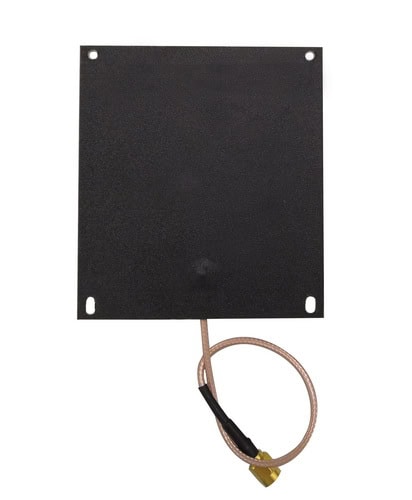
These are just a few examples of near-field antenna types. The choice of antenna depends on the specific application and the desired measurement parameters.a
Near-Field Antenna Gain and Size
The near-field antenna gain is lower because it is not designed to radiate energy efficiently into the far-field. Instead, it focuses on creating a strong near-field region where the energy can be effectively transferred to another device or received from another device. In contrast, the far-field antenna is designed to radiate energy efficiently into the far-field, resulting in higher gain.
cURL Too many subrequests.
cURL Too many subrequests.
cURL Too many subrequests.
 German (Switzerland)
  English
  Spanish
  German
  French (France)
  Korean
  Russian
  Indonesian
  French (Canada)
  Vietnamese
  Armenian
  Albanian
  Assamese
  Acehnese
  Amharic
  Czech
Czech  Bulgarian
  Cebuano
  Malayalam
  Japanese
  Dutch
Dutch