 Skip to content
In a world that is becoming more interconnected, it is crucial to have the ability to maintain strong and reliable communication signals over long distances. Repeaters are devices that meet this challenge by amplifying and regenerating signals, allowing data to travel further without losing quality.
A repeater is an electronic device in telecommunications that extends the reach of a signal by receiving it, amplifying it, and then retransmitting it at a higher power level. This process allows the signal to cover longer distances or to be received on the other side of obstructions, thus enhancing communication reliability and accessibility.
Now that we have a grasp of what a repeater does, let’s look more closely at the different ways it can be used, how it works, and the implications of using it in everyday and specialized communications.
What is a repeater used for?
A repeater is a networking device used to amplify or regenerate a signal in order to extend its range or reach. It receives the signal, strengthens it, and retransmits it to other devices or networks. Repeaters are commonly used in telecommunications, computer networks, and radio communications to overcome the limitations of signal degradation and loss over distance.
Types of Repeaters Based on Technology
Repeaters are not a one-size-fits-all solution—different technologies require different approaches for signal boosting. Here’s a closer look at how repeaters are adapted for modern communication systems:
Microwave Repeaters: These are strategically positioned between transmitting and receiving stations to relay microwave signals across long distances. They rely on powerful transmitters and highly sensitive receivers to maintain signal integrity, making them essential for point-to-point communication links, especially where direct line-of-sight is crucial.
Optical Repeaters: Vital to today’s high-speed fiber optic networks, optical repeaters convert light signals back to electrical form, clean and amplify them, then regenerate the optical signal for continued transmission. This process greatly extends the effective range of fiber optic cables, enabling global internet connectivity and speedy data transfer.
Radio Repeaters: Frequently used in wireless communication—from amateur radio clubs to emergency services—radio repeaters receive weak radio signals and immediately retransmit them at a stronger power. Equipped with dedicated receivers and transmitters, they enable communication across mountain ranges, cityscapes, or rural expanses where direct radio contact would otherwise fail.
Telephone Repeaters: Designed for long-distance telephone lines, especially those running undersea or across continents, these devices utilize transistor-based amplifiers to reinforce voice signals. They support bidirectional conversations, making them crucial for clear international telephone calls and submarine communications.
By leveraging these various types of repeaters, modern networks can overcome physical challenges and bridge vast distances, keeping our conversations, data, and connections strong.
Types of Repeaters Based on LAN Domain Location
Repeaters can also be categorized by where they are placed within a local area network (LAN), depending on the size and spread of the network itself. Here’s how they generally break down:
Local Repeaters: These are typically deployed within smaller LANs, where the connected devices are situated relatively close to one another. The primary purpose of local repeaters is to maintain signal integrity over short distances, ensuring that data packets don’t degrade even when they travel from one end of a small office to another.
Remote Repeaters: In contrast, remote repeaters are found in more expansive LAN environments—such as sprawling office complexes or campus networks—where the distance between devices is much greater. These repeaters bridge longer gaps in the network, boosting signals so they can traverse multiple buildings or far-reaching sections without loss of quality.
Understanding which type of repeater is best suited for a specific LAN location is essential for designing an efficient and reliable communication system.
What is a microwave repeater and how is it used?
A microwave repeater is a specialized type of repeater designed to relay microwave signals across long distances. Typically positioned between a transmitting station and a receiving station, these devices play a key role when direct communication is hindered by terrain, large obstacles, or simply the sheer distance involved.
Microwave repeaters are essential in systems where long-haul, point-to-point communication is needed, such as between mobile towers, TV broadcast stations, or core network links. They use high-powered transmitters and highly sensitive receivers to pick up faint signals, strengthen them, and then send them onward, often over several tens of kilometers. The placement of each microwave repeater is carefully calculated based on the distance and direct line of sight between communication points.
Key uses of microwave repeaters include:
- Bridging communication gaps in remote or mountainous regions where cables or fiber aren’t practical.
- Supporting television and radio broadcasting networks, allowing coverage to extend beyond a single city.
- Enabling cellular networks to maintain consistent service across sprawling metropolitan or rural areas.
By ensuring the signal remains strong and clear over long stretches, microwave repeaters help make seamless, long-distance wireless communication possible.
How does the repeater work?
Repeaters work by receiving a signal from one location, amplifying it, and then retransmitting it to another location. They are typically used in telecommunications and networking to extend the range of a signal or to overcome signal loss or degradation over long distances.

When a signal is transmitted, it gradually loses strength due to factors such as distance, interference, and obstacles. As the signal weakens, it becomes more susceptible to noise and distortion, which can result in data errors or a complete loss of communication.
Repeaters help to combat this problem by receiving the weak signal, amplifying it to a higher power level, and then transmitting it again. By boosting the signal strength, repeaters can overcome the loss of signal power and ensure that the signal reaches its intended destination with enough strength to be properly received.
In addition to amplifying the signal, repeaters can also clean up and regenerate the signal. This means that any noise or distortion that was introduced during transmission is removed or minimized, resulting in a cleaner and more reliable signal.
How a Repeater Works: Step by Step
- cURL Too many subrequests. cURL Too many subrequests.
- Signal Degradation: cURL Too many subrequests.
- cURL Too many subrequests. cURL Too many subrequests.
- cURL Too many subrequests. cURL Too many subrequests.
- cURL Too many subrequests. cURL Too many subrequests.
cURL Too many subrequests.
cURL Too many subrequests.
cURL Too many subrequests.
cURL Too many subrequests.
cURL Too many subrequests.
cURL Too many subrequests.
cURL Too many subrequests.
cURL Too many subrequests.
cURL Too many subrequests. cURL Too many subrequests.
Digital repeaters, on the other hand, serve modern systems that transmit data in digital form. Instead of simply amplifying the signal, digital repeaters decode the incoming digital data, clean it up by removing the accumulated noise or errors, and then regenerate a fresh, clean version of the original digital signal before sending it onward. This capability allows digital repeaters to maintain high signal integrity, which is why they’re widely used in today’s computer networks and digital telecommunications.
In summary, while analog repeaters focus solely on strengthening a signal (noise and all), digital repeaters actually reconstruct and refresh the signal for improved reliability—making each best suited for their respective technologies.
What are the different types of repeaters based on signal type?
Repeaters aren’t one-size-fits-all; in fact, their design depends on the kind of signal they handle. Broadly, repeaters fall into two main categories, each tailored to the signals they work with:
Analog Repeaters: These devices are built for analog signals, such as those used in traditional telephony or older radio transmissions. An analog repeater takes in a weakened analog signal, amplifies it, and sends it out again. While this process does boost signal strength, it also amplifies any accompanying noise, which means analog repeaters are best suited for systems where digital clarity and precision aren’t as critical.
Digital Repeaters: As most modern networks now transmit data digitally—think fiber optic communications, Wi-Fi, or digital radio—digital repeaters have become increasingly prevalent. Instead of simply amplifying the signal (and any unwanted noise), a digital repeater regenerates the original digital pattern, effectively cleaning up and reconstructing distorted data. This regeneration helps maintain data integrity over long distances, making digital repeaters essential for everything from internet backbone networks to cellular communications.
By understanding the difference between these two types, you can better select a repeater suited to your communication infrastructure or troubleshooting challenge.
Types of Repeaters by Connection Type
Repeaters can be broadly divided into two main categories depending on the kind of network they support: wired and wireless.
Wired Repeaters
These repeaters are designed for use in wired networks such as Ethernet LANs. Placed along the cable, a wired repeater captures the electrical signal, amplifies it, and retransmits it down the line. This approach helps the data maintain its strength and integrity, reducing the risk of errors caused by signal attenuation over long cable runs.
Wireless Repeaters
In contrast, wireless repeaters are used in wireless networks, including Wi-Fi systems and some cellular infrastructures. These devices pick up a wireless signal from a router or access point, boost it, and then rebroadcast it to expand the network’s reach. Wireless repeaters are commonly used in homes, large offices, and outdoor environments to eliminate dead spots and provide more consistent coverage.
By choosing the appropriate type of repeater for your connection—wired or wireless—you can ensure seamless communication and optimal signal quality across your entire network.
What is an optical repeater and what is its role in fiber optic communication?
An optical repeater is a specialized device used in fiber optic communication systems to ensure that light signals can travel long distances without losing strength or clarity. When data is transmitted through optical fiber, the light signal naturally weakens and may become distorted as it covers greater distances. This is especially true in large-scale networks or transcontinental cables where signals must travel hundreds or even thousands of kilometers.
To address this, optical repeaters are strategically placed along the fiber optic cable. Their primary job is to receive the faint or degraded optical signal, convert it into an electrical form for amplification and regeneration, and then retransmit it as a clean, strong optical signal down the next section of cable. By doing so, optical repeaters effectively “refresh” the signal, removing accumulated noise and correction errors to maintain high-speed, accurate data transmission. This allows fiber optic communication systems—used by telecom giants like AT&T and undersea network providers—to deliver reliable connectivity across vast distances without significant loss in quality.
What are the benefits of a repeater?
There are several benefits of a repeater:
1. Extending signal range: A repeater amplifies and retransmits a signal, allowing it to cover a larger area than the original signal could reach. This can be especially useful in large buildings, remote areas, or areas with weak signal strength.
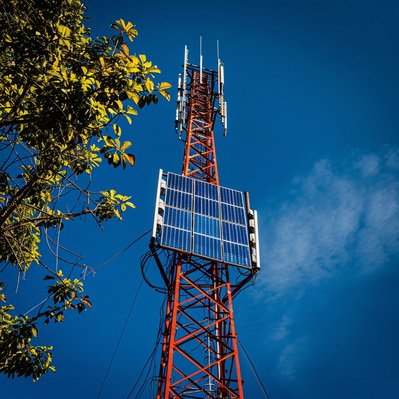
2. Improving signal quality: A repeater can help overcome obstacles such as walls, trees, or geographical features that may weaken or block the original signal. By amplifying and retransmitting the signal, a repeater can ensure a stronger and more reliable signal quality.
3. Enhancing network coverage: In the case of wireless networks, a repeater can extend the coverage area, ensuring a stable and consistent connection throughout the entire coverage zone. This is particularly useful in offices, homes, or public spaces where a strong and reliable network connection is required.
4. Reducing data loss and latency: By boosting the signal strength, a repeater can reduce data loss and improve data transmission speed. This can be beneficial in scenarios where a large amount of data needs to be transferred, such as video streaming, online gaming, or downloading files.
5. Cost-effective solution: Deploying a repeater is often a more cost-effective solution compared to installing additional network infrastructure or running additional cables. It allows for the reuse of existing network equipment and can be easily set up without significant modifications to the existing infrastructure.
6. Flexibility and scalability: Repeaters are typically easy to install and configure, allowing for flexibility in their placement and scalability as the network or coverage area expands. They can be added or relocated as needed without major disruptions to the existing network setup.
Additional Features and Advantages
- Signal regeneration: Repeaters don’t just amplify—they regenerate signals without altering the original data, helping to maintain signal integrity over long distances.
- Analog and digital compatibility: Depending on the type, repeaters can work with both analog and digital signals, making them versatile for various network needs.
- Error reduction: By cleaning up and boosting weak signals, repeaters help reduce errors and data loss that can occur from signal degradation.
- Essential in network design: While adding repeaters does introduce some complexity, their ability to extend network reach and maintain performance makes them an essential part of many communication and networking setups.
- Requires power: Keep in mind, repeaters do need a power source to function, so placement should consider access to electricity.
Overall, a repeater provides an efficient and convenient way to extend the coverage and improve the performance of a signal or network, making it an essential tool in various communication and networking applications.
What are the disadvantages of a repeater?
cURL Too many subrequests.
cURL Too many subrequests.
cURL Too many subrequests.
cURL Too many subrequests.
cURL Too many subrequests.
cURL Too many subrequests.
cURL Too many subrequests.
cURL Too many subrequests.
cURL Too many subrequests.
cURL Too many subrequests.
- cURL Too many subrequests. cURL Too many subrequests.
- cURL Too many subrequests. cURL Too many subrequests.
- cURL Too many subrequests. cURL Too many subrequests.
cURL Too many subrequests.
cURL Too many subrequests.
cURL Too many subrequests.
Here’s why going overboard with repeaters can spell trouble:
Increased Congestion: Unlike more advanced network devices, repeaters don’t manage or filter traffic. If you stack several of them in a row, all the data—good, bad, or noisy—gets repeated throughout the network. This leads to a crowded environment where every device is trying to shout over the other, making congestion much more likely.
Collision Chaos: Each repeater expands the collision domain, meaning more devices are competing to send information at the same time on the same segment. If you exceed the recommended number of repeaters, network packets can “collide” and get lost or have to be resent, dragging down performance—especially noticeable in busy networks.
Lack of Segmentation: Without the ability to separate or compartmentalize network traffic, repeaters simply spread everything everywhere. This makes isolating issues or optimizing performance nearly impossible, and the entire network can become bogged down by a single point of heavy use or interference.
Network Limits: Most network standards specify a maximum number of repeaters allowed between devices to maintain signal integrity and avoid chaos. Surpassing these recommendations isn’t just frowned upon—it can actually break your network, leading to dropped connections or persistent trouble with data transmission.
In practice, moderation is key. Adding repeaters may seem like an easy fix, but using too many can transform a well-behaved network into a sluggish, noisy mess. Always plan your network with care and consult equipment guidelines before stacking up repeaters like dominoes.
What is a WiFi repeater?
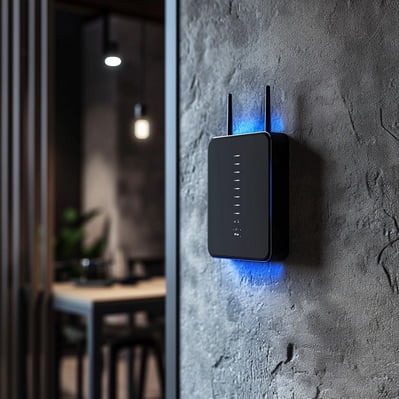
A WiFi repeater is a device that receives the existing WiFi signal from a router, amplifies it, and then rebroadcasts the signal to extend the network’s coverage area. It acts as a middleman between the router and the devices that are connected to the network, allowing them to receive a stronger and more reliable signal. The repeater typically needs to be placed within the existing WiFi network’s range, but closer to the area where the signal needs to be extended. It then creates a new network with its own name and password, allowing devices to connect to it and access the internet.
How do wired repeaters differ from wireless repeaters?
Wired and wireless repeaters both serve to extend a network, but they do so in distinct ways depending on the type of connection involved.
Wired repeaters operate within wired Local Area Networks (LANs). These devices take an electrical signal transmitted over a cable—such as Ethernet—amplify and regenerate it, then pass it along the line. This process helps maintain signal integrity over long distances, preventing loss or degradation as data travels across extensive cabling. Wired repeaters are especially useful in settings where a physical Ethernet connection needs to span further than standard cabling allows, like in large office floors or warehouse environments.
Wireless repeaters, on the other hand, are designed for use with wireless networks. They receive the WiFi or cellular signal wirelessly from a router or access point and then retransmit it to cover areas where the signal is weak or nonexistent. By capturing and rebroadcasting the wireless signal, these repeaters can help fill in dead zones in homes, offices, or public spaces—provided they’re placed within range of the original network.
In summary, the key difference lies in how they connect and repeat signals: wired repeaters extend cabled connections, while wireless repeaters expand the reach of wireless signals. Both are valuable tools, but their use depends on whether your network is running over cables or through the air.
What’s the difference between WiFi extender and repeater?
A WiFi extender and a WiFi repeater are two different devices that are used to boost the range and coverage of a wireless network.
A WiFi extender, also known as a range extender, is a device that connects to an existing WiFi network and rebroadcasts the signal to extend the range of the network. It creates a new network name (SSID) and a new network password, and devices connecting to the extender will be on a separate network from the main router. This means that you will have to manually switch between the main network and the extender’s network when moving around your home or office.
On the other hand, a WiFi repeater, also known as a wireless repeater or a wireless range extender, is a device that connects to an existing WiFi network and rebroadcasts the signal without creating a new network name or password. It acts as a bridge between the main router and the devices connected to it, effectively extending the range of the network. Since it does not create a new network, devices can seamlessly move between the main router and the repeater without having to manually switch networks.
In summary, a WiFi extender creates a new network name and password, while a WiFi repeater extends the range of the existing network without creating a new network.
What is the difference between a router and a repeater?
A router is a networking device that connects multiple devices to a single internet connection. It acts as a central hub, directing traffic between the devices and the internet. Routers also typically include features such as network security, firewall protection, and the ability to create a local area network (LAN) for devices to communicate with each other.
On the other hand, a repeater, also known as a range extender or a signal booster, is a device that extends the range of an existing wireless network. It receives the wireless signal from the router and rebroadcasts it, effectively amplifying the signal and increasing the coverage area. Repeaters do not create a separate network or provide any additional features like routers do, they simply extend the range of an existing network.
In summary, routers are used to connect multiple devices to the internet and provide additional features like network security, while repeaters are used to extend the range of an existing wireless network.
What is the difference between local repeaters and remote repeaters?
Local repeaters and remote repeaters are distinguished by the distance they are designed to cover within a network.
Local repeaters are typically used within small local area networks (LANs) where all devices are situated near each other—think of them as solution for extending a signal just a room or two away. Their main purpose is to overcome minor obstacles or short distances where the signal begins to weaken but does not face major interference or long-range challenges.
Remote repeaters, on the other hand, are intended for larger LAN environments where devices are spread out over a greater distance—such as different floors of a building, or far corners of a campus or warehouse. These repeaters are positioned further from the main router, acting as key “handoff” points to ensure the network signal can travel across more expansive areas without losing strength.
In short, local repeaters address coverage gaps in compact spaces, while remote repeaters bridge longer spans to keep far-flung devices reliably connected.
Can I turn my WiFi router into a repeater?
Yes, it is possible to turn a WiFi router into a repeater. However, not all routers have this capability. You will need to check if your router supports repeater mode or has a “bridge” mode option. If it does, you can follow the instructions provided by the router manufacturer to set it up as a repeater.
What is an illegal repeater?
An illegal repeater refers to a repeater device that is used without proper authorization or in violation of regulatory guidelines. These devices can cause interference and disrupt the normal functioning of communication networks. Using illegal repeaters can result in legal consequences and penalties.
cURL Too many subrequests.
In summary, Repeaters are vital to modern telecommunications as they enable signals to travel further and more reliably. Whether it’s enhancing a home WiFi network or extending cellular coverage, the use of repeaters is crucial in overcoming the limitations of distance and obstacles in signal transmission. For those looking to extend the reach of their network, understanding and utilizing repeaters can be a game-changer.
 German (Switzerland)
  English
  Spanish
  German
  French (France)
  Korean
  Russian
  Indonesian
  French (Canada)
  Vietnamese
  Armenian
  Albanian
  Assamese
  Acehnese
  Amharic
  Czech
Czech  Bulgarian
  Cebuano
  Malayalam
  Japanese
  Dutch
Dutch