 Skip to content

Have you ever wondered how multiple radio signals are combined into one without losing quality? RF combiners are key to making this possible, providing seamless signal integration that’s crucial in many tech applications today.
An RF combiner is a tool that combines multiple RF signals into a single output with minimal loss of signal. This device is crucial in the fields of telecommunications and radio broadcasting as it allows for the merging of different signal sources into one channel.
Read on to uncover the mechanics and various uses of RF combiners that make them indispensable in modern communications.
What is a Combiner in RF?
In RF (radio frequency) technology, a combiner is a device used to combine multiple RF signals into a single output. It is commonly used in various applications such as wireless communication systems, broadcasting, and radar systems.

The purpose of a combiner is to efficiently combine the power of multiple RF signals without causing interference or loss of signal quality. It allows multiple transmitters or antennas to share a common transmission line, reducing the overall complexity and cost of the system.
Combiners can be passive or active. Passive combiners use passive components like resistors, capacitors, and inductors to combine the RF signals. Active combiners, on the other hand, use active components such as amplifiers or mixers to combine the signals.
There are different types of combiners available, including power combiners, frequency combiners, and hybrid combiners. Power combiners combine the power of multiple RF signals, while frequency combiners combine signals of different frequencies. Hybrid combiners are used to combine signals with different polarizations, such as in antenna systems.
Overall, a combiner is an essential component in RF systems that allows multiple RF signals to be combined efficiently and transmitted or received using a single output or antenna.
What does an RF Combiner do?
An RF combiner is a device used in radio frequency (RF) systems to combine multiple RF signals into a single output. It takes the signals from multiple input ports and combines them, typically with some degree of isolation between the input ports, to produce a single output signal. This allows multiple RF sources to be combined and transmitted or received using a single antenna or transmission line. RF combiners are commonly used in various applications such as wireless communication systems, broadcasting, radar systems, and satellite communication.
How does a RF Combiner work?
A RF (Radio Frequency) combiner is a device used to combine multiple RF signals into a single output. It is commonly used in various applications, such as in radio and cellular networks, wireless communication systems, and radar systems.
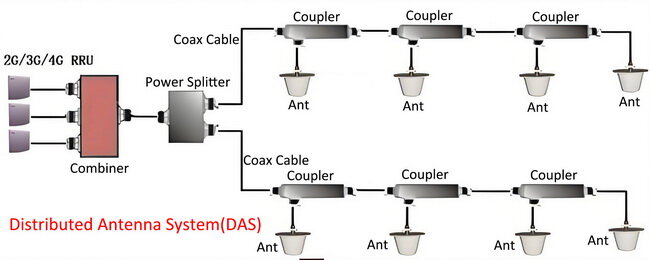
The basic principle behind the operation of a RF combiner is the concept of signal addition. The device takes in multiple RF signals, typically of the same frequency, and combines them together to create a single output signal. This is achieved through the use of passive components, such as resistors, capacitors, and inductors.
There are different types of RF combiners, including power combiners and hybrid combiners. Power combiners are used to combine signals of equal power levels, while hybrid combiners can combine signals of different power levels.
In a power combiner, the RF signals are fed into individual ports, and then combined using a network of passive components. The most common configuration is the Wilkinson power combiner, which uses a combination of resistors and transformers to achieve signal addition. The resistors are used to match the impedance of the input signals, while the transformers are used to combine the signals and provide isolation between the input ports.
In a hybrid combiner, the RF signals are combined using a combination of resistive and reactive components. The resistive components are used to match the impedance of the input signals, while the reactive components, such as capacitors and inductors, are used to combine the signals.
Overall, the RF combiner works by taking in multiple RF signals and using passive components to combine them into a single output signal. The specific configuration and components used depend on the type of combiner and the requirements of the application.
What is a RF Combiner used for?
RF combiners are used to combine multiple RF signals into a single output. They are commonly used in various applications such as:
1. Broadcasting: In broadcasting applications, RF combiners are used to combine the signals from multiple transmitters into a single antenna, thereby reducing the number of antennas required.
2. Cellular Networks: In cellular networks, RF combiners are used to combine the signals from multiple base stations into a single antenna, allowing for better coverage and capacity.
3. Distributed Antenna Systems (DAS): In DAS installations, RF combiners are used to combine the signals from multiple remote units into a single antenna, providing improved signal distribution and coverage.
4. Two-Way Radio Systems: In two-way radio systems, RF combiners are used to combine the signals from multiple radios or repeaters into a single antenna, enabling communication over a larger area.
5. Radar Systems: In radar systems, RF combiners are used to combine the signals from multiple radar transmitters into a single antenna, allowing for better detection and tracking of targets.
Overall, RF combiners help simplify infrastructure, reduce costs, and improve signal performance by combining multiple RF signals into a single output.
What is the purpose of the power combiner?
The purpose of a power combiner is to combine the power from multiple sources or amplifiers into a single output. It is commonly used in radio frequency (RF) and microwave systems to increase the overall power output. By combining the power, the power combiner allows for higher power transmission or signal strength, which is useful in various applications like telecommunications, radar systems, and wireless networks.
Can you combine antenna signals?
Yes, it is possible to combine antenna signals. There are various methods to do this, depending on the specific requirements and circumstances. Here are a few common ways to combine antenna signals:
1. Antenna Combiner: An antenna combiner is a device that combines multiple antenna signals into a single output. It typically has multiple input ports, each connected to an individual antenna, and a single output port. The signals from the different antennas are combined and output through the single port.
2. Diplexer: A diplexer is a device used to combine signals from two different frequency bands onto a single transmission line or antenna. It allows signals from different antennas or sources to share a common transmission path while keeping them separate and preventing interference.
3. Signal Splitter: A signal splitter can be used to combine antenna signals by splitting the signals from multiple antennas and then combining them using a common distribution amplifier. This method is commonly used in cable TV systems to combine signals from multiple antennas or sources before distributing them to multiple TV sets.
4. Active Combiner: An active combiner uses active electronics to combine multiple antenna signals. It amplifies and combines the signals from different antennas before outputting them through a single port. Active combiners are often used in wireless microphone systems, where multiple wireless microphones need to share a single antenna.
These are just a few examples of how antenna signals can be combined. The specific method used will depend on the application, the number of antennas, the frequency bands involved, and other factors.
What is the difference between RF combiner and diplexer?
A RF combiner and a diplexer are both devices used in RF (radio frequency) systems, but they serve different purposes.
1. RF Combiner:
An RF combiner is a device that combines multiple RF signals into a single output. It is used when multiple signals need to be combined and transmitted through a single antenna or transmitted through a common transmission line. RF combiners are commonly used in applications such as broadcasting, wireless communication, and radar systems.

2. Diplexer:
cURL Too many subrequests.

cURL Too many subrequests.
cURL Too many subrequests.
cURL Too many subrequests.
cURL Too many subrequests.

cURL Too many subrequests.

cURL Too many subrequests.
cURL Too many subrequests.
cURL Too many subrequests.

cURL Too many subrequests.
cURL Too many subrequests.
cURL Too many subrequests.
cURL Too many subrequests.
cURL Too many subrequests.
cURL Too many subrequests.
cURL Too many subrequests.
cURL Too many subrequests.
cURL Too many subrequests.
cURL Too many subrequests.
cURL Too many subrequests.
In short, RF combiners are used in many different applications, including wireless communication systems, radar systems, and satellite communication systems. They allow multiple signals to be combined into a single signal, which can then be processed or transmitted more efficiently. This can improve the performance and capacity of these systems, and enable new features and capabilities. Overall, RF combiners are an important component in modern technology that helps to enable the wireless communication systems we rely on every day.
 German (Switzerland)
  English
  Spanish
  German
  French (France)
  Korean
  Russian
  Indonesian
  French (Canada)
  Vietnamese
  Armenian
  Albanian
  Assamese
  Acehnese
  Amharic
  Czech
Czech  Bulgarian
  Cebuano
  Malayalam
  Japanese
  Dutch
Dutch