 Skip to content

Have you ever wondered how you can wirelessly connect to your favorite websites, make phone calls, and use GPS navigation without even thinking about it? The secret behind all of these technologies is the UHF antenna. This little device is the unsung hero of wireless communication, working quietly in the background to keep you connected to the world.
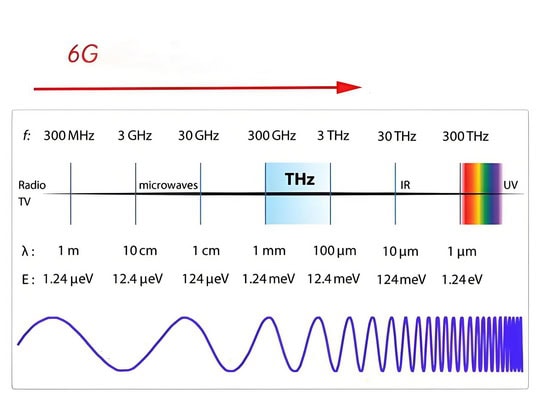
A UHF antenna is a device designed to receive and transmit signals in the Ultra High Frequency (UHF) range, typically between 300 MHz and 3 GHz. These antennas are integral to various technologies, including television broadcasting, wireless communications, mobile phones, and GPS.
Now that you know the quick answer, let’s dive deeper into the workings of UHF antennas, exploring how it works, their types, uses, and advantages.
What is UHF?
UHF stands for Ultra High Frequency. It is a range of electromagnetic waves with frequencies between 300 MHz (megahertz) and 3 GHz (gigahertz). UHF is commonly used for various applications, including television broadcasting, mobile communication, satellite communication, and radar systems.
Main Characteristics and Features of UHF Antennas
UHF antennas stand out for a number of reasons that make them indispensable across modern communication systems. Here’s what sets them apart:
Compact Design: Because UHF signals have shorter wavelengths, UHF antennas are much smaller than those designed for lower frequencies. This makes them practical for use in portable devices like smartphones, tablets, two-way radios, and wireless routers.
Efficient for Urban Environments: Their shorter wavelengths allow UHF signals to penetrate buildings and obstacles more effectively, making these antennas especially useful in crowded cities or areas with lots of physical barriers.
Wide Range of Applications: UHF antennas are found in everything from public safety communications (like police and emergency response radios) to television broadcasting, LTE networks, and even airport radar equipment.
Rapid Data Transmission: The high-frequency nature of UHF means these antennas can support faster data transfer rates, which is critical for seamless mobile internet connectivity and real-time video streaming.
Reliability in Challenging Situations: UHF antennas are often chosen for critical situations, such as military communication or disaster response, due to their ability to maintain stable connections between distant points—even with heavy interference.
These defining features are why UHF antennas remain a backbone technology in both everyday devices and mission-critical systems.
What are UHF antennas used for?
UHF antennas are used for receiving and transmitting signals in the Ultra High Frequency (UHF) range of the electromagnetic spectrum. They are commonly used for various applications including:
1. Television: UHF antennas are used to receive over-the-air television signals, especially for channels in the UHF band.
2. Radio: UHF antennas are used for receiving and transmitting radio signals in the UHF frequency range. This includes two-way radios, walkie-talkies, and other wireless communication devices.
3. Wireless Communication: UHF antennas are used for wireless communication systems such as Wi-Fi, Bluetooth, and wireless routers. They help in transmitting and receiving data over short distances.
4. Mobile Communication: UHF antennas are used in mobile phones and cellular networks to ensure reliable communication and connectivity.
5. Satellite Communication: UHF antennas are used for satellite communication systems, including satellite TV and satellite internet services.
6. RFID (Radio Frequency Identification): UHF antennas are used in RFID systems to read and write data to RFID tags, commonly used for inventory tracking, access control, and asset management.
7. Public Safety and Emergency Services: UHF antennas are used in public safety and emergency services, including police, fire, and ambulance services, to maintain communication over a wide area.
8. Aviation and Aerospace: UHF antennas are used in aviation and aerospace applications for communication between aircraft, air traffic control, and ground stations.
Additional Key Uses and Features of UHF Antennas
- Military and Emergency Communications: UHF antennas are highly valued in military settings, where reliable, point-to-point communication in emergency situations is essential. Their robust performance makes them a top choice for defense operations, including spotting enemy aircraft and coordinating tactical responses.
- Mobile Networks: Most GSM and UMTS mobile networks utilize UHF antennas to ensure strong, consistent connectivity between cell phones and internet devices.
- Device Design: UHF antennas are typically shorter than many other antenna types because their length matches the shorter wavelength of UHF radio waves. This makes them ideal for compact devices and applications requiring portability.
- Public Safety Devices and LTE Applications: Their efficiency and adaptability mean UHF antennas are commonly found in public safety radios, LTE-enabled devices, and two-way communication tools used by first responders.
These features, combined with their versatility, explain why UHF antennas are a backbone technology across so many industries and critical services.
cURL Too many subrequests.
cURL Too many subrequests.
cURL Too many subrequests.
cURL Too many subrequests.

cURL Too many subrequests.
cURL Too many subrequests.
cURL Too many subrequests.
cURL Too many subrequests.
cURL Too many subrequests.
cURL Too many subrequests.
cURL Too many subrequests.
cURL Too many subrequests.
cURL Too many subrequests.
- cURL Too many subrequests.
- cURL Too many subrequests.
- cURL Too many subrequests.
cURL Too many subrequests.
- cURL Too many subrequests.
- cURL Too many subrequests.
- Versatile and can be used for a wide range of frequencies by adjusting the element lengths.
- Delivers a predictable radiation pattern, with maximum sensitivity perpendicular to the antenna’s length, making it suitable for both broadcast and point-to-point communication.
Because of these characteristics, half-wave dipole antennas are a popular choice in many wireless communication systems.
What are the advantages of UHF antennas?
There are several advantages of UHF antennas:
1. Wide coverage: UHF antennas have a longer wavelength compared to VHF antennas, allowing them to cover a larger area. This makes them suitable for long-range communication and broadcasting.
2. Less interference: UHF signals are less prone to interference from buildings, trees, and other obstacles compared to VHF signals. This makes UHF antennas more reliable in urban and densely populated areas.
3. Better signal quality: UHF antennas generally provide better signal quality and reception compared to VHF antennas. They can deliver clearer audio and video signals, resulting in a higher quality viewing or listening experience.
4. More channels: UHF frequency bands can accommodate a larger number of channels compared to VHF frequency bands. This allows for more options and variety in terms of available TV channels and radio stations.
5. Compact size: UHF antennas can be designed to be smaller and more compact compared to VHF antennas. This makes them easier to install and less obtrusive in residential or commercial settings.
6. Compatibility with digital signals: UHF antennas are well-suited for receiving digital TV signals, which are commonly broadcast in the UHF frequency range. They can capture and decode digital signals more effectively, ensuring a high-quality digital TV viewing experience.
UHF Antenna Types
There are several types of UHF antennas, including:
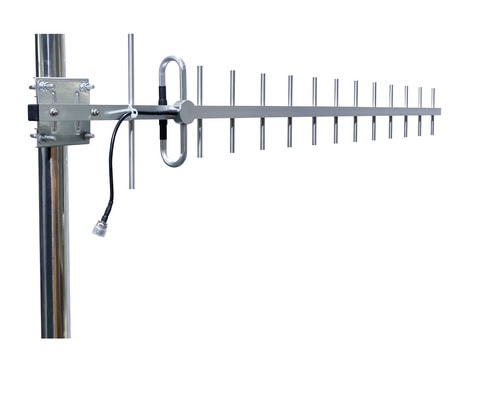
1. Yagi-Uda Antenna: This is a directional antenna consisting of multiple parallel elements arranged in a line. It is commonly used for TV reception.The Yagi-Uda antenna, often simply called a “Yagi,” features a pair of metal rods (the driven element and reflector) placed parallel to each other, along with several directors to enhance directivity and gain. You’ll frequently spot these antennas mounted on rooftops, especially for television use in areas where signal strength may be weak. Thanks to their efficient design, Yagi antennas are well-suited for installations in locations with challenging reception conditions. Some models even include a motorized base that allows users to rotate the antenna for optimal alignment with broadcast towers, further improving signal quality.
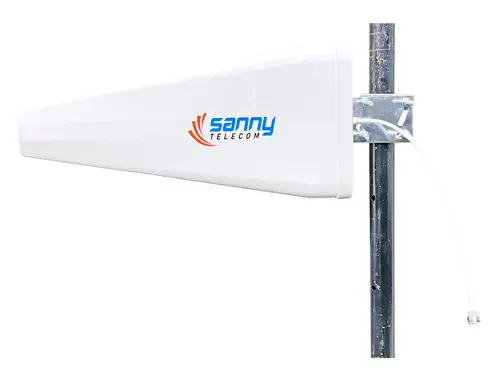
2. Log-Periodic Antenna: This is a wideband antenna that consists of multiple dipole elements of varying lengths. It is used for a wide range of applications, including TV, radio, and wireless communication.
3. Panel Antenna: This is a flat, rectangular or square antenna that is often used in wireless communication systems, such as Wi-Fi routers, signal booster, RFID, IoT, etc.

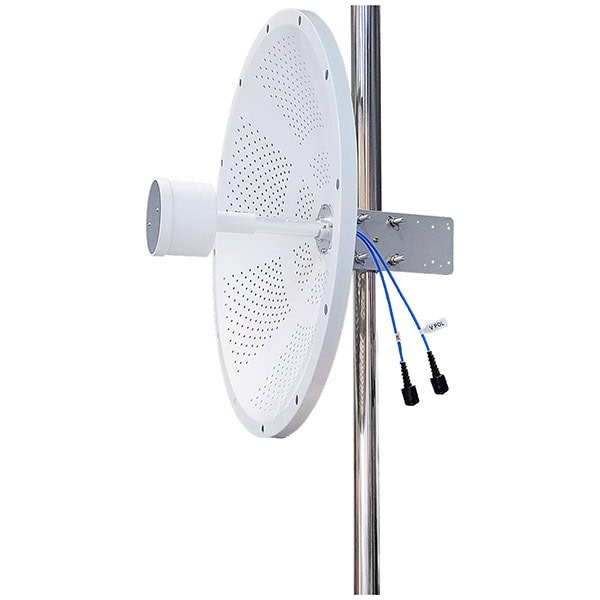
4. Parabolic Reflector Antenna: This antenna consists of a parabolic reflector dish with a feedhorn at its focal point. It is used for long-range communication, such as backhauls , CCTV and point-to-point communications.
5. Quadrifilar Helical Antenna: A quadrifilar helix antenna (QHA) is a type of antenna that consists of four helical wires wound around a central axis. Each wire is wound in a helix shape and is spaced 90 degrees apart from the adjacent wires. The QHA is designed to radiate and receive circularly polarized electromagnetic waves.
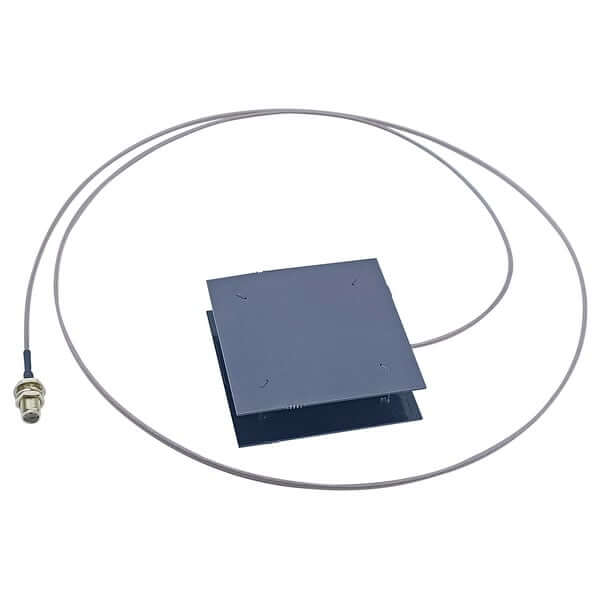
These are just a few examples of UHF antenna types, and there are many other variations and designs available for different applications.
Examples of Specialized UHF Antennas
In addition to the common types listed above, there are several specialized UHF antennas designed for unique environments and applications:
Marine UHF Antennas: Engineered for use on ships and boats, marine UHF antennas are often built to withstand harsh saltwater conditions. They’re typically mounted high on masts to maximize range and are crucial for maritime communication, including VHF/UHF radios used by the US Coast Guard and international vessels.
Naval Shipboard Antennas: These antennas are ruggedized for military use on naval vessels. They often feature advanced materials to resist corrosion and integrated grounding to manage the electromagnetic complexities of large metal ships. Models like the Shakespeare 5396-AIS or options from Comrod and Cobham exemplify this category.
UHF Dipole Antennas: Widely used in situations that demand reliable, omnidirectional coverage, dipole antennas are frequently deployed in emergency response vehicles, base stations, and portable communication setups from brands like Larsen and Tram.
These specialized UHF antennas are carefully engineered for their respective environments, ensuring dependable communication no matter the conditions.
Folded Dipole Antenna: What It Is and Why Choose One?
Among the various UHF antenna designs, the folded dipole antenna stands out for its simplicity and versatility. At its core, a folded dipole consists of a single conductor—usually a length of metal or wire—that is folded back on itself, with the two ends placed in close proximity. This clever design allows the antenna to maintain a balanced signal and a broad impedance range, making it especially popular in both UHF and VHF television applications.
Benefits of a Folded Dipole Antenna
- Ease of Construction: Folded dipoles are straightforward to build using basic, budget-friendly materials, making them accessible for DIY enthusiasts or quick fixes.
- Durability: Thanks to their simple structure, these antennas are known for their long service life and reliability in various environmental conditions.
- Impedance Matching: One of the biggest advantages is their natural match to 300-ohm twin-lead cable, reducing signal loss during transmission.
- Versatile Mounting: The compact, unobtrusive form factor lends itself to installations in tight indoor spaces or outdoors atop a mast.
- Consistent Performance: Folded dipole antennas perform well for standard TV reception, ensuring stable audio and video signals across a range of frequencies.
Whether you’re looking for a reliable antenna for TV or experimenting with radio setups, the folded dipole offers a smart blend of performance, affordability, and ease of use.
cURL Too many subrequests.
cURL Too many subrequests.
cURL Too many subrequests.
cURL Too many subrequests.
cURL Too many subrequests.
cURL Too many subrequests.
cURL Too many subrequests.
cURL Too many subrequests.
cURL Too many subrequests.
cURL Too many subrequests.
cURL Too many subrequests.
cURL Too many subrequests.
cURL Too many subrequests.
cURL Too many subrequests.
cURL Too many subrequests.
cURL Too many subrequests.
cURL Too many subrequests.
cURL Too many subrequests.
cURL Too many subrequests.
1. Channel Master CM-4228HD: This outdoor antenna has a long-range capability of up to 80 miles. It is designed to receive UHF signals and has a multi-directional reception pattern.
2. Antennas Direct DB8e: This outdoor antenna is highly rated for its performance and long-range reception. It has a range of up to 70 miles and features a bowtie design for enhanced signal capture.
3. RCA ANT751E: This compact outdoor antenna has a range of up to 70 miles and is designed for UHF reception. It is easy to install and can be mounted on a roof or attic.
It’s important to note that the best antenna for you will depend on various factors such as your location, the distance to the broadcasting towers, and the surrounding terrain. It is recommended to check the signal strength and availability in your area before purchasing an antenna.
How to design a UHF antenna?
Designing a UHF (Ultra High Frequency) antenna involves several steps. Here is a general guide to help you design a basic UHF antenna:
1. Determine the frequency range: UHF frequencies range from 300 MHz to 3 GHz. Identify the specific frequency or frequency range you want your antenna to operate in.
2. Choose the antenna type: There are various types of UHF antennas, such as dipole, Yagi, patch, and loop antennas. Select the type that best suits your requirements and available resources.
3. Calculate the dimensions: The dimensions of the antenna elements depend on the chosen antenna type and the desired frequency. You can use online calculators or antenna design software to calculate the dimensions accurately.
4. Gather materials: Depending on the antenna type and design, you will need materials such as copper wire, coaxial cable, connectors, insulators, and a supporting structure (e.g., PVC pipe or wooden boom).
5. Build the antenna: Follow the calculated dimensions and construct the antenna elements. For example, if building a dipole antenna, cut the copper wire to the required length and connect it to the coaxial cable using a balun or matching transformer.
6. Mount the antenna: Attach the antenna elements to the supporting structure or boom. Ensure the elements are properly aligned and spaced according to the calculated dimensions.
7. Connect the feedline: Connect the coaxial cable to the antenna elements using appropriate connectors. Use a balun or matching transformer if necessary.
8. Test the antenna: Connect the other end of the coaxial cable to a UHF receiver or transmitter. Place the antenna in an open area, away from obstructions, and away from other electronic devices. Test the antenna’s performance by measuring signal strength, reception quality, or transmission range.
9. Fine-tune the antenna: If the antenna does not perform optimally, you may need to make adjustments. You can try changing the dimensions, element spacing, or element positions to improve performance. Repeat the testing process until you achieve satisfactory results.
Remember that designing an antenna involves a certain level of technical knowledge and expertise. It is recommended to consult antenna design resources, books, or seek advice from experts in the field to ensure your UHF antenna design is accurate and effective.
How to install a UHF antenna?
Installing a UHF antenna for wireless communication involves the following steps:
1. Determine the type of UHF antenna: There are different types of UHF antennas available, such as Yagi, Omni-directional, and Panel antennas. Choose the one that suits your specific needs and requirements.
Common Types of UHF Antennas
- Half-wave Dipole Antenna: Composed of two metal rods or wires extending horizontally or vertically, this classic design is more powerful than a quarter-wave antenna and works well for general UHF applications.
- Loop Antenna: Often found in TV setups, a loop antenna consists of a length of wire shaped into a loop. Its omnidirectional nature allows it to receive signals from all directions, making it useful in urban environments.
- cURL Too many subrequests. This type features a single piece of metal or wire folded into a specific shape, with both ends close together. Folded dipoles are simple to build using affordable materials and are common in TV and radio installations due to their durability.
- UHF Yagi Antenna: Recognizable from rooftop TV antennas, the Yagi design uses multiple metal elements (rods) arranged parallel to each other. Yagi antennas are highly directional and efficient, making them ideal for areas with weak signals or for targeting specific transmission sources. Some advanced models even include a motor to adjust direction for optimal reception.
By understanding these basic types and their strengths, you can select the best UHF antenna for your application—whether it’s for reliable TV reception, enhanced two-way radio performance, or specialized wireless communication.
2. Identify the mounting location: Select a location that provides a clear line of sight to the target device or the communication point. Consider factors like height, obstructions, and distance.
3. Assemble the antenna: Follow the manufacturer’s instructions to assemble the UHF antenna. This typically involves attaching the elements or connectors to the main antenna body.
4. Mount the antenna: Depending on the type of UHF antenna, you may need to mount it on a pole, mast, or bracket. Ensure that the mounting structure is secure and stable.
5. Connect the antenna to the wireless device: Connect the antenna to the wireless device, such as a router, access point, or wireless adapter, using the appropriate cable or connector. Ensure that the connection is tight and secure.
6. Configure the wireless device: Access the configuration settings of the wireless device and specify the antenna type and any other necessary settings. Refer to the device’s user manual for detailed instructions on how to configure it.
7. Test the wireless connection: Once the antenna is installed and the device is configured, test the wireless connection to ensure it is working properly. Check the signal strength and quality, and make any necessary adjustments to the antenna position or configuration settings.
8. Fine-tune the antenna position: If the wireless connection is not satisfactory, you may need to fine-tune the antenna position. Make small adjustments to the antenna’s direction, elevation, or location, and test the connection again until you achieve the desired performance.
Note: It is important to comply with local regulations and obtain any necessary permits or licenses before installing a UHF antenna for wireless communication.
cURL Too many subrequests.
In short, understanding UHF antennas is crucial for optimizing your use of devices that depend on these frequencies. Whether you are setting up a home entertainment system, improving your mobile communication, or participating in amateur radio activities, the right UHF antenna can greatly enhance your experience and performance.
 German (Switzerland)
  English
  Spanish
  German
  French (France)
  Korean
  Russian
  Indonesian
  French (Canada)
  Vietnamese
  Armenian
  Albanian
  Assamese
  Acehnese
  Amharic
  Czech
Czech  Bulgarian
  Cebuano
  Malayalam
  Japanese
  Dutch
Dutch