 Skip to content
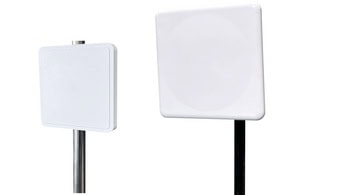
When you’re upgrading your wireless networks, selecting the right antenna makes all the difference. Panel antennas—especially dual polarization models—are popular choices because they enable you to maximize signal coverage and network performance. But when I talk with clients, the decision often comes down to one common question: Should I choose a 19dBi or splurge on the 23dBi antenna?
Let’s dig into exactly what these two choices mean for your wireless deployment, the practical differences between their performances, and the important factors you’ll need to weigh before making your decision.
The primary difference between a 19dBi and a 23dBi dual polarization panel antenna is gain and beamwidth. A 23dBi antenna provides higher gain, giving it a stronger, more focused signal over longer distances, ideal for point-to-point links. In contrast, a 19dBi antenna provides slightly less gain but offers a wider coverage pattern, making it more suitable for shorter distance coverage.
Keep reading for a detailed breakdown of how to pick the best antenna for your particular needs.
What Exactly Does 19dBi and 23dBi Mean?
Let’s quickly break down “dBi” because that’s crucial to understanding what you’re choosing here. Antenna gain is measured in decibels relative to an isotropic antenna, abbreviated as dBi. An isotropic antenna is a hypothetical antenna that sends signals equally in all directions—it’s essentially an idealized “perfect” antenna that doesn’t really exist in practice.
A 19dBi antenna amplifies the signal 79 times stronger than this isotropic reference. A 23dBi antenna, meanwhile, amplifies by roughly 200 times. That sounds impressive (and it is)—but bigger numbers alone don’t decide the right antenna for you. They have real-world implications and trade-offs that are vital to understand before moving forward.
The Trade-off—Beamwidth vs Gain
There’s no free lunch in antenna design. Increasing antenna gain usually comes at the cost of beamwidth—the width of the radio waves that your antenna casts. A 19dBi antenna provides a broader coverage pattern. Think of it as a flashlight giving you wider illumination around a yard. On the other hand, a 23dBi panel antenna is similar to a spotlight—narrower, more intense, and targeted.
In practical terms:
19dBi Panel Antenna:

– Moderate gain (ideal for medium-range coverage areas).
– Wider horizontal and vertical beamwidth—you don’t have to be quite as precise in aiming the antenna.
– Good for multipoint or coverage areas where many users need equitable signal strength.
23dBi Panel Antenna:
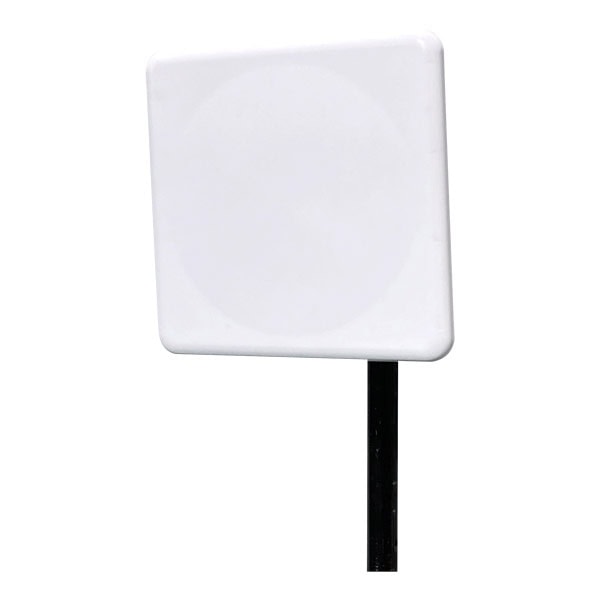
– Higher gain (ideal for longer-range or point-to-point links).
– Narrower beamwidth requires accurate antenna alignment and aiming.
– Excellent choice for long-distance communication where precise connectivity matters, such as setting up substantial backhaul links.
Here’s a quick reference of practical scenarios for each gain:
| Antenna Gain | Application Scenario | Typical Deployment |
| 19 dBi | Point-to-Point, medium-range coverage | Business parks, campuses, warehouses |
| 23 dBi | Point-to-Point, long-range connectivity | Wireless backbone connections, ISP transmission |
Where and When Should You Choose 19dBi?
Choosing a 19dBi dual-polarization panel antenna often means you’ll gain flexibility. They’re perfect for moderate-distance connections or covering medium-sized area setups. If you’re targeting multiple users spread around a warehouse, college campus, or industrial area, a 19dBi antenna is your reliable workhorse.
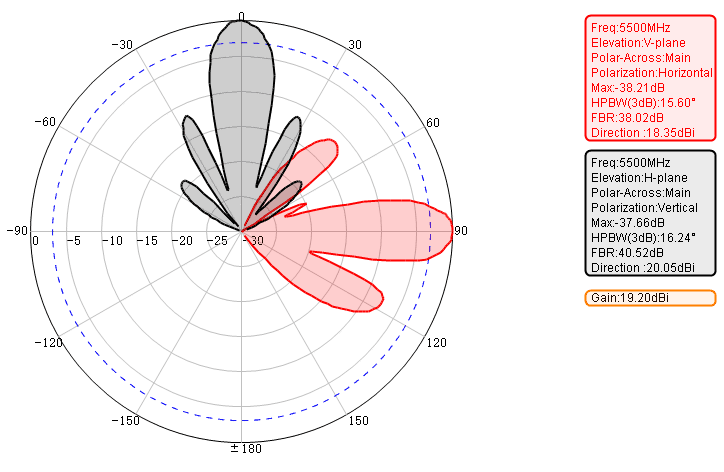
It’s also forgiving. The antenna can be mounted with less intricacy, and aiming doesn’t need hyper-precision—saving your tech team valuable deployment time.
One of my favorite case studies involves a midsize industrial facility client who went with a full-scale deployment using 19dBi dual polarized panel antennas from CommScope. Within days they experienced clear and strong coverage throughout their warehouses and loading docks, significantly improving workflow efficiency.
When Is 23dBi the Better Choice?
When you require long-distance, laser-sharp connectivity, the 23dBi antenna shines brightest. Its superior gain provides stronger received signal strength even across long distances, best when setting up critical point-to-point backhaul connections or bridging large geographic gaps.
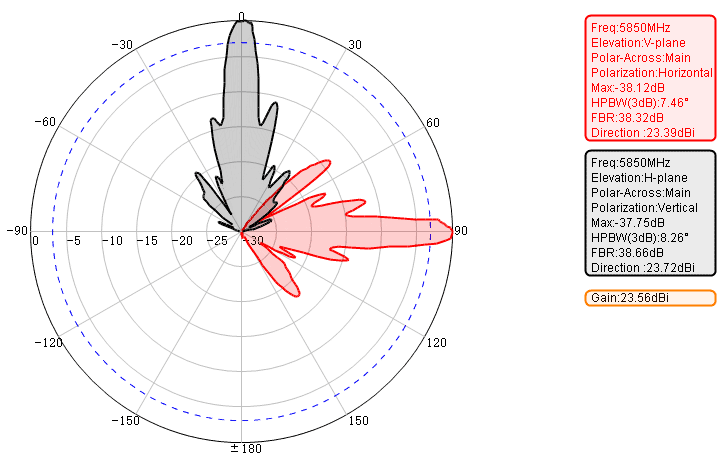
If accuracy isn’t a problem and you’re clear about aligning antennas precisely, the higher gain from a 23dBi antenna offers substantial benefits. Consider applications such as connecting remote buildings or creating uplinks between business campuses across substantial distances.
cURL Too many subrequests.
cURL Too many subrequests.
cURL Too many subrequests.

cURL Too many subrequests.
cURL Too many subrequests.
cURL Too many subrequests.
cURL Too many subrequests.
cURL Too many subrequests.
cURL Too many subrequests.
cURL Too many subrequests.
cURL Too many subrequests.
cURL Too many subrequests.
cURL Too many subrequests.
Conclusion
cURL Too many subrequests. panel antennas, cURL Too many subrequests.
cURL Too many subrequests.
cURL Too many subrequests.
 German (Switzerland)
  English
  Spanish
  German
  French (France)
  Korean
  Russian
  Indonesian
  French (Canada)
  Vietnamese
  Armenian
  Albanian
  Assamese
  Acehnese
  Amharic
  Czech
Czech  Bulgarian
  Cebuano
  Malayalam
  Japanese
  Dutch
Dutch