 Skip to content
What is a Dipole Antenna?

A dipole antenna, in radio and telecommunications, is the most basic yet extensively utilized antenna type, consisting of two conductive elements or rods that emit and receive electromagnetic waves. This straightforward design enables it to effectively transmit and receive signals across a wide range of frequencies, making it a fundamental tool in wireless communication systems.
What is a Luneburg Lens Antenna?
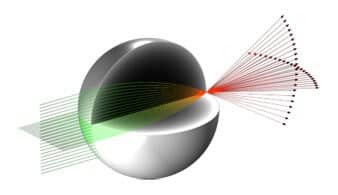
A Luneburg lens antenna is an advanced type of antenna that utilizes a spherical lens with a gradient refractive index to direct radio waves efficiently. Unlike conventional antennas, its unique structure allows for uniform signal distribution and high-gain performance across multiple directions without the need for physical reorientation. This makes it especially valuable in applications requiring broad coverage and precise signal focus.
What is a Lens Antenna?

A lens antenna is a specialized device designed to direct and focus electromagnetic waves, enabling high-speed communication applications. By utilizing a lens to shape and steer signals, these antennas facilitate enhanced data transmission speeds and efficiency, playing a crucial role in technologies like 5G networks and radar systems.
What is 5G?
The fifth generation of cellular network technology, known as 5G, is a huge improvement over the previous generation, 4G. It offers faster data speeds, much lower latency, and the ability to connect more devices at the same time. This opens up possibilities for advancements in areas like self-driving cars, smart buildings, and many different Internet of Things (IoT) applications.
What is a 5G Antenna?
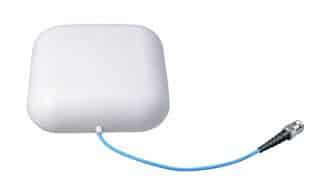
A 5G antenna is a technologically advanced component of the 5G network, designed to transmit and receive the high-frequency signals that enable the fifth generation of wireless technology. Compared to its predecessors, a 5G antenna is capable of supporting significantly faster data transmission speeds, handling more simultaneous connections, and efficiently managing the vast data volumes characteristic of modern digital communication.
What is the Difference Between 5G and 5G mmWave?

In conclusion, the main difference between 5G and 5G mmWave lies in their coverage area, speed, capacity, and supported applications. 5G operates on three different frequency bands: low-band, mid-band, and high-band (mmWave). Low-band 5G offers the widest coverage area, mid-band 5G offers a balance between coverage and capacity, and mmWave 5G offers the fastest speeds and highest capacity but with the smallest coverage area. While low-band and mid-band 5G can support most applications, mmWave 5G is ideal for applications that require large amounts of data transfer.
 English
  Spanish
  German
  French (France)
  Korean
  Russian
  Indonesian
  French (Canada)
  Vietnamese
  Armenian
  Albanian
  Assamese
  Acehnese
  Amharic
  Czech
Czech  Bulgarian
  Cebuano
  Malayalam
  German (Switzerland)
  Japanese
  Dutch
Dutch