 Skip to content
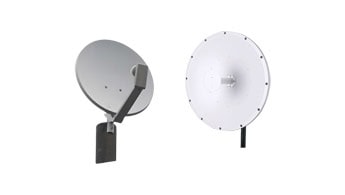
You’ve probably noticed dish antennas perched on rooftops, towers, or hillsides. At first glance, they might all look similar—but not all dishes are created equal. Trust me—I made that same mistake myself back when I started working in communications technology!
Today, let’s clear up the confusion by exploring the key differences between Satellite Dish Antennas and Point-to-Point Dish Antennas. We’ll dive into their unique characteristics, including their typical applications, operating frequencies, physical structures, interfaces, and mounting methods. By understanding these distinctions, you’ll be better equipped to select the ideal antenna solution for your next project or business requirement.
A Quick Answer: What’s the Main Difference?
Satellite dish antennas are designed specifically to communicate with satellites orbiting high above Earth. They typically operate at higher frequency bands, such as Ku-band or Ka-band, and use specialized components like Low-Noise Blockdown converters (LNBs). To function correctly, satellite dishes must be precisely aligned to point toward satellites stationed in geostationary orbit.

On the other hand, point-to-point dish antennas are built to establish direct communication links between two locations on the ground, such as buildings or communication towers. These antennas usually operate at lower microwave frequencies and rely on highly directional signals to achieve reliable, high-speed data transmission over terrestrial distances.
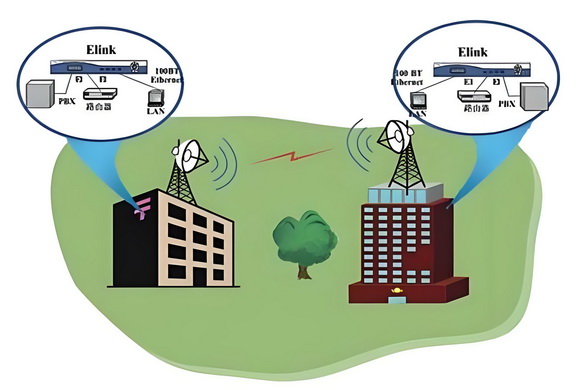
In short, satellite dishes connect you to satellites in space, while point-to-point dishes link two points directly on Earth. Simple enough, right? But as always, the real difference lies in the finer details. Let’s dive in deeper!
Application Scenario: Different Roles, Different Dishes
Satellite Dish Antennas
Need connectivity in remote areas without wired internet access? Satellite dish antennas offer the ideal solution. They excel in providing satellite TV services, reliable internet connectivity in rural locations, emergency communication during disasters, and essential communication links for maritime vessels through satellite phones and networks.
These antennas communicate with satellites positioned approximately 35,786 kilometers above Earth’s equator. Given this immense distance, satellite dishes require precise alignment and highly sensitive receivers to ensure clear and stable communication.
Point-to-Point Dish Antennas
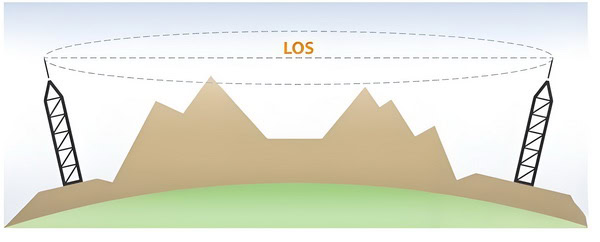
When it comes to direct communication between two locations, point-to-point dish antennas are your best choice. Unlike satellite dishes, these antennas don’t send signals into space. Instead, they transmit highly focused microwave signals directly between two antennas within clear line-of-sight.
Typical applications include linking cellular network towers, creating private broadband networks for businesses, aggregating data for IoT systems, and providing campus-wide connectivity for universities or large industrial complexes.
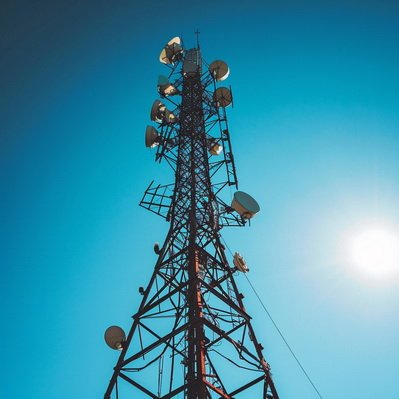
In fact, I once worked on a memorable project that installed dozens of point-to-point antennas across buildings in an industrial park. This setup delivered secure, high-speed internet connectivity efficiently and affordably, eliminating the need for expensive cable installations.
Beyond these examples, point-to-point communication systems are also widely employed in government communications, private corporate networks, international data services, and military operations—anywhere security, reliability, and privacy are critical. Because the signal is transmitted directly between two endpoints, only the intended recipient receives the transmission, resulting in high levels of confidentiality and control over bandwidth usage.
This dedicated line approach means there’s no risk of your data colliding with external network traffic, making it ideal for mission-critical operations where even brief delays or disruptions could have significant consequences. Whether supporting secure video feeds, connecting remote offices, or ensuring uninterrupted communication for emergency services, point-to-point antennas are all about precision, performance, and peace of mind.
Why Does Point-to-Point Communication Still Matter?
Now, you might be wondering—with all the hype around modern multicast and broadcast models—why bother with point-to-point communication at all? The answer is simpler than you’d think: precision and control.
Point-to-point links offer several irreplaceable advantages:
- Ultimate Privacy: Since signals travel strictly from one sender to one receiver, there’s no risk of the data unintentionally reaching unauthorized parties. This level of privacy is a huge reason government agencies, financial institutions, and even the military still rely heavily on point-to-point channels for transmitting sensitive information.
- Reliability You Can Count On: With a dedicated communication lane, you’re not sharing bandwidth with anyone else. There are no random slowdowns or unexpected interruptions caused by network congestion.
- Consistent Quality: Whether it’s high-definition video conferencing between two company headquarters or transferring critical operational data across a private fiber link, point-to-point provides stable, predictable performance.
- No Eavesdropping or Traffic Jams: Unlike broadcast, where data is sent everywhere, or multicast, where several recipients can listen in, point-to-point is a single, focused connection. Imagine a sealed courier sent straight to your door, instead of tossing a message into a crowd and hoping the right person grabs it.
That’s why, despite all the flashy new models, point-to-point remains the gold standard wherever security, reliability, and precision can’t be compromised. It’s the backbone tech behind everything from enterprise data backbones to secure international calls, where even a moment’s delay isn’t an option.
Point-to-Point Communication in Live Video Links and Broadcasting
So, what exactly do you need to set up a point-to-point video link—whether for live news, surveillance, or even a pop-up broadcast from the far end of your corporate campus?
Here’s a quick field guide to the typical gear:
- IP Video Encoders & Decoders: These handy devices take your raw video, convert it into IP packets, and send it to the other end, where it’s decoded back into a watchable stream. Popular choices come from brands like Haivision, Teradek, and Matrox.
- Microwave Transmission Systems: If laying cable isn’t practical, dedicated microwave radio equipment provides robust, low-latency wireless transport—think Ubiquiti AirFiber or Cambium Networks point-to-point radios.
- Optical Fiber Equipment: For ultra-high quality, dedicated fiber lines with SFP modules or video-over-fiber transmitters and receivers keep your broadcast sharp, even across extended distances.
- Network Switches & Routers: High-capacity, managed network gear (from companies like Cisco, Juniper, or Netgear) keep traffic flowing smoothly, managing prioritization and redundancy for mission-critical video feeds.
- Antenna Systems: For wireless links, precision-aligned dish antennas or directional panels ensure your video arrives at the right place, with minimal interference.
Each setup might look a bit different based on location, bandwidth needs, and budget, but these are the core components that keep video links stable, secure, and crystal clear—no matter where in the world you’re sending your feed from.
Point-to-Point Communication in Live Video Links and Broadcasting
Point-to-point communication is essential for delivering seamless live video feeds in everything from breaking news coverage to major sporting events. When broadcasters need to connect a camera crew at a remote location directly to a studio or control room, a reliable, high-capacity link is non-negotiable. Enter point-to-point antennas, which transmit video signals in real time with minimal delay—ensuring what’s captured on scene can be aired almost instantly.
Typical setups might use microwave antennas, IP-based video encoders and decoders, or dedicated fiber optic lines to move vast amounts of data quickly and securely. Whether it’s a live shot of a political rally sent via satellite uplink or a fiber-optic feed for a major league baseball game, point-to-point communication guarantees high-definition video reaches its destination without a hitch. The result? Crystal-clear broadcasts, smooth video conferencing, and real-time surveillance feeds that keep viewers and operators connected to the action as it unfolds.
Operating Frequency: A Closer Look at Different Frequency Bands
Frequency is a critical factor in antenna performance—it directly affects antenna size, alignment complexity, and connection reliability.
Satellite Dish Antennas
Satellite antennas typically operate at higher frequency ranges, such as Ku-band (12–18 GHz), Ka-band (26.5-40 GHz), and occasionally C-band (4–8 GHz). These higher frequencies enable greater data throughput, making them ideal for high-definition TV broadcasts, live streaming services, and satellite-based internet connections for homes and businesses.
However, signals at these elevated frequencies can be quite sensitive to environmental conditions. Rain, storms, or dense cloud cover can easily disrupt reception. In fact, I’ve had several friends mention their frustration with satellite TV outages, especially during heavy rainstorms!
Low Noise Converters: S-Band vs. X-Band
When working with microwave frequencies, low noise converters (LNCs)—often referred to as low-noise block downconverters (LNBs)—are indispensable for picking up faint signals and making them usable for receivers or processing equipment. The right LNC can dramatically improve signal quality, especially in challenging environments.
S-Band LNC Specifications
For S-band applications (typically 2 to 2.7 GHz), LNCs are designed to maximize signal amplification while minimizing noise introduction. A well-engineered S-band converter will generally offer:
- Frequency coverage: 2–2.7 GHz
- Gain: Around 30–35 dB, plenty for digital broadcast and telemetry
- Typical noise figure: About 1.0 dB or lower, which helps preserve signal clarity over long cable runs or in weak-signal scenarios
Such specifications make S-band LNCs suitable for many digital transmission systems, ground station applications, and certain types of broadcast feeds that require clear, low-interference reception.
X-Band LNC Specifications
For X-band reception (around 8 to 8.5 GHz, common in satellite and deep-space communications), the demands increase. Here’s what you’ll generally find:
- Frequency coverage: 8–8.5 GHz
- Gain: Up to 50 dB, to compensate for the inherently weaker signals coming from space
- Very low noise figures: In the 0.8 dB range or better—a crucial point, as even a fraction of a dB can mean the difference between clear reception and pure static at these frequencies
These technical specs ensure X-band LNCs can extract and amplify very faint signals from distant satellites, making them a backbone of reliable satellite earth stations and certain scientific installations.
In short, while both S-band and X-band LNCs work on the same fundamental principle, their technical requirements—especially regarding frequency coverage, gain, and noise figure—are tailored to their unique operating environments and signal strengths.
Point-to-Point Dish Antennas
Point-to-point antennas primarily use microwave frequencies, commonly in the 2.4 GHz, 5GHz and 6 GHz bands, as well as higher licensed microwave bands such as 11 GHz or even 23 GHz. These frequencies provide reliable and robust connectivity over terrestrial distances that can span several kilometers or more.
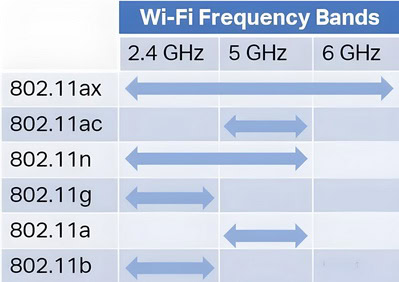
Compared to satellite antennas, point-to-point antennas operate at relatively lower frequencies, giving them greater resilience against weather conditions. This makes them particularly suitable for consistent and dependable communication links, even in moderate climates and during rainfall.
Advancements in RF and Microwave Technology: Powering Modern Communication
The rapid evolution of RF and microwave technology isn’t just impressive—it’s fundamentally reshaping how telecommunications and broadcasting work behind the scenes. From 5G cellular towers sprouting up across cityscapes to next-generation TV and radio broadcasts, these technological leaps are enabling faster speeds, more reliable connectivity, and improved capacity.
For example, cutting-edge RF and microwave solutions now provide:
- Higher Bandwidths: Supporting more simultaneous users and ultra-high-definition streaming—think about tuning in to a live sporting event with zero buffering.
- Greater Reliability: Enhanced signal processing and smarter antenna designs keep connections stable even in congested urban environments or during peak demand.
- Miniaturization: Smaller, more efficient components mean streamlined installation on everything from rooftop antennas in New York to broadcasting trucks at the Super Bowl.
It’s remarkable to see the way telecom giants and broadcasters use these advancements—from AT&T’s rural broadband initiatives to the BBC’s crystal-clear digital radio—ensuring that our thirst for speed and quality is always met. Whether it’s a rural farm accessing telemedicine or a family binge-watching in HD, modern RF and microwave advances are at the heart of it all.
How Uplink and Downlink Work in Satellite-Based Point-to-Point Links
So, how do uplink and downlink actually work when two sites talk to each other via satellite? Think of it as a two-step relay race, with the satellite acting as the runner handing off the baton.
First, the uplink: one ground station beams its data skyward, carefully aiming its transmission at a satellite parked high above the equator (typically in a geostationary orbit around 35,786 kilometers up). That signal travels through the atmosphere and reaches the satellite, where specialized onboard equipment receives and processes it.
Next comes the downlink: the satellite, after receiving the data, transmits it back down to the destination ground station on Earth, again using highly focused radio waves. This back-and-forth enables long-distance communication across continents and even oceans—far beyond what regular terrestrial antennas can manage. Major satellite internet providers, global broadcasters like the BBC, and maritime networks all depend on this setup to stay reliably connected, no matter where their stations are located.
In short, the uplink sends your data up, the satellite acts as the cosmic middleman, and the downlink brings that information down to its final destination, bridging vast distances with just a blink of radio waves.
Physical Structure: Similar Looks, Different Details
At first glance, satellite dishes and point-to-point antennas appear nearly identical—both feature a familiar round, dish-like shape. However, upon closer inspection, you’ll quickly notice several important differences.
Satellite Dish Antennas
Satellite dish antennas typically have a concave, paraboloid shape resembling a shallow bowl. Their size varies significantly, from about 60 centimeters for residential use up to several meters for commercial applications.
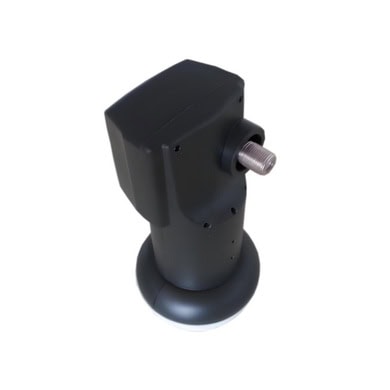
A distinctive feature of satellite dishes is their single central feed horn, equipped with an LNB (Low Noise Blockdown converter). The LNB converts high-frequency satellite signals into lower frequencies, simplifying their transmission through coaxial cables into homes or commercial buildings.
Point-to-Point Dish Antennas
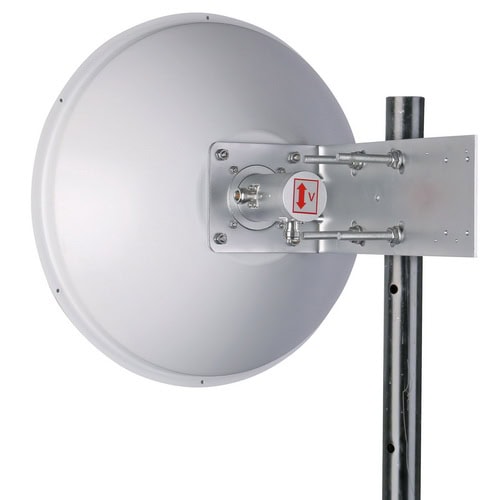
Point-to-point dish antennas also utilize a parabolic design, yet they differ significantly in their feed system. These antennas typically integrate specialized radio transceivers directly into the feed assembly (often called integrated feed assemblies). Their design provides a narrow, highly directional beam ideal for establishing reliable, high-capacity wireless data links between two fixed points.
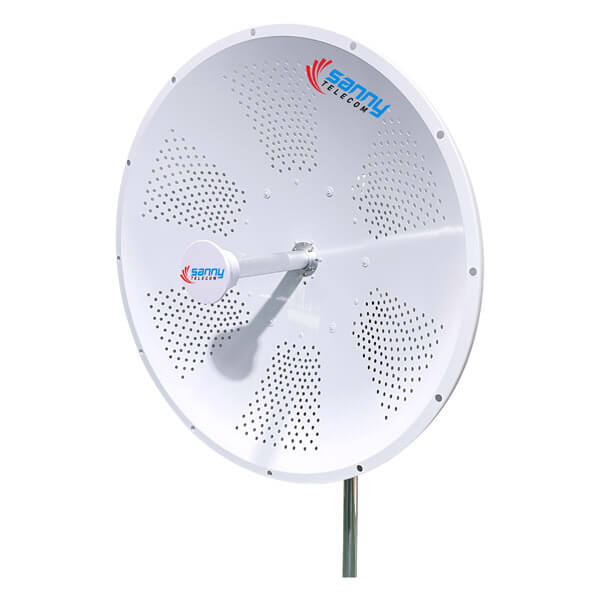
Additionally, point-to-point dishes commonly feature durable radomes—protective coverings designed to reduce wind resistance and protect sensitive equipment from harsh environmental conditions. While radomes are rarely found on standard consumer satellite dishes, they are a standard feature on professional-grade point-to-point antennas.
Low Noise Converters (LNCs): Silent Workhorses for Weak Signal Reception
Let’s talk about the unsung heroes behind reliable point-to-point communication: low noise converters, or LNCs. If you’ve ever wondered how these systems manage to pick up faint signals from far-off transmitters—or from space itself—LNCs are your answer.
LNCs serve one fundamental purpose: they amplify very weak incoming microwave or satellite signals while adding as little extra noise as possible. This is crucial because, by the time signals arrive at a dish—especially over long terrestrial or satellite links—they’re often incredibly faint.
Here’s how it works:
- Signal Amplification: An LNC’s primary job is to boost the signal strength right at the antenna feed, where the original, unspoiled signal is strongest. Typical quality LNCs deliver gains of 30 to 50 dB to ensure that even the weakest signals reach your receiver with clarity.
- Noise Minimization: At the same time, LNCs are designed to generate minimal additional electronic “static” or noise. Noise figures can be as low as 0.8 to 1.0 dB for top models—critical for discerning between valuable information and background hiss.
- Frequency Conversion: Many LNCs also “downconvert” the high-frequency signal (like X-band or S-band) to a more manageable, lower frequency. This makes it much easier to transmit the signal over coaxial cables to your indoor equipment, without significant losses.
So when you see a high-end point-to-point dish system quietly streaming data or voice across kilometers, you can thank the LNC tucked inside the feed for delivering crisp, dependable signals—rain or shine.
Interfaces and Connectivity: Inputs and Outputs
Have you ever wondered how signals travel into and out of dish antennas? Although it might seem simple, understanding the connectors and cables used is crucial for successful installation and reliable operation.
Satellite Dish Antennas
Satellite dishes commonly use coaxial cable connections, specifically “F-type” connectors paired with standard RG-6 coaxial cables. These cables carry signals from the outdoor dish antenna into indoor equipment such as satellite receivers, decoders, or modems.
Consumer satellite systems are highly standardized, making them easy to install and compatible with most home electronics. If you’ve ever set up a satellite TV dish yourself, you’re probably already familiar with these connectors.
Point-to-Point Dish Antennas
In contrast, professional point-to-point dish antennas often utilize robust RF connectors such as N-type or SMA connectors. These connectors are specifically designed for high-frequency applications, offering reliable performance and durability in outdoor environments. Typically, low-loss coaxial cables connect the antenna feed to external radio equipment or microwave modems.
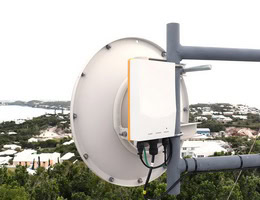
In many professional installations I’ve worked on, N-type or SMA connectors were standard choices, ensuring stable and high-quality signal transmission for telecom providers, enterprise networks, and other critical communication systems.
Mounting and Alignment: Precision vs. Flexibility
Proper installation highlights important distinctions between satellite dishes and point-to-point antennas, particularly in terms of alignment requirements and mounting methods.
Mounting and Aligning Satellite Dishes Satellite dishes require precise alignment toward specific satellites positioned above the equator. Achieving accurate alignment involves careful aiming, typically using specialized alignment tools, compasses, or smartphone alignment apps, to accurately point dishes toward satellites orbiting approximately 35,786 kilometers away.
For residential installations, satellite dishes are commonly mounted using brackets attached to walls or rooftops. In commercial or larger-scale installations, specialized ground-mounted or pedestal-mounted brackets are often used to ensure stability, durability, and precise positioning.
Mounting and Aligning Point-to-Point Antennas In contrast, point-to-point antennas require precise horizontal and vertical alignment directly toward another antenna located on the ground, typically within clear line-of-sight distances ranging from a few hundred meters to tens or even hundreds of kilometers.

These antennas usually feature highly adjustable mounting brackets and sophisticated alignment mechanisms. Some models come equipped with built-in mechanical or digital alignment tools, allowing installers to fine-tune antenna positioning accurately. Alignment adjustments are typically guided by monitoring signal strength indicators provided by integrated software or handheld alignment instruments, ensuring optimal connectivity and performance.
Conclusion
When it comes down to it, choosing between a satellite dish antenna and a point-to-point dish antenna depends entirely on your specific use case and the environment you’re working in:
- Are you looking to deliver TV or internet services directly to homes or rural communities? A Satellite Dish Antenna is your best bet.
- Do you need high-performance, reliable connectivity to link two terrestrial locations, or support demanding enterprise or IoT applications? A Point-to-Point Dish Antenna is the way to go.
Don’t forget to consider key elements such as weather sensitivity (frequency), ease or complexity of installation, connectivity requirements (interface), and precision needed for antenna alignment.
From my own experience, clearly understanding these differences from the start can significantly simplify your decision-making and help you achieve your operational goals more smoothly.
I hope this guide has helped clarify the differences between these two antenna types. Do you have any additional questions or insights from your own experiences you’d like to share? I’d love to hear your thoughts!
 English
  Spanish
  German
  French (France)
  Korean
  Russian
  Indonesian
  French (Canada)
  Vietnamese
  Armenian
  Albanian
  Assamese
  Acehnese
  Amharic
  Czech
Czech  Bulgarian
  Cebuano
  Malayalam
  German (Switzerland)
  Japanese
  Dutch
Dutch