 Skip to content
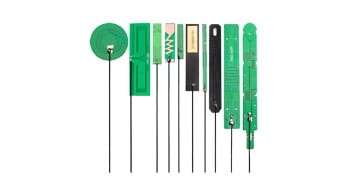
In the evolving world of wireless communication, Flexible Printed Circuit (FPC) antennas have emerged as a pivotal technology. These antennas leverage their flexibility to enhance the performance and reliability of various electronic devices, from smartphones to sophisticated industrial equipment.
An FPC antenna is a type of wireless antenna made on a flexible polymer substrate, which allows it to bend, fold, and conform to small or irregular spaces without losing its effectiveness. This adaptability makes it an ideal choice for today’s compact and complex electronic architectures.
Let’s dive deeper into how FPC antennas operate and their applications, shedding light on their growing importance in our connected world.
What is a FPC in electronics?
FPC stands for Flexible Printed Circuit. It is a type of circuit board that is made from flexible materials, such as polyimide or polyester film, instead of rigid materials like fiberglass. FPCs are used in electronic devices where space is limited or where the circuit board needs to be able to bend or flex. They are often found in applications such as smartphones, laptops, cameras, and medical devices. FPCs allow for more compact and flexible designs, as they can be folded or bent to fit into tight spaces or conform to the shape of the device.
How does the FPC antenna work?
FPC antennas are made using a flexible printed circuit (FPC) substrate, which is a thin and flexible material that can be bent, twisted, and shaped without breaking. This substrate is typically made of a plastic material, such as polyimide, that has good electrical insulation properties.

The FPC antenna is constructed by printing or etching conductive traces on the FPC substrate. These conductive traces form the radiating element of the antenna and are connected to the feedline, which is a conductive path that carries the radio frequency (RF) signal to and from the antenna.
What manufacturing techniques are used to fabricate FPC antennas?
FPC antennas are typically produced using well-established printed circuit board (PCB) fabrication processes. Manufacturers employ methods such as photolithography and chemical etching to create precise conductive patterns on flexible substrates like polyimide or polyester film. These techniques are widely used in the electronics industry for their consistency, scalability, and ability to deliver high-quality, repeatable results.
This approach not only ensures reliable antenna performance across production batches but also allows for intricate designs that can meet the demanding requirements of modern portable devices.
When an RF signal is applied to the feedline, it creates an oscillating electric current in the conductive traces of the antenna. This current generates an electromagnetic field around the antenna, which radiates out into space as electromagnetic waves.
The size and shape of the conductive traces determine the operating frequency and radiation pattern of the antenna. By carefully designing the shape and dimensions of the conductive traces, engineers can optimize the antenna’s performance for the desired frequency band and radiation characteristics.
When electromagnetic waves from other antennas or wireless devices in the environment impinge on the FPC antenna, they induce an electric current in the conductive traces. This current is then carried by the feedline to the RF circuitry of the device, where it is processed and demodulated to extract the desired information.
The flexibility of the FPC substrate allows the antenna to maintain performance over a wide range of shapes and bending states. This makes it particularly useful in mobile devices that require durable and reliable wireless communication capabilities, as the antenna can be bent and twisted without affecting its performance.
How do FPC antennas address ground plane and circuit board space limitations?
One of the key advantages of FPC antennas is their ability to work around traditional constraints posed by limited ground plane and circuit board space. Unlike standard Surface-Mount Device (SMD) antennas, which rely heavily on the size and shape of the main PCB and its accessible ground plane, FPC antennas are designed with flexibility in mind.
Because the flexible circuit board of an FPC antenna can be tailored specifically for the application, engineers can position the antenna and its ground reference in nearly any part of the device—often on thin, unused surfaces or wrapped around corners. This customization not only frees up space on the main PCB but also simplifies integration, since the antenna doesn’t compete for valuable real estate on the core circuit board.
Furthermore, FPC antennas maintain high efficiency and provide an omni-directional radiation pattern, comparable to many traditional external antennas, without requiring a large ground plane. Their optimized design delivers strong wireless performance while allowing the internal layout of a device to remain compact and versatile.
How does the cable length and orientation flexibility benefit FPC antenna integration?
One of the standout advantages of FPC antennas is their remarkable adaptability when it comes to cable length and mounting orientation. Thanks to their construction, these antennas can be positioned vertically, horizontally, or even layered in unique arrangements within a device—without sacrificing their performance. This flexibility is invaluable when you’re working with devices that have limited space or unconventional internal layouts.
Additionally, FPC antennas offer the option to customize cable lengths. This makes it much easier to connect the antenna precisely where it’s needed within the device, even when space is at a premium or the main circuit board is in a tricky spot. Whether the antenna needs to be flat, curved, or wrapped around other components, it continues to deliver consistent wireless performance.
This combination of orientation and cable flexibility means FPC antennas can be seamlessly integrated into tight or oddly shaped enclosures—where traditional surface-mount antennas might be impossible to fit—offering engineers more freedom in design while maintaining strong signal transmission and reception.
What is a FPC antenna used for?
A FPC (Flexible Printed Circuit) antenna is used for wireless communication purposes. It is a thin, flexible antenna that can be easily integrated into various electronic devices such as smartphones, tablets, laptops, wearables, and Internet of Things (IoT) devices. FPC antennas are designed to transmit and receive radio frequency signals, enabling wireless connectivity for devices like Wi-Fi, Bluetooth, GPS, NFC, and cellular networks.

What are the advantages of the FPC antenna?
The FPC (Flexible Printed Circuit) antenna offers several advantages over traditional antennas:
1. Flexibility: The FPC antenna is made of a flexible material, allowing it to be bent, folded, or twisted to fit into various form factors and designs. This flexibility makes it suitable for integration into compact and unconventional spaces.
2. Size and Weight: FPC antennas are thin and lightweight, making them ideal for devices where size and weight are critical factors, such as smartphones, wearables, and IoT devices.
3. Customizability: FPC antennas can be easily customized and tailored to specific requirements. They can be designed to operate on different frequencies and support multiple wireless communication standards.
4. Durability: FPC antennas are robust and resistant to mechanical stress, vibration, and temperature variations. They can withstand bending and flexing without affecting their performance, making them suitable for applications where the device is subjected to frequent movement or physical stress.
5. Cost-effective: FPC antennas can be manufactured using low-cost materials and processes, making them a cost-effective solution for mass production.
In addition, FPC antennas are generally less expensive than externally mounted antennas, delivering high levels of performance without the added cost or complexity of external antenna deployment. This makes them an attractive option for manufacturers seeking reliable wireless connectivity while keeping production budgets in check.
6. Easy integration: FPC antennas can be directly mounted onto the device’s circuit board, simplifying the integration process and reducing assembly time and costs.
In addition, many FPC antennas are ultra-thin and come with a peelable backing—much like a sticker—allowing them to be easily attached to surfaces using pre-applied adhesive. This not only streamlines installation in tight or irregular spaces but also provides design flexibility for engineers integrating antennas into compact or uniquely shaped devices.
7. RF performance: FPC antennas can provide good RF performance, including high gain, low loss, and good radiation patterns, enabling reliable wireless connectivity.
How does the performance of FPC antennas compare to external omni-directional antennas?
FPC antennas can deliver radio frequency performance that rivals many external omni-directional antennas. Like traditional omni-directional types, FPC antennas typically provide a broad, 360-degree radiation pattern, which allows for reliable signal coverage regardless of device orientation. However, the key distinction lies in their space efficiency. Because FPC antennas require significantly less ground area while maintaining similar signal quality and efficiency, they’re particularly well-suited for compact devices where every millimeter matters. This space-saving advantage enables engineers to optimize both circuit board layout and overall device design without sacrificing wireless performance.
What types of antennas can be developed using flexible PCB technology?
Flexible PCB (FPC) technology allows engineers to design and implement a wide range of antenna types to suit different applications and performance requirements. With a thin polyimide substrate and patterned copper traces, FPC technology supports the development of various antenna structures, such as:
- Monopole antennas, which are commonly used for their simple design and effective performance in compact devices.
- Dipole antennas, offering balanced characteristics for a broad range of wireless communications.
- Printed F-shaped antennas, which are popular for their space-efficient geometry and reliable wireless connectivity.
Beyond these, FPC technology can also accommodate custom antenna geometries tailored to unique device shapes and operational frequencies. This versatility enables integration into everything from wearable fitness trackers to industrial IoT sensors, maintaining reliable radio frequency performance even as devices become ever smaller and more flexible.
What is the difference between PCB antenna and FPC antenna?
PCB (Printed Circuit Board) antenna and FPC (Flexible Printed Circuit) antenna are two different types of antennas used in electronic devices.
1. PCB Antenna: A PCB antenna is a type of antenna that is directly printed or etched onto the PCB of the electronic device. It is made using conductive traces on the PCB itself. PCB antennas are typically low-cost, easy to manufacture, and can be integrated into the design of the PCB. They are commonly used in devices like smartphones, routers, and IoT devices. PCB antennas are rigid and cannot be bent or flexed.
2. FPC Antenna: An FPC antenna is a type of antenna that is printed or etched on a flexible printed circuit board. It is made using conductive traces on a flexible substrate. FPC antennas are flexible and can be bent or curved to fit the design requirements of the device. They are commonly used in devices like wearables, smartwatches, and other compact devices where space is limited. FPC antennas are more expensive to manufacture compared to PCB antennas due to the additional flexibility and materials required.
In summary, the main difference between PCB antennas and FPC antennas is the flexibility. PCB antennas are rigid and integrated into the PCB, while FPC antennas are flexible and printed on a flexible substrate.
To summarize, FPC antennas are a significant advancement in antenna technology that combines flexibility and strong performance. They meet the needs of today’s wireless communication applications and are essential for the continued shrinking and advancement of electronic devices. Whether in consumer electronics or high-end industrial machines, FPC antennas provide a flexible and efficient solution for dependable connectivity.
 English
  Spanish
  German
  French (France)
  Korean
  Russian
  Indonesian
  French (Canada)
  Vietnamese
  Armenian
  Albanian
  Assamese
  Acehnese
  Amharic
  Czech
Czech  Bulgarian
  Cebuano
  Malayalam
  German (Switzerland)
  Japanese
  Dutch
Dutch