 Skip to content
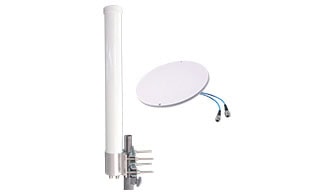
In the rapidly evolving world of wireless communications, understanding the tools that enhance connectivity can be a game changer. Among these, the MIMO Omni antenna stands out. But what exactly does this technology entail and how can it benefit users ranging from tech enthusiasts to industry professionals?
A MIMO Omni antenna is a sophisticated wireless technology that utilizes multiple-input and multiple-output (MIMO) techniques to broadcast and receive signals in all directions. This omni-directional approach ensures wide coverage and enhanced data throughput, making it ideal for environments requiring robust wireless connectivity.
Now that we have a basic understanding of MIMO Omni antennas, let’s explore how they work, what they’re used for, and the advantages they offer in order to fully appreciate their impact on our everyday communication and beyond.
What Does an Omni MIMO Antenna Do?
An omni-directional MIMO antenna is designed to transmit and receive signals in all directions simultaneously. It consists of multiple antenna elements that work together to transmit and receive multiple data streams at the same time. This allows for increased capacity and improved performance in wireless communication systems.
The omni-directional nature of the antenna means that it can communicate with multiple devices located in different directions without the need for the antenna to be physically repositioned. This makes it ideal for use in applications such as Wi-Fi, cellular networks, and other wireless communication systems where there are multiple devices located in different directions.
What Are the MIMO Omni Antennas Used For?
MIMO (Multiple-Input, Multiple-Output) omni-directional antennas are used in wireless communication systems to improve the performance and capacity of the network. They are commonly used in Wi-Fi routers and access points, as well as in cellular base stations and DAS(Distributed Antenna System).
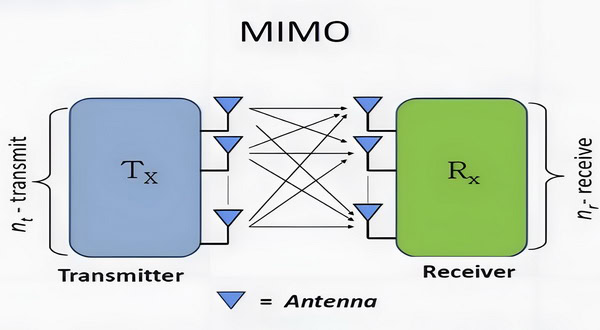
MIMO technology uses multiple antennas at both the transmitter and receiver to transmit and receive multiple data streams simultaneously. This allows for increased data throughput and improved signal quality, leading to faster and more reliable wireless connections.
Omni-directional antennas are designed to radiate and receive signals in all directions, providing 360-degree coverage. This makes them ideal for use in environments where the wireless devices are moving or where there are multiple devices located in different directions from the access point.

The combination of MIMO and omni-directional antennas allows for better coverage and capacity in wireless networks, making them suitable for use in homes, offices, public spaces, and outdoor areas.
When Should You Choose a MIMO Antenna Over a Signal Booster?
MIMO antennas really shine in scenarios where the highest possible data speeds and reliable connectivity are the main goals. For users whose devices are equipped with external antenna ports—such as many 4G/5G routers, hotspots, and certain industrial gateways—a MIMO omni antenna is typically the optimal solution. This is because it enables the device to simultaneously transmit and receive multiple streams of data, unlocking significant improvements in throughput and signal quality without the need for additional signal amplification.
Opt for a MIMO antenna when:
- You want maximum data rates: MIMO technology can dramatically increase wireless speed and performance, particularly in environments with heavy data usage.
- Your device supports external antennas: To take advantage of MIMO, your router, modem, or hotspot must have the appropriate ports for connecting external antennas.
- You need consistent connectivity in all directions: MIMO omni antennas offer 360-degree coverage, making them suitable for setups where devices might be mobile or spread throughout a space.
On the other hand, if your devices do not support external antenna connections, or if you’re aiming to enhance signal strength for multiple devices within a larger area (like throughout a home or office), a signal booster may be a more practical alternative.
Understanding your device’s capabilities and your specific wireless needs is key to making the most effective choice between these two technologies.
How Does the MIMO Omni Antenna Work?
A MIMO (Multiple-Input Multiple-Output) omni-directional antenna is designed to transmit and receive signals in multiple directions simultaneously. It uses multiple antenna elements to create multiple streams of data, increasing the capacity and efficiency of a wireless communication system.
The MIMO omni-directional antenna works by using multiple antenna elements that are spaced apart from each other. Each antenna element is connected to a separate radio frequency chain, allowing for independent transmission and reception of signals.
When transmitting, the MIMO omni-directional antenna uses signal processing techniques to create multiple spatially separated streams of data. These streams are transmitted simultaneously from the different antenna elements, effectively increasing the data throughput of the system. When receiving, the MIMO omni-directional antenna uses the multiple antenna elements to receive signals from multiple directions simultaneously. The received signals are processed and combined to improve the signal quality and increase the data throughput of the system.

The MIMO omni-directional antenna is designed to work in a multi-path environment, where signals can reflect off buildings, objects, and other surfaces. By using multiple antenna elements, the antenna can take advantage of the different paths that the signals can take, improving the signal quality and increasing the data throughput of the system.
Overall, the MIMO omni-directional antenna is a powerful tool for increasing the capacity and efficiency of wireless communication systems. By using multiple antenna elements and signal processing techniques, it can transmit and receive multiple streams of data simultaneously, improving the performance of the system in multi-path environments.
How Do Spatial Multiplexing and Beamforming Enhance Wi-Fi MIMO Performance?
To further understand why MIMO omni-directional antennas are so effective, it helps to look at two key techniques they rely on: spatial multiplexing and beamforming.
Spatial Multiplexing:
With spatial multiplexing, multiple data streams are sent simultaneously over different antenna elements. Picture a busy intersection where, instead of all the cars cramming into a single lane, traffic flows smoothly through multiple lanes at once. Each “lane” corresponds to a unique signal path, allowing the system to handle more data at the same time. As a result, the data rate is significantly boosted—users can experience faster downloads and less congestion, all without needing extra bandwidth.
Beamforming:
Some advanced MIMO systems, particularly in Wi-Fi, also make use of beamforming. This technique allows the antennas to focus their signals in the direction of the receiving device, rather than broadcasting evenly in every direction. It’s akin to a spotlight that follows you across a stage, making sure you’re always in the best light. By directing energy where it’s needed most, beamforming can increase signal strength, minimize interference from surrounding devices, and help ensure a more stable connection—even in crowded environments like offices or cafes.
Combined, these innovations enable MIMO omni-directional antennas not just to cover more ground, but to do so with greater speed, reliability, and efficiency—keeping your wireless network performing at its best.
Why Is Proper Positioning and Aiming of a MIMO Antenna Important?
Properly positioning and aiming your MIMO antenna is crucial because it directly impacts the overall performance and reliability of your wireless network. Since MIMO technology relies on multiple antenna elements to transmit and receive different streams of data, each element’s orientation and location can greatly affect how well it captures and delivers signals.
In environments filled with obstacles—like buildings, walls, or trees—signals often reflect, scatter, or even fade. Adjusting the antenna’s placement helps you maximize the strength of both direct and reflected signal paths, letting the system take full advantage of multipath propagation. Finding the optimal spot may take some experimentation, but it ensures you achieve the highest data rates, more stable connections, and fewer dead zones throughout your coverage area.
By carefully setting up your MIMO antenna, you’re not just improving signal quality for one device, but enhancing coverage for every user in the space—whether it’s a busy office, a campus quad, or a bustling coffee shop.
What is MU-MIMO (Multi-User MIMO)?
MU-MIMO, or Multi-User Multiple-Input Multiple-Output, takes MIMO technology a step further by allowing an antenna system to communicate with multiple devices at the same time rather than one after another. Traditionally, even with MIMO, a wireless router or access point would serve each device in quick succession, rapidly switching between them—think of it as politely taking turns in a conversation.
With MU-MIMO, the available bandwidth can be split into separate streams that are delivered to several devices simultaneously. This means a family streaming shows in different rooms, or an office full of laptops and smartphones, can all enjoy faster, more consistent connections—even when everyone is online at once.
Of course, for this technology to work, both the router or access point and the connected devices (like newer laptops, phones, or tablets) need to support MU-MIMO. When they do, you’ll notice an improvement in network efficiency and overall performance, especially in busy network environments.
How Do Spatial Multiplexing and Beamforming Enhance Wi-Fi MIMO Performance?
Spatial multiplexing and beamforming are two core technologies that significantly boost the effectiveness of Wi-Fi MIMO (Multiple-Input, Multiple-Output) systems.
Spatial Multiplexing:
In a Wi-Fi MIMO system, spatial multiplexing makes it possible to send multiple independent data streams at the same time, using separate antenna elements. Each stream takes advantage of different spatial paths (such as reflections off walls or objects). This means your router can transmit more data without needing extra bandwidth, effectively multiplying the network’s throughput. The end result is much higher data rates, especially in environments like homes, offices, or public spaces where many devices are interconnected.
Beamforming:
Beamforming is another powerful technique used with MIMO antennas. Rather than radiating signal power equally in all directions, the antenna system intelligently directs the wireless signals toward specific receiving devices. This focused approach enhances signal strength at the target location, increases range, and minimizes interference from unwanted directions. For users, this means more reliable connections and fewer issues caused by signal dropouts or competing devices.
When combined, spatial multiplexing and beamforming allow Wi-Fi MIMO systems to deliver faster, more robust wireless performance even in complex environments where signals may bounce off various surfaces. These technologies are essential to supporting high-density usage, smoother streaming, and dependable connectivity across all corners of a modern network environment.
What Are the Advantages of a MIMO Omni Antennas?
There are several advantages of a MIMO (Multiple-Input Multiple-Output) omni-directional antenna:
1. Increased coverage: A MIMO omni-directional antenna can provide coverage in all directions, allowing for a wider coverage area compared to a directional antenna.
2. Simplified installation: With a MIMO omni-directional antenna, there is no need to align the antenna in a specific direction, simplifying the installation process.
Additionally, the process of positioning your MIMO omni-directional antenna is more forgiving than with directional models. While directional antennas require careful aiming and placement—often involving some trial and error to achieve optimal performance—MIMO omni antennas work right out of the box, providing consistent coverage no matter where you place them. This makes them especially suitable for environments where the direction of incoming and outgoing signals may change or where it’s impractical to continually adjust antenna orientation.
By eliminating the need for precision aiming, MIMO omni-directional antennas offer a practical, user-friendly solution for boosting wireless performance across a broad area.
3. Improved signal quality: The use of multiple antennas in a MIMO system allows for improved signal quality, as the antennas can transmit and receive multiple data streams simultaneously.
4. Increased capacity: MIMO technology can increase the capacity of a wireless network by transmitting multiple data streams at the same time, effectively increasing the data throughput.
5. Better performance in multipath environments: MIMO systems are designed to mitigate the effects of multipath interference, where signals bounce off obstacles and arrive at the receiver at different times. By using multiple antennas, MIMO can improve the signal quality and reliability in these environments.
How Much Faster Is MIMO Compared to SISO Antennas?
When it comes to raw speed and capacity, MIMO (Multiple-Input Multiple-Output) antennas have a distinct edge over SISO (Single-Input Single-Output) antennas. With SISO systems, all data is transmitted and received through a single antenna, which sets a firm limit on both speed and network efficiency.
MIMO technology, by contrast, leverages multiple antennas to send and receive several data streams at the same time. This means:
- Throughput can be doubled or even tripled: For example, a 2×2 MIMO system (using two transmitting and two receiving antennas) can theoretically achieve twice the data rate of a typical single antenna setup in the same conditions. More advanced configurations like 4×4 or 8×8 MIMO can provide even greater gains.
- Network capacity increases: Channels don’t get bogged down as quickly, so more users or devices can enjoy high speeds simultaneously, especially in dense environments.
- Performance boosts in real-world scenarios: While the exact speed improvement depends on environmental factors and device support, many users notice a significant difference, especially in areas with lots of signal reflection or interference.
In short, MIMO doesn’t just improve coverage—it can dramatically enhance the speed of wireless connections compared to traditional SISO antennas, making streaming, gaming, and large downloads much smoother and more reliable.
What Are the Key Differences Between Wi-Fi MIMO and Cellular MIMO Technologies?
While both Wi-Fi MIMO and cellular MIMO harness the benefits of multiple antennas to bolster wireless performance, their applications and underlying complexities differ significantly.
Range and Coverage:
- Wi-Fi MIMO is typically used for short-range communication, such as within homes, offices, or businesses. It is optimized for environments where devices are relatively close to the access point and high throughput is prioritized over long distances.
- Cellular MIMO, by contrast, is engineered for long-range connectivity, supporting mobile users spread across neighborhoods, cities, or even broader regions. It’s built to perform reliably amid changing signal conditions and a larger, more dispersed user base.
System Complexity:
- Wi-Fi MIMO systems generally involve less complex configurations, as the network infrastructure is contained and predictable.
- Cellular MIMO can be far more advanced, utilizing techniques such as Massive MIMO—especially in modern 5G networks—to enable dozens or even hundreds of simultaneous data streams. This requires intensive signal processing and coordination among base stations.
Capacity and User Load:
- Wi-Fi MIMO supports fewer devices and typically handles a modest number of simultaneous connections, which is suitable for households or small businesses.
- Cellular MIMO is built to manage a much higher number of concurrent users, often across multiple sectors and cells, while maintaining robust service quality.
Deployment Environments:
- Wi-Fi MIMO is designed for environments with known layouts and fewer obstacles, like office buildings and homes.
- Cellular MIMO must contend with diverse outdoor scenarios, including urban canyons, rural areas, and everything in between, making advanced interference mitigation and adaptability essential.
In summary, while both technologies use MIMO to enhance wireless communication, Wi-Fi MIMO is suited to smaller, more controlled settings, and cellular MIMO is tailored for broad, variable coverage with a high number of users.
How Do WiFi MIMO and Cellular MIMO Technologies Differ?
While both WiFi and cellular systems utilize MIMO (Multiple-Input Multiple-Output) technology to boost data throughput and improve reliability, there are key distinctions in how these technologies are applied:
Frequency Bands:
WiFi MIMO typically operates in unlicensed frequency bands—most commonly 2.4 GHz and 5 GHz. Cellular MIMO systems, on the other hand, work within a variety of licensed bands, ranging from low (700 MHz) to mid and high bands (up to 6 GHz and beyond, particularly with 5G).
Range and Coverage:
WiFi MIMO is geared toward local, short-range connections in homes, offices, or cafes, where the main challenge is often navigating walls and other indoor obstacles. Cellular MIMO antennas, such as those used by carriers like AT&T, T-Mobile, or Verizon, are designed for broader, outdoor coverage with longer range and more rigorous demands for signal reliability.
Deployment Environment:
WiFi MIMO deployments focus on dense indoor spaces where multiple access points may coexist. By contrast, cellular MIMO systems must manage interference and hand-offs across many distributed towers, supporting users moving between locations.
Channel Characteristics:
WiFi environments are subject to reflection from walls, floors, and furniture, which MIMO leverages for spatial multiplexing. Cellular MIMO faces challenges like distance, outdoor obstacles, and a wider variation in user location, requiring advanced signal processing to maintain quality.
Capacity and Users:
In most cases, WiFi MIMO serves fewer devices with higher per-user bandwidth, while cellular MIMO must support many users at once, balancing their needs for both speed and stability.
In summary, while the underlying principle of using multiple antennas applies to both WiFi and cellular MIMO, each is optimized for the specific requirements and challenges of its particular environment.
How Do MU-MIMO, SU-MIMO, and Massive MIMO Differ in Capabilities and Applications?
While MIMO technology is a game-changer for wireless communication, not all MIMO implementations are created equal. Let’s break down the three primary types—MU-MIMO, SU-MIMO, and Massive MIMO—to better understand their distinctions and use cases.
MU-MIMO (Multi-User MIMO):
- MU-MIMO allows a single wireless system to communicate with multiple devices at the same time by splitting the bandwidth into separate data streams.
- This setup is particularly effective in locations like busy offices or homes where several devices are competing for bandwidth. With MU-MIMO, several users can enjoy efficient, simultaneous connections instead of waiting in line for their turn.
- For MU-MIMO to work, both the antenna and the connected devices need to support the technology.
SU-MIMO (Single User MIMO):
- SU-MIMO is the classic approach, where the multiple antennas in a system serve a single device at any given moment.
- It boosts data rates through spatial multiplexing (each antenna transmits a unique stream), or it improves reliability through diversity—sending the same data over several paths to counteract interference and fading.
- SU-MIMO is widespread in current WiFi routers (like Wi-Fi 5/802.11ac) and mobile networks, enhancing speed and stability for one user at a time.
Massive MIMO:
- Massive MIMO raises the bar for wireless networks by using dozens or even hundreds of antennas at the base station. This approach is central in cutting-edge 5G deployments and dense urban networks.
- Its major strength is precision: the system uses advanced signal processing (beamforming) to direct signals sharply at each user, which means less interference and higher throughput for more devices.
- As a result, Massive MIMO dramatically increases the capacity of cellular networks and is well suited for crowded stadiums, city centers, and large venues.
Summary Table:
| Type | Serves | Number of Antennas | Primary Benefit | Typical Application |
| SU-MIMO | Single user | 2-4 | Higher speed or reliability | Home/office WiFi, 4G/5G |
| MU-MIMO | Multiple users | 4+ | Simultaneous connections | Busy networks, offices |
| Massive MIMO | Many users (100s) | 64+ (can be 100s) | Max network capacity | 5G, stadiums, events |
In summary, while SU-MIMO serves one device at a time and is ideal for boosting individual performance, MU-MIMO enables smooth multi-device connectivity, and Massive MIMO delivers unparalleled capacity and efficiency for huge crowds and data-hungry environments. Each approach addresses different challenges, ensuring that wireless networks meet the needs of everything from home streaming to the busiest public spaces.
What is SU-MIMO (Single User MIMO)?
SU-MIMO, or Single User MIMO, is a technology designed to enhance the performance of wireless systems for an individual device. In this setup, multiple antennas are used on both the transmitter and receiver, allowing a single user to benefit from a higher data rate and improved connection reliability.
There are two primary ways SU-MIMO works:
- Spatial Multiplexing: Each antenna transmits different data streams simultaneously. This means a device can receive more data at once, resulting in faster download and upload speeds.
- Diversity: Multiple antennas can transmit the same data stream, which helps to counteract issues like fading and signal dropouts, leading to a more stable connection.
This approach is commonly found in modern WiFi routers and cellular devices, providing noticeable boosts in speed and performance for individual users connecting to the network. SU-MIMO focuses on optimizing communication for one device at a time, unlike some advanced forms of MIMO that can serve several users simultaneously.
What Are the Differences Between MIMO Omni Antenna and Single Omni Antennas?
MIMO (Multiple-Input Multiple-Output) omni-directional antennas and single omni-directional antennas are two types of antennas used in wireless communication systems. Here are the main differences between the two:
1. Number of Antennas: MIMO omni-directional antennas have multiple antennas, typically two or more, while single omni-directional antennas have only one antenna.
2. Spatial Multiplexing: MIMO omni-directional antennas use spatial multiplexing to transmit multiple data streams simultaneously, whereas single omni-directional antennas can only transmit one data stream at a time.
3. Diversity: MIMO omni-directional antennas provide diversity by using multiple antennas to improve the signal quality and reliability, especially in environments with fading and interference. Single omni-directional antennas do not provide diversity.
4. Capacity: MIMO omni-directional antennas can increase the capacity of a wireless system by transmitting multiple data streams simultaneously. Single omni-directional antennas have limited capacity as they can only transmit one data stream at a time.
5. Interference Rejection: MIMO omni-directional antennas can reject interference by using multiple antennas to separate the desired signal from the interference. Single omni-directional antennas are more susceptible to interference.
Overall, MIMO omni-directional antennas offer higher capacity, better signal quality, and improved reliability compared to single omni-directional antennas. However, they are more complex and require multiple antennas and advanced signal processing techniques.
MIMO Omni Antenna Types
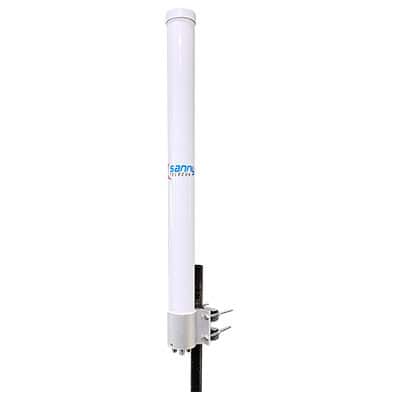
– Consists of two metal rods or wires that are oriented in opposite directions.
– Each rod is a quarter-wavelength long, making the entire antenna half-wavelength long. – The rods are typically parallel to each other and perpendicular to the ground.
– The feed point, where the antenna is connected to the transmitter or receiver, is located at the center of the dipole.
– Dipole antennas are commonly used in applications that require omni-directional coverage, such as Wi-Fi networks and radio broadcasting.
Dome Antenna:
– Also known as a ceiling mount antenna or omni-directional ceiling antenna.
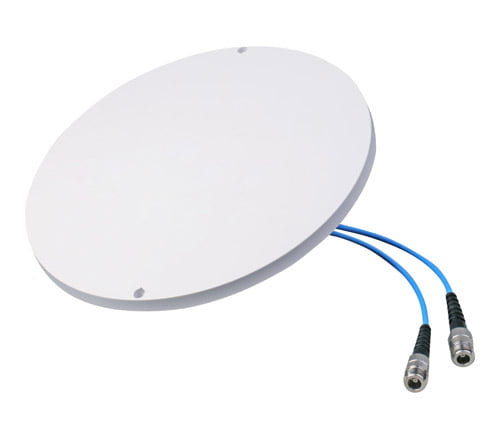
– Consists of a circular or dome-shaped enclosure that houses the antenna elements. – The antenna elements are typically dipole antennas or monopole antennas.
– The dome enclosure protects the antenna elements from damage and provides a more aesthetically pleasing appearance.
– Dome antennas are commonly used in indoor environments such as offices, hotels, and shopping malls to provide wireless coverage over a large area.
Other Common Antenna Types and Their Characteristics
Beyond dipole and dome antennas, several other antenna designs are widely used in wireless communication systems, each with its own strengths and ideal applications:
Horn Antennas:
Horn antennas are known for their high directivity and low side lobes, making them excellent for focusing signal transmission and minimizing interference from unwanted directions. They’re often used in point-to-point links where targeted coverage and strong interference rejection are required.
Sector Antennas:
Sector antennas are essentially enlarged panel antennas that deliver coverage across defined sectors—typically 60°, 90°, or 120°. With enhanced directivity and good front-to-back isolation, they’re commonly spotted in cellular base stations to provide coverage to specific sections while minimizing overlap and interference between neighboring sectors.
Yagi Antennas:
The Yagi antenna features a classic design with a single driven element and multiple directors that focus the signal, offering strong gain but over a narrow frequency range. These antennas are popular for television reception and amateur radio, where directional coverage and moderate gain are desirable.
Microstrip Antennas:
Compact and low-profile, microstrip (or patch) antennas are typically found embedded within devices such as smartphones, routers, and hotspots. They offer basic performance in constrained spaces, sacrificing some gain and polarization flexibility for sleek integration.
Whip Antennas:
Whip antennas are commonly used with Wi-Fi routers, gateways, and some mobile hotspots. Characterized by their straight, flexible rod shape, they provide omni-directional coverage but generally cannot be cross-polarized, which can limit their overall performance compared to more advanced antenna types.
Parabolic Antennas:
Parabolic, or dish, antennas provide high gain and are ideal for long-range, point-to-point connections. While they excel in focusing signals in a single direction, most are designed for SISO (Single Input Single Output) configurations rather than MIMO, making them suitable where maximum range—not capacity—is the top priority.
Each of these antennas fits specific use cases based on coverage needs, directivity, and device integration requirements. Choosing the right type depends on factors such as the desired coverage area, potential interference, and the application environment.
Panel Antenna:
- Panel antennas are characterized by their flat, rectangular design, making them suitable for both indoor installations and mounting on walls or structural surfaces outdoors.
- Unlike highly directional antennas, panel antennas offer a moderate degree of directionality. This allows them to focus wireless coverage toward a specific area without requiring precise alignment.
- They are particularly effective in environments where obstacles block direct line-of-sight to signal sources, as they can capture and utilize reflected signals.
- Common applications for panel antennas include enhancing coverage in offices, conference rooms, and various public indoor spaces, as well as targeted outdoor installations where broad but focused coverage is needed.
Panel antennas strike a balance between ease of use and performance, providing a practical solution for delivering strong, reliable wireless coverage in challenging environments.
Dish Antenna
– Dish antennas, sometimes referred to as parabolic antennas, feature a curved, dish-shaped reflector that concentrates radio waves into a tight, highly directional beam.
– This focused design allows them to achieve exceptionally high gain, making them especially well-suited for long-range point-to-point wireless links, such as those used in microwave transmission, satellite communication, and backhaul networks.
– The main advantage of a dish antenna is its ability to transmit and receive signals over great distances with minimal interference from surrounding signals.
– Because they only focus energy in a specific direction, dish antennas reduce unwanted noise and provide robust performance even in environments with significant obstacles or interference.
Dish antennas are a popular choice for applications that demand a reliable, high-strength, and narrow beam—such as connecting remote sites, establishing wireless internet service provider (WISP) links, or supporting high-capacity data transmission in outdoor settings.
Log-Periodic (LPDA) Antenna
– Log-periodic antennas, commonly referred to as LPDA (Log-Periodic Dipole Array) antennas, are specialized directional antennas designed to operate efficiently across a wide span of frequencies.
– The antenna features a distinctive “fishbone” shape, created by a sequence of metal elements in gradually varying lengths arranged along a central boom. Sometimes, you’ll spot them encased in a triangular or rectangular PVC housing, often in a clean white finish—think of it as the antenna’s business suit.
– So, when is an LPDA antenna the right choice? These antennas excel when you need reliable, high-gain performance over a broad frequency range. For example:
- If you want to connect to a distant cell tower for LTE or 5G data, especially in rural or fringe coverage areas.
- When your signal environment shifts—say, if your equipment must support multiple cellular bands or technologies without swapping out antennas.
- For long-range point-to-point wireless links requiring a consistent, focused beam—like stretching Wi-Fi coverage between buildings on a campus or linking remote monitoring stations.
– LPDAs are most often used in outdoor setups where there’s a clear line of sight to the signal source, such as a cellular tower or another wireless access point. By combining wide frequency support with strong directional gain, they’re a go-to solution for demanding connectivity challenges where a standard omni or single-band yagi just won’t cut it.
MIMO Omni Antenna Polarizations
MIMO (Multiple-Input Multiple-Output) omni-directional antennas can support different types of polarizations, including horizontal (H), vertical (V), and slant polarizations. Two commonly used slant polarizations are +45° and -45°.
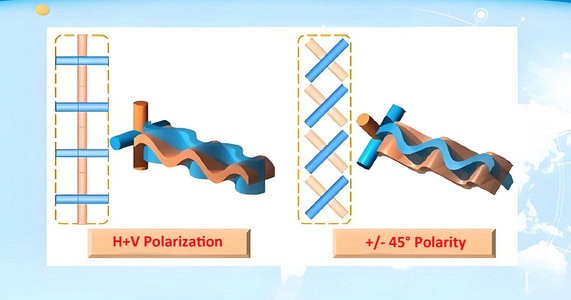
The H+V polarization refers to the combination of horizontal and vertical polarizations. In this configuration, the antenna has multiple elements or ports, with each element or port dedicated to either horizontal or vertical polarization. This allows the antenna to transmit and receive signals in both the horizontal and vertical planes simultaneously.
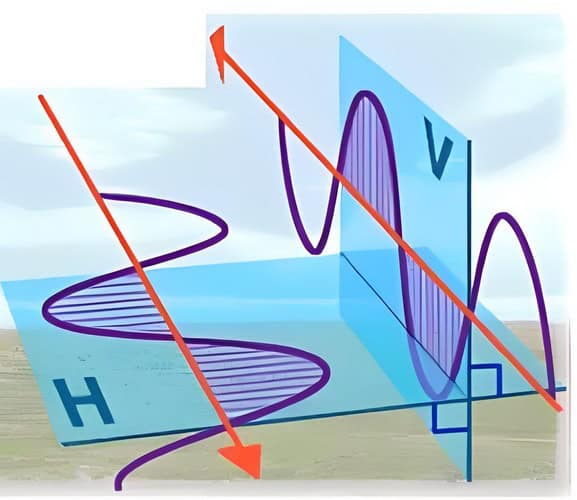
The +/- 45° slant polarizations refer to the two diagonal polarizations that are at a 45° angle from the horizontal and vertical planes. In this configuration, the antenna also has multiple elements or ports, with each element or port dedicated to either the +45° or -45° slant polarization. This allows the antenna to transmit and receive signals in both the +45° and -45° slant planes simultaneously.

Both the H+V polarization and the +/- 45° slant polarizations are commonly used in MIMO systems to increase the capacity and reliability of wireless communication. By using multiple antennas with different polarizations, MIMO systems can exploit the spatial diversity of the radio channel, improving the signal quality and mitigating the effects of fading and interference.
Polarization and Spatial Multiplexing in MIMO Antennas
To maximize spatial multiplexing and overall performance, manufacturers often combine these polarization schemes with specific antenna arrangements:
- 2×2 MIMO antennas typically use cross-polarized elements, with each element set at +45° and -45° to the horizontal. This cross-polarization enables two distinct data streams to be sent and received simultaneously.
- 4×4 MIMO antennas generally consist of two pairs of cross-polarized antennas, which are also spatially separated within the antenna housing. This spatial separation, combined with cross-polarization, further enhances signal diversity and reduces the likelihood of interference between streams.
- 8×8 MIMO antennas build on this concept by integrating four sets of cross-polarized antennas, each spatially separated. This configuration supports even more data streams and further boosts throughput, especially in dense or high-demand wireless environments.
By carefully combining polarization and spatial arrangement, MIMO omni-directional antennas are able to deliver higher data rates, improved coverage, and robust performance even in challenging radio conditions.
MIMO Antenna Configurations: Polarization and Spatial Separation
MIMO omni-directional antennas leverage both polarization and spatial separation, depending on their specific configuration:
2×2 MIMO: In a typical 2×2 setup, antennas are cross-polarized, meaning they transmit and receive signals at +45° and -45° slant polarizations. This approach enables the system to send two independent data streams simultaneously, enhancing throughput without requiring additional frequency spectrum.
4×4 MIMO: For 4×4 configurations, the system incorporates two pairs of cross-polarized antennas. These pairs are spatially separated—placed at distinct physical locations—to further reduce signal correlation. This spatial diversity, combined with polarization diversity, allows for better signal reliability and increased capacity when compared with 2×2 setups.
8×8 MIMO: In 8×8 systems, four pairs of cross-polarized antennas are strategically spaced apart. Each pair supports both +45° and -45° slant polarizations, and their placement across the antenna array maximizes spatial diversity. This setup significantly boosts data rates and signal robustness, especially in challenging wireless environments.
By combining multiple polarizations with spatial separation, these MIMO configurations capitalize on both the polarization and spatial diversity of the wireless channel, leading to improved signal quality, reduced interference, and greater network performance overall.
When to Use H+V vs +/- 45° Polarization in MIMO Antennas
Choosing between H+V (horizontal and vertical) polarization and +/- 45° (slant) polarization depends largely on the environment and the system you’re working to match.
H+V Polarization: This setup uses separate elements for horizontal and vertical signals. It’s common in indoor MIMO applications or legacy systems where the infrastructure is designed to support traditional cross-polarized signals. For environments with predictable signal paths and less multipath interference—such as open spaces or locations with minimal reflective surfaces—H+V can provide robust performance.
+/- 45° Polarization: Here, antenna elements are oriented at +45° and -45° angles, allowing signals to travel along diagonals. This configuration is widely used in modern cellular networks, especially those designed to manage complex environments with significant multipath propagation—think city centers, urban canyons, or challenging indoor locations. By leveraging diagonal polarizations, these antennas help maximize throughput and reliability when signals are reflected or scattered by buildings and obstacles.
Which Should You Choose?
As a rule of thumb, always try to match the polarization to the system or network you’re connecting to. Most contemporary LTE, 4G, and 5G cellular networks—from major providers like Ericsson and Nokia—use +/- 45° polarization for their base station antennas. In these cases, using a MIMO antenna with slant polarization (+/- 45°) will give you the best results in terms of signal quality and throughput.
If you’re working in settings where infrastructure uses legacy H+V polarization (such as older Wi-Fi setups or point-to-point links), aligning your antenna polarization to horizontal and vertical will help avoid signal loss and maximize performance.
Quick Tips:
- For current cellular networks: stick with +/- 45° slant polarization.
- For certain Wi-Fi and legacy equipment: use H+V polarization, if that’s what the network supports.
- When in doubt, check the specifications or consult the system documentation; some antennas can be rotated to switch between polarizations as needed.
Matching the antenna polarization with the system ensures optimal signal integrity and overall network efficiency.
Polarized Antenna Pairs vs. Spaced Antenna Pairs in MIMO Systems
When designing a MIMO system, there are two key methods for deploying multiple antennas: using polarized antenna pairs or spaced antenna pairs. Both approaches have their own strengths and are chosen based on the requirements of the wireless environment.
Polarized Antenna Pairs
Polarized antenna pairs utilize antennas with different polarizations—most commonly horizontal and vertical (H+V), or slant polarizations like +45° and -45°. The advantage of this setup is that each polarization acts as an independent channel—since signals sent on, for example, a vertical polarization are largely ignored by the horizontal polarization, and vice versa. This separation helps reduce interference and allows for more efficient transmission and reception of simultaneous data streams. Deploying these pairs is especially helpful where adding extra space for antennas isn’t practical, such as within compact equipment enclosures or indoor access points.
Spaced Antenna Pairs
Alternatively, spaced antenna pairs are two or more identical antennas placed physically apart. By separating antennas, the system creates spatial diversity, allowing it to receive multiple versions of the same signal that have traveled different paths. This turns multipath propagation—a common challenge where signals bounce off walls and other surfaces—into an advantage. The system can combine these various signals to boost reliability and mitigate fading. Spaced antenna deployment is often seen on outdoor base stations and in environments where antenna separation is feasible.
Choosing Between the Two
- Polarized pairs are ideal in space-limited or indoor scenarios, taking advantage of polarization diversity without requiring large antenna separations.
- Spaced pairs excel in larger environments or outdoor settings, where multipath can be harnessed for improved signal quality.
Both techniques can even be combined in advanced MIMO systems, further increasing capacity, resilience, and data throughput.
Understanding MU-MIMO in Cellular Communication
MU-MIMO, or Multi-User Multiple-Input Multiple-Output, is a key technology deployed in modern cellular systems, including both 4G and 5G networks. Unlike traditional MIMO, which serves one user at a time using multiple antennas, MU-MIMO allows a single base station to simultaneously transmit to and receive data from several devices. Each connected device can receive its own unique data stream—all at the same time—without waiting in line behind other users.
This is achieved by leveraging advanced antenna arrays and signal processing techniques that separate multiple users’ signals spatially. The result? Improved network efficiency, higher data rates, and a better experience for everyone connected, even in environments like stadiums or busy urban areas where many devices compete for bandwidth.
MIMO Omni Antennas Applications
MIMO (Multiple Input Multiple Output) omni-directional antennas are widely used in WiFi and cellular networks to improve the performance and coverage of wireless communication systems. Here are some of the applications of MIMO omni-directional antennas in these networks:
1. WiFi Networks: MIMO omni-directional antennas are used in WiFi routers and access points to enhance the data rate and coverage area. By utilizing multiple antennas, MIMO technology enables the transmission and reception of multiple data streams simultaneously, resulting in increased data throughput and improved network performance. MIMO omni-directional antennas are particularly useful in environments with high interference and signal fading, such as in crowded urban areas or multi-story buildings.
2. Cellular Networks: MIMO omni dome antennas are widely used in DAS to improve the capacity and coverage of cellular networks. In LTE (Long-Term Evolution) and 5G networks, MIMO technology is employed to increase the data rate and spectral efficiency. MIMO omni-directional antennas allow for the simultaneous transmission and reception of multiple data streams, which enables higher data rates, better signal quality, and improved network capacity.
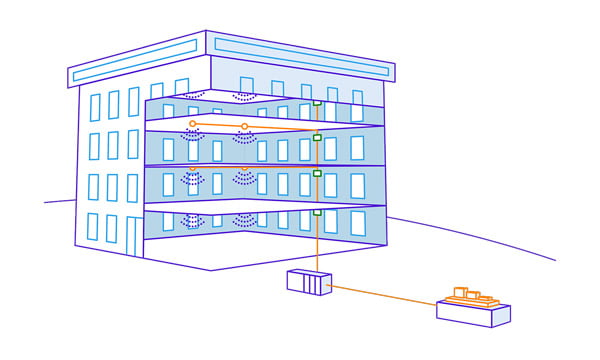
3. Public Hotspots: MIMO omni-directional antennas are used in public WiFi hotspots to provide reliable and high-speed internet connectivity in public areas like parks, airports, and shopping malls. These antennas ensure a wide coverage area and enable multiple users to connect to the hotspot simultaneously, without experiencing significant degradation in signal quality or speed.
4. Smart Cities: MIMO omni-directional antennas are employed in smart city applications to provide wireless connectivity for various IoT (Internet of Things) devices and sensors. These antennas enable the deployment of smart city infrastructure, such as smart streetlights, smart parking systems, and environmental monitoring systems, by ensuring reliable and efficient wireless communication.
5. Wireless Mesh Networks: MIMO omni-directional antennas are used in wireless mesh networks to create a self-healing and self-configuring network infrastructure. These antennas enable the establishment of wireless links between nodes in the network, allowing for the transmission of data over long distances without the need for physical cables. MIMO technology enhances the network performance by increasing the data rate and improving the reliability of the wireless links.
Overall, MIMO omni-directional antennas play a crucial role in improving the performance, coverage, and capacity of WiFi and cellular networks. These antennas are essential for providing reliable and high-speed wireless communication in various applications and environments.
MIMO 2×2 vs 4×4 Omni Antennas
MIMO (Multiple-Input Multiple-Output) refers to a wireless communication technology that uses multiple antennas to transmit and receive data simultaneously. By using multiple antennas, MIMO can increase the data throughput and improve the overall performance of a wireless system.
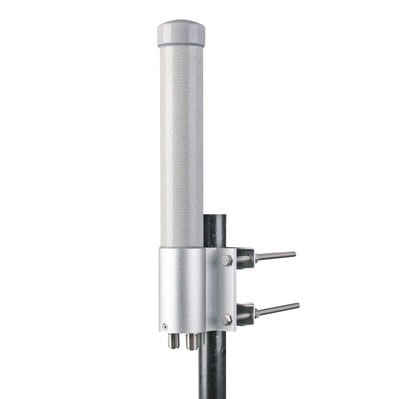
In the context of MIMO 2×2 vs 4×4 omni-directional antennas, the numbers 2×2 and 4×4 refer to the number of antennas used for transmission and reception. A 2×2 MIMO system uses two antennas for both transmission and reception, while a 4×4 MIMO system uses four antennas for both transmission and reception.

The main difference between a 2×2 MIMO system and a 4×4 MIMO system is the number of antennas used. A 4×4 MIMO system has twice the number of antennas as a 2×2 MIMO system, which means it can potentially achieve higher data throughput and better performance.
However, it’s important to note that the benefits of a 4×4 MIMO system over a 2×2 MIMO system may not be fully realized in all situations. The performance of a MIMO system depends on various factors, including the wireless environment, the distance between the antennas, and the presence of obstacles or interference. In some cases, a 2×2 MIMO system may be sufficient to achieve the desired performance, while in other cases a 4×4 MIMO system may be necessary.
Additionally, the use of omni-directional antennas means that the antennas radiate and receive signals in all directions. This can be beneficial in scenarios where the wireless devices are moving or where the direction of the signal is constantly changing. However, omni-directional antennas may not provide the same level of gain or coverage as directional antennas, which are designed to focus the signal in a specific direction.
In summary, a 4×4 MIMO system with omni-directional antennas has the potential to provide higher data throughput and better performance compared to a 2×2 MIMO system. However, the actual benefits will depend on the specific wireless environment and the requirements of the application.
What is a WiFi Omni MIMO Antenna?
A WiFi omni-directional MIMO antenna is a type of antenna that can receive and transmit signals in multiple directions at the same time. MIMO stands for Multiple-Input Multiple-Output, which means that the antenna has multiple input and output ports to support multiple data streams.
An omni-directional antenna is designed to radiate and receive signals in all directions, providing a 360-degree coverage pattern. This is in contrast to a directional antenna, which focuses its signal in a specific direction.
A WiFi omni MIMO antenna is typically used in wireless networks to provide coverage in all directions, ensuring that all devices within range can connect to the network. It is commonly used in applications such as home WiFi networks, small office networks, and public WiFi hotspots.
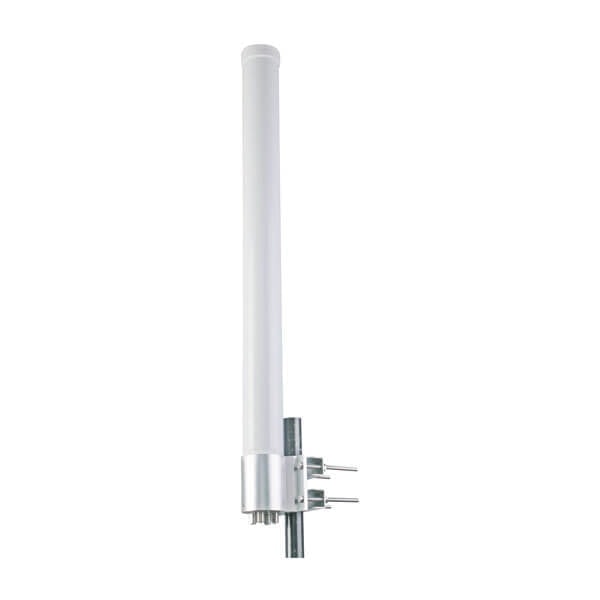
The advantage of using a MIMO antenna is that it can support multiple data streams simultaneously, increasing the overall capacity and performance of the wireless network. This is especially useful in environments with a high number of connected devices or where there is a need for high-speed data transfer.
Overall, a WiFi omnidirectional MIMO antenna is a versatile and efficient solution for providing wireless coverage in all directions and supporting multiple data streams.
What is a 4G/LTE Omni MIMO Antenna?
The 4G/LTE Omnidirectional MIMO Antenna is a dome-shaped antenna designed specifically for use in a distributed antenna system (DAS) setup. It is equipped with multiple-input multiple-output (MIMO) technology, allowing it to transmit and receive signals simultaneously on multiple frequencies.
The MIMO dome antenna is designed to provide reliable and consistent coverage in indoor and outdoor environments. Its omnidirectional pattern ensures that signals are transmitted and received in all directions, making it suitable for use in areas with high user density.
The antenna is capable of supporting multiple frequency bands, including 4G and LTE, making it compatible with a wide range of wireless communication systems. This versatility allows it to be used in various applications, such as in office buildings, shopping malls, stadiums, and other public venues.
The MIMO dome antenna is typically mounted on the ceiling or wall, providing a discreet and unobtrusive installation. It is also designed to be weatherproof, ensuring its durability and reliability in outdoor environments.
Overall, the 4G/LTE Omnidirectional MIMO Antenna is a high-performance antenna that is ideal for use in distributed antenna systems. Its MIMO technology and omnidirectional pattern make it an excellent choice for providing reliable wireless coverage in indoor and outdoor environments.
What is a 5G Omni MIMO Antenna?
The 5G Omnidirectional MIMO Antenna is a type of antenna that is specifically designed for 5G networks. It is an omnidirectional antenna, which means it can transmit and receive signals in all directions. This makes it ideal for use in distributed antenna systems (DAS) where multiple antennas are used to provide coverage in a specific area.
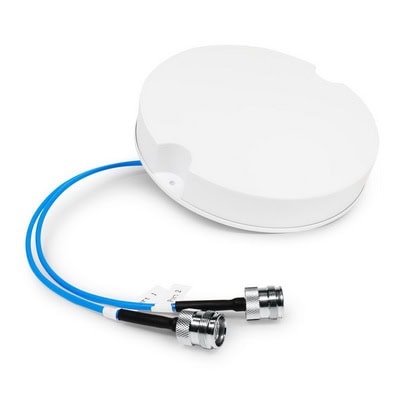
One of the key features of the 5G Omnidirectional MIMO Antenna is its support for Multiple Input Multiple Output (MIMO) technology. MIMO allows for the simultaneous transmission and reception of multiple data streams, which greatly increases the capacity and speed of a wireless network. With MIMO, the 5G Omnidirectional MIMO Antenna can handle multiple connections at the same time, providing a seamless and high-quality wireless experience for users.
The 5G Omni MIMO Antenna is typically designed as a dome-shaped antenna, which offers several advantages. First, the dome shape allows for a wide coverage area, ensuring that the antenna can reach devices in all directions. Second, the dome shape helps to minimize interference from nearby objects, which can improve the overall performance of the antenna.
In addition to its MIMO capabilities and dome shape, the 5G Omnidirectional MIMO Antenna also supports high-frequency bands, which are necessary for 5G networks. These high-frequency bands offer increased capacity and faster speeds compared to lower frequency bands.
Overall, the 5G Omnidirectional MIMO Antenna is an essential component of a 5G network, especially in DAS applications. Its MIMO capabilities, dome shape, and support for high-frequency bands make it an ideal choice for providing reliable and high-performance wireless connectivity in a wide variety of environments.
How to Choose a MIMO Omni Antenna?
MIMO (Multiple-Input Multiple-Output) omni-directional antennas are used to improve wireless communication in environments where there are multiple devices transmitting and receiving data simultaneously. These antennas are designed to provide a wider coverage area and better signal quality. When choosing a MIMO omni-directional antenna, there are several factors to consider:
1. Frequency Range: Ensure that the antenna supports the frequency range used by your wireless devices. Most antennas are designed for specific frequency bands, such as 2.4 GHz or 5 GHz.
2. Gain: The gain of an antenna determines how effectively it can transmit and receive signals. Higher gain antennas provide a stronger signal over a longer distance. However, higher gain antennas are also more directional, meaning they have a narrower coverage area. Choose an antenna with an appropriate gain for your specific needs.
3. Number of Elements: MIMO antennas have multiple elements (individual antennas) that work together to improve signal quality. The number of elements determines the number of simultaneous data streams the antenna can handle. Choose an antenna with the appropriate number of elements for your devices.
4. Polarization: Antennas can have vertical, horizontal, or dual polarization. The polarization of the antenna should match the polarization of your wireless devices for optimal signal reception. Dual polarization antennas can support both vertical and horizontal polarization.
5. Connector Type: Ensure that the antenna has the correct connector type to connect to your wireless devices. Common connector types include SMA, RP-SMA, and N-type connectors.
6. Mounting Options: Consider how you plan to mount the antenna. Some antennas come with mounting brackets or hardware, while others require additional accessories for mounting. Choose an antenna that is suitable for your mounting requirements.
7. Environmental Conditions: Consider the environmental conditions where the antenna will be installed. Some antennas are designed for indoor use only, while others are weatherproof and can be used outdoors. If you plan to install the antenna outdoors, ensure that it is rated for the specific weather conditions in your area.
8. Budget: Finally, consider your budget. Antennas vary in price depending on their features and capabilities. Set a budget and choose an antenna that fits within that range.
By considering these factors, you can choose a MIMO omni-directional antenna that meets your specific requirements and improves the wireless communication in your environment.
Conclusion
In conclusion, MIMO Omni antennas are essential for modern wireless technology as they provide better coverage, faster speeds, and more reliable connections. Whether you are upgrading your personal network or designing a system for a large venue, it is important to understand the capabilities and uses of these antennas.
 English
  Spanish
  German
  French (France)
  Korean
  Russian
  Indonesian
  French (Canada)
  Vietnamese
  Armenian
  Albanian
  Assamese
  Acehnese
  Amharic
  Czech
Czech  Bulgarian
  Cebuano
  Malayalam
  German (Switzerland)
  Japanese
  Dutch
Dutch