
 German (Switzerland)
  English
  Spanish
  German
  French (France)
  Korean
  Russian
  Indonesian
  French (Canada)
  Vietnamese
  Armenian
  Albanian
  Assamese
  Acehnese
  Amharic
  Czech
Czech  Bulgarian
  Cebuano
  Malayalam
  Japanese
  Dutch
Dutch Ask For A Quick Quote
Wonderful, you have made the right choice. We will never let you down!
We will contact you within 2 hours of working days, please pay attention to the email with the suffix “@sannytelecom.com”.
 Skip to content
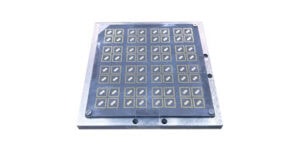

Millimeter waves (mmWave) refer to a portion of the electromagnetic spectrum with wavelengths ranging from 1 to 10 millimeters. This frequency range falls between microwave and infrared waves.

When choosing a horn antenna, you need to focus on a couple of parameters based on your application. It’s included but not limited to frequency ranges, gain, polarization as well as the half-power beamwidth, etc.
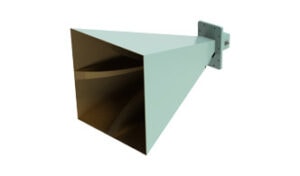
Horn antennas are of different types that give you a variety to choose from. The choice would depend on the need and function that the antenna has to perform. Following are 9 main types of horn antennas that will help you understand their different features and determine which one you need.
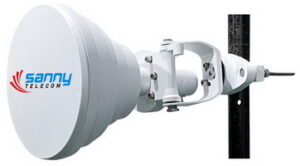
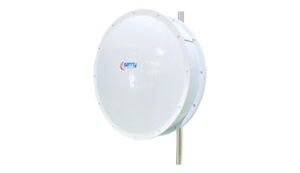
A high gain directional antenna which is typically used to receive or transmit signals in the wireless backhaul networks at 4.9-6.4GHz, is a WiFi Parabolic Dish Antenna.
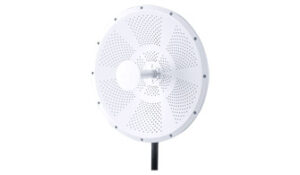
For WiFi parabolic dish antenna, the gain ranges from 18dBi to 40dBi between 2.4GHz and 6.5GHz, depending on the exact frequency range and reflector diameter.
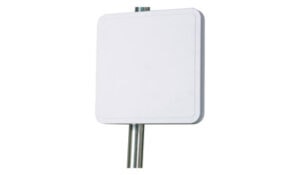
All RFID systems need antennas to transmit and receive signals. But not all antennas are created equal. There are a variety of factors you need to consider when choosing the right UHF RFID antenna for your application.