 Skip to content
The Evolution of Antenna Technology: From 1G to 5G-Advanced

The evolution of antenna technology is a direct response to the demands of each mobile generation. 1G used simple, external monopole antennas for analog voice on 800 MHz bands. 2G’s digital standards like GSM and CDMA prompted the move to compact, internal PIFA antennas to fit smaller phones. 3G’s UMTS standard introduced antenna diversity for better data reliability. 4G LTE required multiple antennas for MIMO technology to boost data speeds. 5G and 5G-Advanced now use sophisticated phased arrays and Massive MIMO for intelligent beamforming on Sub-6 GHz and high-frequency millimeter waves.
Near-Field vs. Far-Field RFID Antennas
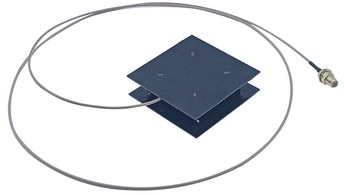
Near-field and far-field RFID antennas differ primarily in their communication method and read range. Near-field antennas use a magnetic, non-propagating field (inductive coupling) for short-range communication, typically up to 15-30 centimeters. Far-field antennas use a propagating electromagnetic wave (capacitive coupling or backscatter) for long-range communication, reaching up to 15 meters or more. The choice between them depends on the specific application’s need for range versus precision.
Satellite Dish Antenna vs Point-to-Point Dish Antenna
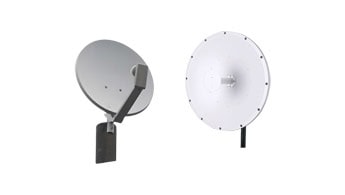
Today, let’s clear up the confusion by exploring the key differences between Satellite Dish Antennas and Point-to-Point Dish Antennas. We’ll dive into their unique characteristics, including their typical applications, operating frequencies, physical structures, interfaces, and mounting methods. By understanding these distinctions, you’ll be better equipped to select the ideal antenna solution for your next project or business requirement.
WiFi 19dBi vs 23dBi Dual Polarization Panel Antenna
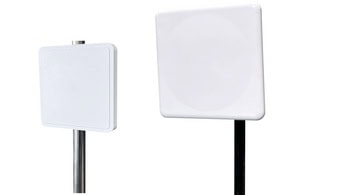
The primary difference between a 19dBi and a 23dBi dual polarization panel antenna is gain and beamwidth. A 23dBi antenna provides higher gain, giving it a stronger, more focused signal over longer distances, ideal for point-to-point links. In contrast, a 19dBi antenna provides slightly less gain but offers a wider coverage pattern, making it more suitable for shorter distance coverage.
Introducing the 5.15–7.2 GHz High-Gain Panel Antenna for Next-Gen Wi-Fi

At Sanny Telecom, we’re excited to unveil our latest innovation: the STP5172G23HVM2 Dual Polarized Panel Antenna. Designed for the future of Wi-Fi, this antenna covers an ultra-wide frequency range of 5.15 to 7.2 GHz, giving you a powerful advantage in today’s fast-evolving wireless market. As demand for higher capacity and broader spectrum grows, our antenna delivers the performance, reliability, and flexibility you need.
Top 6 Enclosures for Wireless Communication
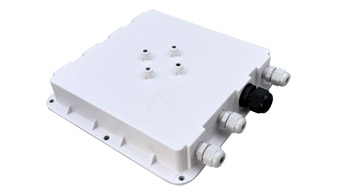
Wireless communication is integral to modern technology, supporting everything from mobile networks to IoT devices and satellite systems. To ensure optimal performance, reliability, and protection of wireless devices, choosing the right enclosure is crucial. These enclosures must not only provide mechanical protection but also preserve the integrity of the wireless signals. The material used in the enclosure and the machining processes employed can significantly affect the device’s functionality. In this article, we explore the top seven enclosure materials for wireless communication and the machining techniques that enhance their performance.
 English
  Spanish
  German
  French (France)
  Korean
  Russian
  Indonesian
  French (Canada)
  Vietnamese
  Armenian
  Albanian
  Assamese
  Acehnese
  Amharic
  Czech
Czech  Bulgarian
  Cebuano
  Malayalam
  German (Switzerland)
  Japanese
  Dutch
Dutch