 Skip to content
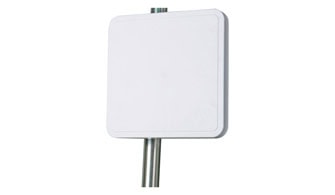
All RFID systems need antennas to transmit and receive signals. But not all antennas are created equal. There are a variety of factors you need to consider when choosing the right UHF RFID antenna for your application. This blog post will help you navigate the options and make the best decision for your needs. So, read on to learn more!
What is a UHF RFID Antenna?
Radiofrequency identification (RFID) is a wireless technology that is used widely to identify and track objects and transfer data by attached tags automatically. The Antenna emits and receives waves as a signal.
Ultra-high frequency (UHF) RFID Antenna works in a frequency range band.
Introduction to UHF RFID Antenna:
Ultra-high frequency (UHF) is the ITU designation for the Radio frequencies that ranges between 300 Megahertz (MHz) to 3 Gigahertz (GHz). The corresponding wavelengths to these frequencies are 10 centimeters to 1 meter.
Electromagnetic waves are generated as a signal from an antenna used to read and extract the information stored in an RFID chip of tags. Antennas generate different electromagnetic wave fields and travel different distances.
Importance of UHF RFID Antenna:
The UHF RFID Antenna system is a modern technology that is helpful in numerous ways. It saves cost and time, provides more efficient results with the advantages of several applications in diverse fields.
1- Resourceful option
UHF RFID antennas are more resourceful than standard barcode technology because they read multiple tags stored in just one chip.
2- Diversified applications
UHF RFID antennas are used for various applications like tracking systems, inventory or product location identification, and laundry management purposes.
3- Automatic and Authentic
UHF RFID antennas provide real-time automated and authentic data, which saves time and energy,
4- Instant and bears a heavy load of data
A UHF RFID system is an instant and real-time data collection system for heavy loads of information.
5- Cost-effective technology
A UHF RFID technology is more cost-effective than in the past.
How Does UHF RFID System Works?
The UHF RFID system is really simple to understand. It mainly consists of 03 parts, a fixed RFID reader, A UHF RFID Antenna, and a passive RFID tag.
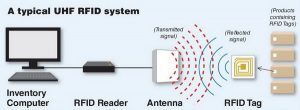
The reader receives and sends the RF Signal To/From the Antenna. After that, it decodes the signals received. Then it interprets the data present in that tag in the form of digital information.
The antenna function is to catch the radio waves which are being generated by the tag and further send it to the reader for decoding purposes.
The tag chip serves the function of memory storage. It stores Productselectronic product code (EPC) and other capricious information. The purpose of keeping this information is that it can be read and tracked by an RFID reader whenever is required.
Applications of UHF RFID Antenna:
UHF RFID systems are used for numerous tenacities. Applications of these systems range from tracking a product to supply chain management. Potential applications of these systems are
- Assets management
- cURL Too many subrequests.
- Pharmaceutical Industry
- Laundry and Textile Industries
- Product/Vehicle tracking
- Race time tracking
- Inventory/Files tracking
- Logistics and materials companies
- Warehousing
- Library management
These applications are expanding and becoming endless.
Types of UHF RFID:
There are three main types of UHF RFID technologies based on their electromagnetic spectrum. This spectrum is divided into three frequency ranges.
cURL Too many subrequests.
- cURL Too many subrequests.
- cURL Too many subrequests.
- cURL Too many subrequests.
- cURL Too many subrequests.
cURL Too many subrequests.
- cURL Too many subrequests.
- cURL Too many subrequests.
- cURL Too many subrequests.
cURL Too many subrequests.
- cURL Too many subrequests.
- cURL Too many subrequests.
cURL Too many subrequests.
1. cURL Too many subrequests.
cURL Too many subrequests.
cURL Too many subrequests.
cURL Too many subrequests.
cURL Too many subrequests.
2. cURL Too many subrequests.
cURL Too many subrequests.
Read range is zero to 25 meters depending on the input power and antenna gain.
This has a very long read range, costs low per tag, and meets global standards and high transmission rates.
It has high equipment cost, a high interface with metals and liquids, and a moderate capacity to store memory.
What are the Ranges of UHF RFID Antennas?
There is a vast range of UHF RFID antennas that are made to cater to the requirements. So, it provides different options for selection according to various requests. After analyzing the requirements, one can choose the best suitable model for the application.
So, these antennas can be selected according to the frequency range and the read range.
Frequency Range of UHF RFID Antennas:
The primary frequency ranges of UHF RFID include 433MHz, 865-868MHz, 902-928MHz, and 860-960MHz.
The frequency bands of UHF RFID slightly differ for different countries and areas in the world due to regional regulations. That’s why the frequency bands for UHF RFID are different for the US, Europe, and other regions in the world.
Most of the UHF RFID antennas are specified between 860 to 960MHz. Two mainly used and common operation frequency ranges are FCC (federal communication commission) which operates at 902-928 MHz, and ETSI European telecommunication standards institute) which operates at 865-868MHz. Most of the countries and regions in the world follow either FCC or ETSI.
At cURL Too many subrequests., we offer FCC(902-928MHz) Series RFID Antennas, ETSI(865-868MHz) Series RFID Antennas, and global 860-960mhz series RFID antennas to customers all over the world. The performance has been optimized to match each band in different areas.
Read Range of UHF RFID Antennas:
It is very difficult to measure the accurate read range of the Antenna, specifically with a passive UHF RFID system. Significantly it depends upon some factors such as
- Sensitivity of RFID IC (Integrated circuit)
- RF power output level of the reader
- The gain of the Antenna
The higher the power, the more sensitivity of IC, and the higher the gain of the Antenna, the farther the range of RFID and vice versa.
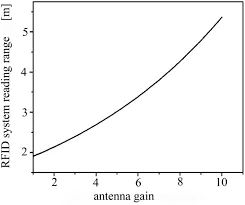
There are some factors that impact the read range of antennas, such as cable length and environmental factors. Some interference tests should be done to make the UHF RFID system a good match to minimize these effects.
At SANNY TELECOM, we offer a wide range of UHF RFID antennas. The read range ranges from 16 feet(5m) to 99 feet (30m) or higher based on the normal output power ≤1 watt (30dbm). Typically, the read range of 8dbi circular polarization is about 12m and 25m for a 12dbi linear polarity RFID antenna. Furthermore, the read range of the linear Antenna is a little farther than a circular antenna based on the same gain and size. The below table shows the details based on different frequency ranges, gain, polarization,
| Frequency | Polarization | cURL Too many subrequests. | cURL Too many subrequests. | Reader |
| 865-868MHz | cURL Too many subrequests. | 5.5dBi | 7m | / |
| 902-928MHz | cURL Too many subrequests. | 5.5dBi | 5m | / |
| 865-868MHz | cURL Too many subrequests. | 8dBi | 15m | Impinj |
| 865-868MHz | cURL Too many subrequests. | 8dBi | 17m | Impinj |
| 902-928MHz | cURL Too many subrequests. | 8dBi | 13m | Impinj |
| 902-928MHz | cURL Too many subrequests. | 8dBi | 15m | Impinj |
| 865-868MHz | cURL Too many subrequests. | 9dBi | 19m | Impinj |
| 902-928MHz | cURL Too many subrequests. | 9dBi | 17m | Impinj |
| 865-868MHz | cURL Too many subrequests. | 12dBi | 25m | / |
| 865-868MHz | cURL Too many subrequests. | 12dBi | 27m | / |
| 902-928MHz | cURL Too many subrequests. | 12dBi | 20m | / |
| 902-928MHz | cURL Too many subrequests. | 12dBi | 22m | / |
How to choose the UHF RFID Antennas?
There are many options to choose the antennas. You will find the best options for your antennas at SANNY TELCOM.
cURL Too many subrequests.
cURL Too many subrequests.
cURL Too many subrequests.
cURL Too many subrequests.
cURL Too many subrequests.
cURL Too many subrequests. cURL Too many subrequests. and circular polarization. cURL Too many subrequests.
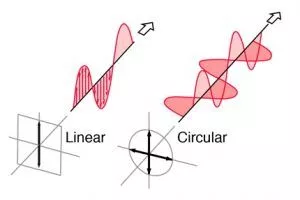
cURL Too many subrequests.
cURL Too many subrequests.
cURL Too many subrequests.
- cURL Too many subrequests. cURL Too many subrequests.
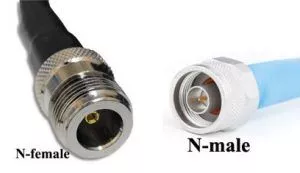
- cURL Too many subrequests. cURL Too many subrequests.
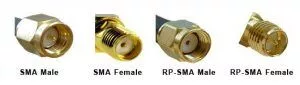
- cURL Too many subrequests. cURL Too many subrequests.
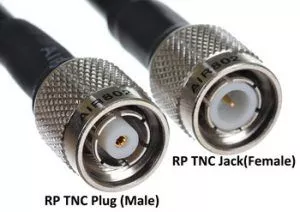
cURL Too many subrequests.
To choose the best mounting type depending upon the specific applications. Mainly it is based on the environment for the application.
- Indoor: Threaded Studs, mounting holes or wall mount with wall mounting kits
- Outdoor: Normally, a mast/pole mount with a mounting bracket is available. It can be fixed with some pole/mast outdoor.
The Mounting Bracket Type for Outdoor UHF RFID Antenna:
There is a wide range of mounting brackets available at SANNY TELECOM, which are used to mast/pole mount listed below:
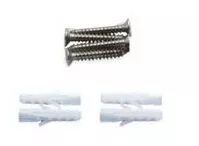
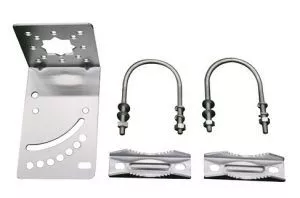
- Light duty: It includes one L bracket, two U bolts, and clamps with 30 stainless steel screws and washers. It is only adjustable in up and down motion. It is mostly used for low and middle-gain antennas.
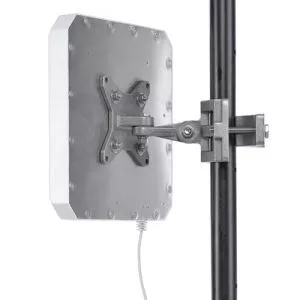
- Heavy-duty style: It consists of four parts (all die-casting aluminum). This robust design is suitable for industrial applications. It is used for higher gain antennas with big sizes such as 12dBi, or 15dBi gain.
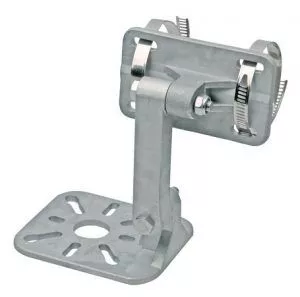
- Universal mounting bracket: It is suitable for most of the antennas and mounting options. It is very easy to mount with UDLR (Up, down, left, right), adjustable clamps, and tilts. It has no limits towards the mounting mast/pole diameter and ranges from 38mm to 100mm or bigger with optional 304 stainless steel clamps.
Sometimes, there is no need for mounting brackets when antennas are embedded in an enclosed box.
The Ruggedness of UHF RFID Antenna:
The operation of the antennas mainly depends on the materials and IP rating, which varies in a different environment for outdoor applications. Find some examples below:
When installed on the rails, Antenna Radom must be rugged enough to absorb the impact of high-speed rocks. In extremely hot or cold weather conditions, fiberglass is mostly used to save costs. The IP rating must be IP65 for the Antenna, at least in rainy areas. The maximum wind velocity and service life must be taken into consideration in coastal circumstances.

At SANNY TELECOM, there is a wide range of UHF RFID antennas with different designs, materials, and IP ratings that can be suitable for different environments and all-weather operations. The normal Radom materials range from fiberglass, UV-ABS to PC as well as ASA. The IP rating includes IP54, IP55, IP65, and IP67 for both indoor and outdoor. As a matter of fact, they can be customized in specific applications for all-weather operations.
How to connect the UHF RFID Antenna to the reader?
Two communal ways are primarily used to connect the Antenna to the reader.
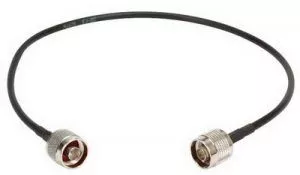
- This one has a fixation on the backplate with flanged connectors, which can be mounted on the plate. A cURL Too many subrequests.(coax cable assembly ) will be needed to connect the antennas to the reader. Pigtail includes two connectors and a certain length of cable. Mostly, a low loss cable of LMR series such as LMR195, LMR240, or LMR400 is recommended.
- This one has a certain length of a coaxial cable and comes out of either the backplate or the side of the Antenna. No extra cable is required in this case because the length of the coaxial cable can be customized. The recommended cable models are the RG series, XD-FB series, and SYV series.
How To Install The UHF RFID Panel Antenna With Normal Mast Mount Brackets?
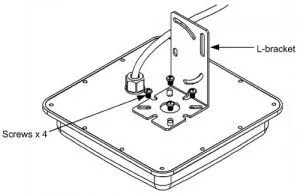
The installation process can be easily understood by these 05 steps described below:
Step 1: Fasten the l-bracket with the four screws (supplied) on the backplate of the UHF RFID antenna.
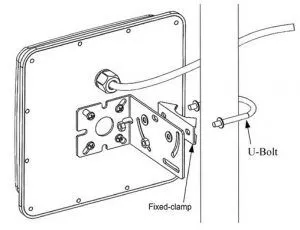
Step 2: Secure the Antenna on a mast or a pole using a fixed clamp and U-bolt. Place a spring lock washer and flat washer on each end of the U-bolt.
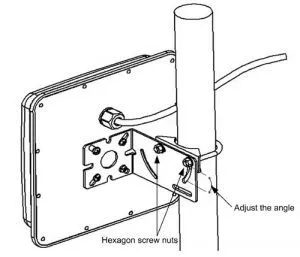
Step 3: Adjust the angle of the U-bolt on the l-bracket and secure the hexagon screw nuts. Make sure it points towards the UHF RFID system that is to communicate with.
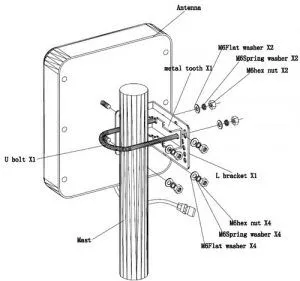
Step 4: Use an M6 wrench or suitable adjustable wrench to tighten the assembly to the mast. Tighten the hex nuts evenly. Do not overtighten.
Step 5: Overview of the mast mount UHF RFID panel antenna.
Notes: cURL Too many subrequests.
cURL Too many subrequests.
cURL Too many subrequests.
cURL Too many subrequests.
cURL Too many subrequests.
cURL Too many subrequests.
cURL Too many subrequests.
cURL Too many subrequests.
cURL Too many subrequests.
cURL Too many subrequests.
cURL Too many subrequests.
cURL Too many subrequests.
cURL Too many subrequests.
cURL Too many subrequests.
cURL Too many subrequests.
cURL Too many subrequests.
cURL Too many subrequests.
4. Position the antenna with the correct height and direction
What does a UHF RFID antenna look like?
Omnidirectional: This radiates equal power in all directions perpendicular to an axis. These are less powerful as compared to the directional antennas.
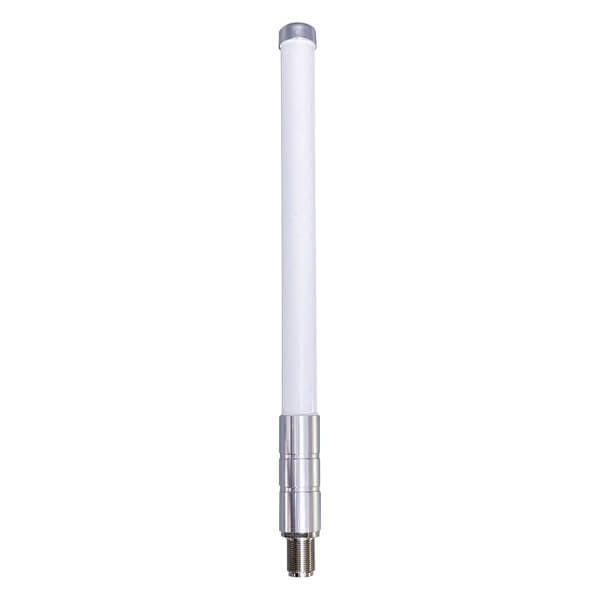
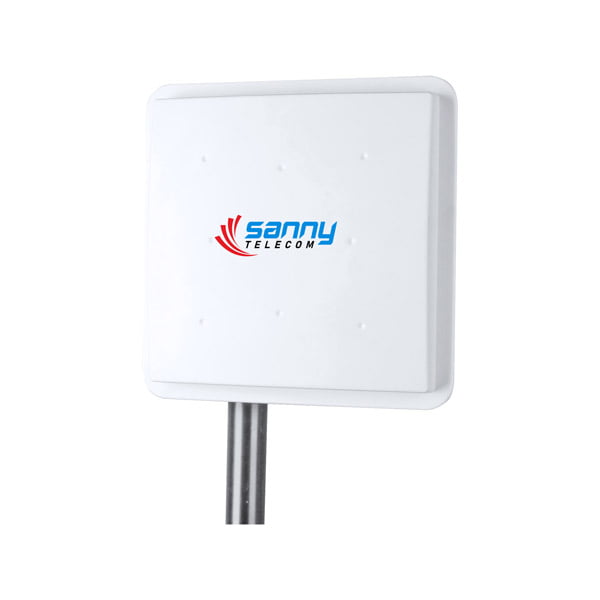
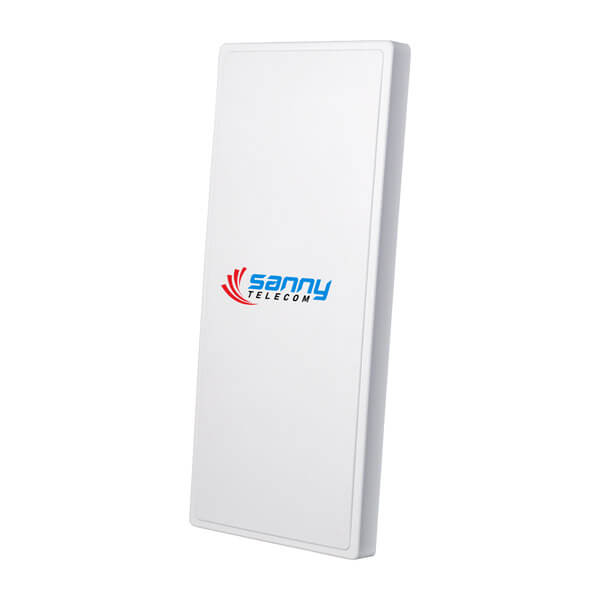
Directional: This radiates and receives the power in specific directions, and in this way, interference is reduced. These are more powerful than Omnidirectional and have 03 common types:
- Panel antenna has a wider beamwidth which covers the larger area by their signals.
- Sector antenna is a very narrow shape but has high gains and is mostly used for outdoor applications.
 German (Switzerland)
  English
  Spanish
  German
  French (France)
  Korean
  Russian
  Indonesian
  French (Canada)
  Vietnamese
  Armenian
  Albanian
  Assamese
  Acehnese
  Amharic
  Czech
Czech  Bulgarian
  Cebuano
  Malayalam
  Japanese
  Dutch
Dutch