 Skip to content
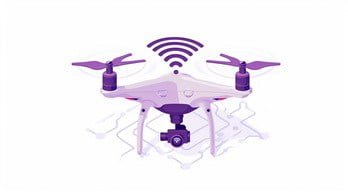
Ever wondered how drones communicate so effectively over distances? At the heart of this capability lies the drone antenna. It’s more than just a piece of technology; it’s the unsung hero of the UAV world, enabling seamless control and transmission. Let’s dive into the intricacies of drone antennas and unveil their critical role.
A drone antenna is a crucial device that allows a drone to communicate with its remote control, other devices, and systems by transmitting and receiving radio waves. These antennas enable the essential functions of drones, such as navigation, data transmission, and the operation of onboard systems, making them indispensable in the performance and utility of unmanned aerial vehicles (UAVs).
Now that we’ve uncovered the basics, let’s delve deeper into the diverse functionalities and types of drone antennas.
What does a drone antenna do?
A drone antenna is responsible for transmitting and receiving signals between the drone and the remote controller or ground station. The antenna plays a crucial role in ensuring that the drone can navigate safely and efficiently.
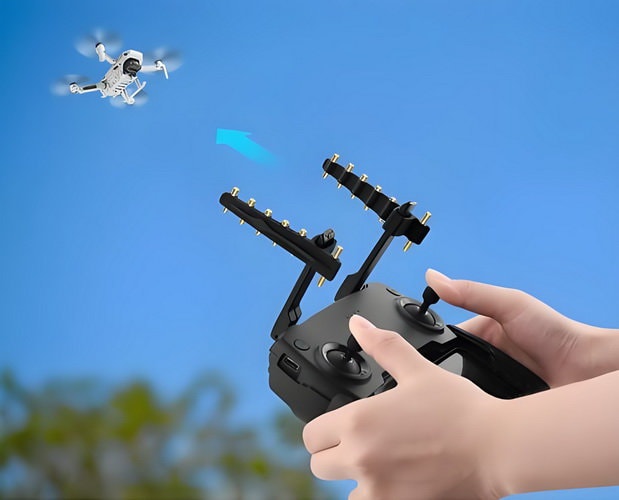
When the drone receives a signal from the remote controller, it processes the command and executes the corresponding action. For example, if the pilot wants the drone to ascend, they will push the throttle stick up, which sends a signal to the drone via the antenna. The drone then increases the power to the motors and starts to ascend.
Similarly, when the drone transmits a signal to the remote controller, it provides information about its flight status, such as altitude, speed, battery level, and GPS coordinates. This information is displayed on the remote controller’s screen, allowing the pilot to monitor the drone’s flight and make necessary adjustments.
The drone antenna ensures that these signals are transmitted and received effectively, even at long distances. It needs to be designed to provide a strong and stable connection, minimizing signal loss or interference. This is especially important for drones that fly in areas with obstacles or interference, such as buildings or crowded urban environments.
Overall, the drone antenna is a critical component that enables communication between the drone and the pilot, allowing for safe and efficient flight operations.
What is a drone antenna used for?
A drone antenna is a crucial component that is used for a variety of purposes. Its primary function is to transmit and receive signals to and from the drone. but its versatility goes far beyond simple connectivity. In today’s rapidly evolving drone landscape, antennas are essential for creating reliable, real-time connections between drones, controllers, and other devices—supporting everything from live video streaming to instant image sharing and seamless data transmission.Here are some of the key applications of a drone antenna:
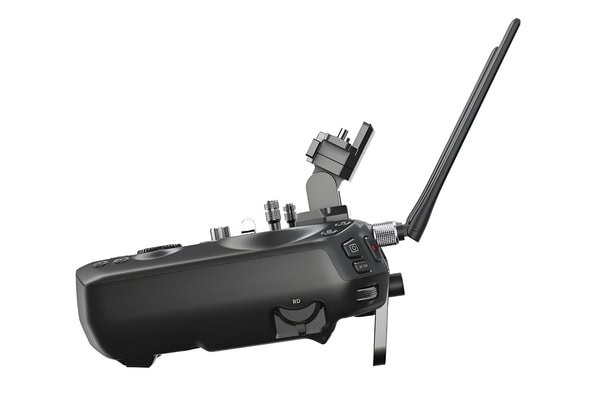
1. Video Transmission: Drones are often equipped with cameras to capture aerial footage. The antenna plays a vital role in transmitting the live video feed from the drone to a remote controller or a ground station. This enables the operator to monitor the drone’s flight and capture high-quality footage.Modern antennas are designed for high-bandwidth, low-latency video links, making real-time video recording and even live streaming possible.
2. Remote Control Signal: Drones are typically controlled remotely using a radio transmitter. The antenna on the drone receives the control signals from the remote controller, allowing the operator to maneuver the drone in different directions and control its various functions.Without a robust antenna, command lag or loss of connection could jeopardize the entire flight.
3. GPS Reception: Many drones use GPS (Global Positioning System) technology to determine their location and navigate accurately. The drone antenna receives signals from GPS satellites, enabling the drone to maintain its position, follow a pre-programmed flight path, or return to a specific location autonomously.Reliable GPS reception is vital for features like automated mapping, precise surveying, and safe return-to-home operations.
4. Telemetry Data: Drones collect various data during flight, such as altitude, speed, battery level, and temperature. This data is transmitted back to the operator or ground station through the antenna. It helps the operator monitor the drone’s performance and make informed decisions during the flight.Real-time telemetry ensures mission-critical information is always at the pilot’s fingertips.
5. FPV (First Person View): FPV is a popular feature in drones that allows the operator to see real-time video footage from the drone’s camera as if they were inside the drone. The drone antenna is responsible for transmitting the video feed to the FPV goggles or monitor worn by the operator, providing an immersive flying experience.Reliable antennas are the backbone of competitive drone racing and cinematic FPV flights.
6. Signal Range Extension: Some drone antennas are designed to extend the range of the drone’s control and video transmission signals. These antennas use advanced technologies like directional antennas or signal amplifiers to enhance the signal strength and range, allowing the drone to fly further and transmit video over long distances.This is especially important for commercial applications such as search and rescue, agricultural surveying, or infrastructure inspection.
7. Signal Quality Improvement: In areas with poor signal reception, such as urban environments or places with a lot of interference, a high-quality drone antenna can help improve signal strength and stability. This ensures a reliable and uninterrupted connection between the drone and the remote controller or ground station.
Versatility and Reliability
In summary, the drone antenna is a versatile and indispensable component that facilitates video transmission, remote control, GPS reception, data transmission, FPV experience, signal range extension, and signal quality improvement.As drone technology continues to advance, the demand for robust, high-performance antennas grows—making them essential for enabling real-time communication, safe navigation, and the full range of innovative applications drones are now capable of. Its importance cannot be overstated in ensuring the smooth operation and functionality of a drone,even when obstacles like buildings or electromagnetic interference threaten the signal.
What is the range of a drone antenna?
The range of a drone antenna refers to the maximum distance at which the drone can maintain a reliable connection with its remote controller or ground station. Distance is a critical factor in drone operation as it determines how far the drone can fly and explore its surroundings. The range of a drone is influenced by various factors such as the type of antenna used, the frequency it operates on, and the environment in which it is flown.
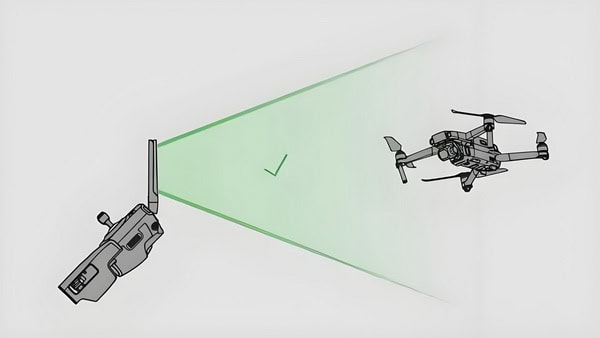
Antennas play a crucial role in maximizing the range of a drone. They are responsible for transmitting and receiving radio signals between the drone and the remote controller or ground station. There are different types of antennas used in drones, including omni-directional antennas and directional antennas.
Omni-directional antennas radiate and receive signals in all directions, providing a 360-degree coverage. They are commonly used in consumer-grade drones as they offer a good all-around signal strength. However, their range is limited compared to directional antennas.
Directional antennas, on the other hand, focus the signal in a specific direction, providing a longer range and stronger signal strength. These antennas are commonly used in professional-grade drones or for long-range applications. They are more sensitive to the orientation and positioning of the drone, as they need to be pointed towards the remote controller or ground station for optimal signal strength.
The frequency at which the drone and the remote controller communicate also affects the range. Most consumer-grade drones operate on the 2.4 GHz frequency, which provides a good balance between range and signal penetration. However, this frequency band is crowded and can be subject to interference from other devices such as Wi-Fi routers or Bluetooth devices. Professional-grade drones often operate on the 5.8 GHz frequency, which offers less interference but has a shorter range and weaker signal penetration.
The environment in which the drone is flown can also impact the range of the antenna. Obstacles such as buildings, trees, or hills can block or weaken the radio signals, reducing the effective range of the drone. Flying in an open area with a clear line of sight between the drone and the remote controller or ground station will maximize the range.
In conclusion, the range of a drone antenna is the maximum distance at which the drone can maintain a reliable connection with its remote controller or ground station. Antennas play a crucial role in maximizing the range by transmitting and receiving radio signals. The type of antenna, the frequency of operation, and the environment in which the drone is flown all impact the range.
What is a drone antenna for FPV?
A drone antenna for FPV (First Person View) is a component that allows the transmission and reception of video signals between the drone and the FPV goggles or monitor used by the pilot. It is an essential part of the FPV system as it enables the pilot to see live video footage from the drone’s perspective.
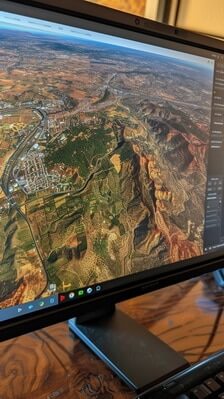
The antenna is responsible for sending the video signal from the drone’s onboard camera to the pilot’s FPV goggles or monitor. It also receives control signals from the pilot’s transmitter, allowing them to control the drone’s flight.
There are two main types of antennas used in FPV systems: the transmitter antenna and the receiver antenna. The transmitter antenna is located on the drone and transmits the video signal to the receiver antenna on the pilot’s FPV goggles or monitor.
The quality and performance of the drone antenna greatly impact the FPV experience. A good antenna will provide a strong and clear video signal, allowing the pilot to see the surroundings and fly the drone with confidence. On the other hand, a poor antenna may result in video dropout, signal interference, and reduced range, leading to a less immersive and potentially dangerous FPV experience.
Drone antennas for FPV come in various shapes and sizes, including dipole antennas, cloverleaf antennas, and patch antennas. Each type has its own characteristics and advantages, such as increased range, better signal penetration, or improved video quality.
Choosing the right drone antenna for FPV is crucial to ensure a reliable and enjoyable flying experience. It is recommended to do research, seek advice from experienced FPV pilots, and consider factors such as frequency compatibility, gain, polarization, and antenna placement to make an informed decision.
UAV antenna types
There are several types of UAV (Unmanned Aerial Vehicle) antennas that are commonly used for communication and data transmission purposes. Some of the common UAV antenna types include:
1. Dipole Antenna: A dipole antenna consists of two conductive elements that are aligned along the same axis. It is a simple and commonly used antenna for UAVs due to its compact size and omnidirectional radiation pattern.
2. Patch Antenna: A patch antenna is a flat, rectangular or circular shaped antenna that is widely used in UAVs for GPS and communication purposes. It provides a directional radiation pattern and is known for its high gain and low profile.
Patch antennas, also known as microstrip antennas, are designed to focus the signal in a specific direction, making them highly effective for tasks that require targeted coverage, such as video transmission, GPS navigation, and other data communications. Constructed from a thin sheet of metal mounted over a larger ground plane, patch antennas are lightweight and compact—an ideal choice for drones where space and weight are at a premium. Their streamlined design ensures minimal drag, and their ability to deliver reliable, directional signals makes them a popular solution not just for UAVs but also for various wireless applications and even space vehicles.
3. Helical Antenna: A helical antenna is a type of antenna that has a helix-shaped structure. It is commonly used for long-range communication in UAVs due to its high gain and directional radiation pattern.
The simple, compact design of the helical antenna makes it well-suited for drone setups where space and weight are limited. Notably, its helical structure enables circular polarization, which helps maintain a stable and uninterrupted signal even when the drone changes orientation or experiences multipath interference. Helical antennas are widely used for transmitting live video footage from the drone to the ground station, as well as for data transmission and communication with other UAVs or ground systems.
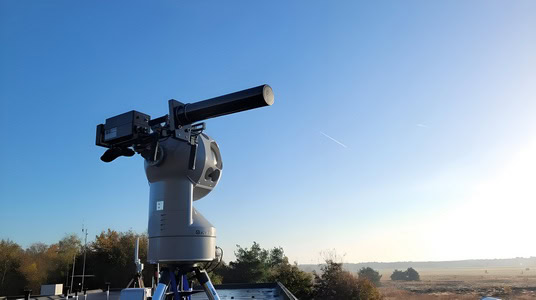
4. Yagi-Uda Antenna: A Yagi-Uda antenna is a directional antenna that consists of multiple elements, including a driven element, reflector, and one or more directors. It is commonly used for long-range communication and has a high gain.
Thanks to its highly directional radiation pattern, the Yagi-Uda antenna is ideal for applications where focused transmission and reception over extended distances are required—such as long-distance video transmission, data communication, and remote control. Its design allows it to achieve superior signal strength and clarity by minimizing interference from unwanted directions, making it a popular choice for UAVs that need reliable connectivity far from the base station.
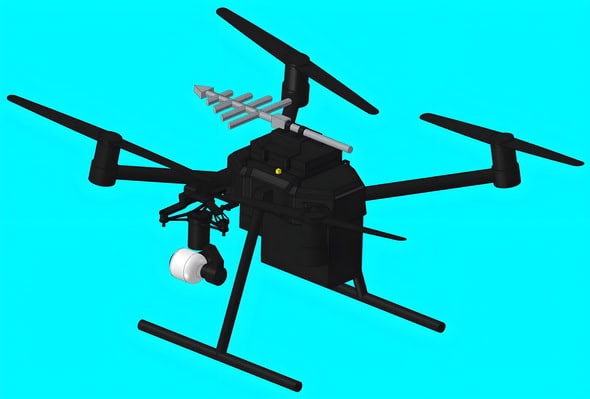
5. Parabolic Dish Antenna: A parabolic dish antenna consists of a parabolic reflector and a feed antenna placed at its focus. It is used for long-range communication and provides high gain and a narrow beamwidth.
Thanks to its curved reflector, the parabolic dish focuses signals in a single direction, making it highly effective for transmitting or receiving data over significant distances. This makes it a popular choice for FPV drone setups managed from ground stations or remote controls, especially when high-quality video transmission is required across long ranges. Its precise, directional nature helps minimize interference and ensures a strong, reliable link when flying far from the pilot.
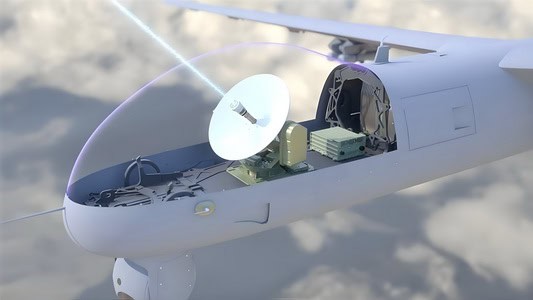
6. Omni-directional Antenna: An omni-directional antenna radiates and receives signals equally in all directions. It is commonly used for short-range communication and is suitable for applications where the UAV needs to communicate with multiple ground-based stations simultaneously.
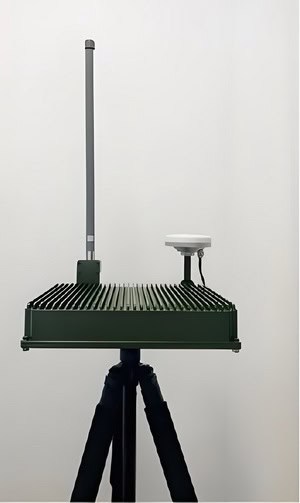
These are just some of the common UAV antenna types, and there are many other specialized antennas used for specific applications or requirements in UAVs.
What antenna do I need for my drone?
When selecting an antenna for your drone, it is important to consider the specific application and your needs as an operator. Here are a few factors to consider:
1. Frequency: Determine the frequency range your drone operates on. Most drones use either 2.4 GHz or 5.8 GHz frequency bands. Make sure to choose an antenna that is compatible with your drone’s frequency.
2. Antenna Type: There are different types of antennas available, including omnidirectional and directional antennas. Omnidirectional antennas transmit and receive signals in all directions, making them suitable for general flying and FPV (First Person View) applications. Directional antennas, on the other hand, focus the signal in a specific direction, providing longer range and better signal penetration. They are ideal for long-range flights or areas with obstacles.
3. Gain: Antenna gain refers to its ability to focus the signal in a specific direction. Higher gain antennas provide longer range and better penetration, but they have a narrower beam width. Lower gain antennas have a wider beam width but offer shorter range. Consider your flying style and the range you need to determine the appropriate gain for your antenna.
4. Polarization: Antennas can be either linearly polarized (vertical or horizontal) or circularly polarized. It is important to match the polarization of your drone’s transmitter and receiver antennas for optimal signal strength. Circularly polarized antennas are more resistant to signal loss caused by the drone’s orientation, making them a popular choice for FPV applications.
5. Connector Type: Ensure that the antenna you choose has the correct connector type to connect to your drone’s transmitter or receiver. Common connector types include N type, SMA /RP-SMA, IPEX, etc.
Remember, selecting the right antenna can greatly improve the range and quality of your drone’s video and control signals. Consider your specific needs and flying style to choose the antenna that best suits you.
What is the best position for a drone antenna?
The best position for a drone antenna depends on the specific drone and the type of antenna being used. However, here are some general tips on antenna placement to optimize signal strength and reduce interference:
1. Keep the antenna away from other electronic components: Place the antenna as far away as possible from other electronic components, such as the flight controller, ESCs, or video transmitters. These components can generate electromagnetic interference (EMI) that can degrade the signal strength.
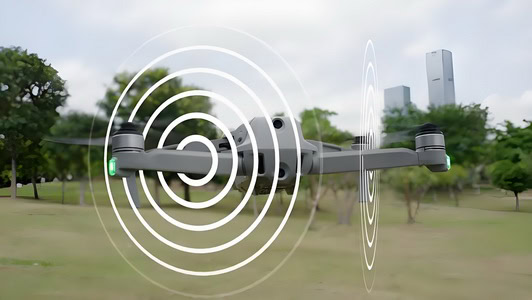
2. Maintain a clear line of sight: Try to position the antenna in a way that it has a clear line of sight to the remote control transmitter. Avoid placing the antenna behind or under any metal or carbon fiber structures that can block or weaken the signal.
3. Avoid placing the antenna near the battery: Drone batteries can generate electrical noise, which can interfere with the antenna signal. Keep the antenna as far away as possible from the battery to reduce this interference.
4. Position the antenna vertically: For better signal reception, it is generally recommended to position the antenna vertically, perpendicular to the ground. This helps to maximize the range of the signal in all directions.
5. Use a diversity antenna system: Consider using a diversity antenna system, which consists of two or more antennas placed at different locations on the drone. This can help improve signal strength and reduce signal loss due to interference or obstacles.
6. Experiment and test: Antenna placement can vary depending on the specific drone, its components, and the environment. Experiment with different positions and orientations of the antenna to find the optimal placement for your specific setup. Use signal strength indicators or perform range tests to assess the effectiveness of different antenna positions.
Remember, it is important to consult the user manual or manufacturer’s guidelines for your specific drone and antenna to ensure proper installation and placement.
In summary, the antenna is a crucial component of a drone’s communication and performance. By knowing the different types of antennas, how they work, and how to use them effectively, you can greatly improve your drone’s capabilities. Whether you fly drones for fun or for work, having the right antenna setup is essential for pushing the limits of what your drone can do.
 English
  Spanish
  German
  French (France)
  Korean
  Russian
  Indonesian
  French (Canada)
  Vietnamese
  Armenian
  Albanian
  Assamese
  Acehnese
  Amharic
  Czech
Czech  Bulgarian
  Cebuano
  Malayalam
  German (Switzerland)
  Japanese
  Dutch
Dutch